
HQ Review: Grace Meraki Dance Company presents its first performance “Finding Home”
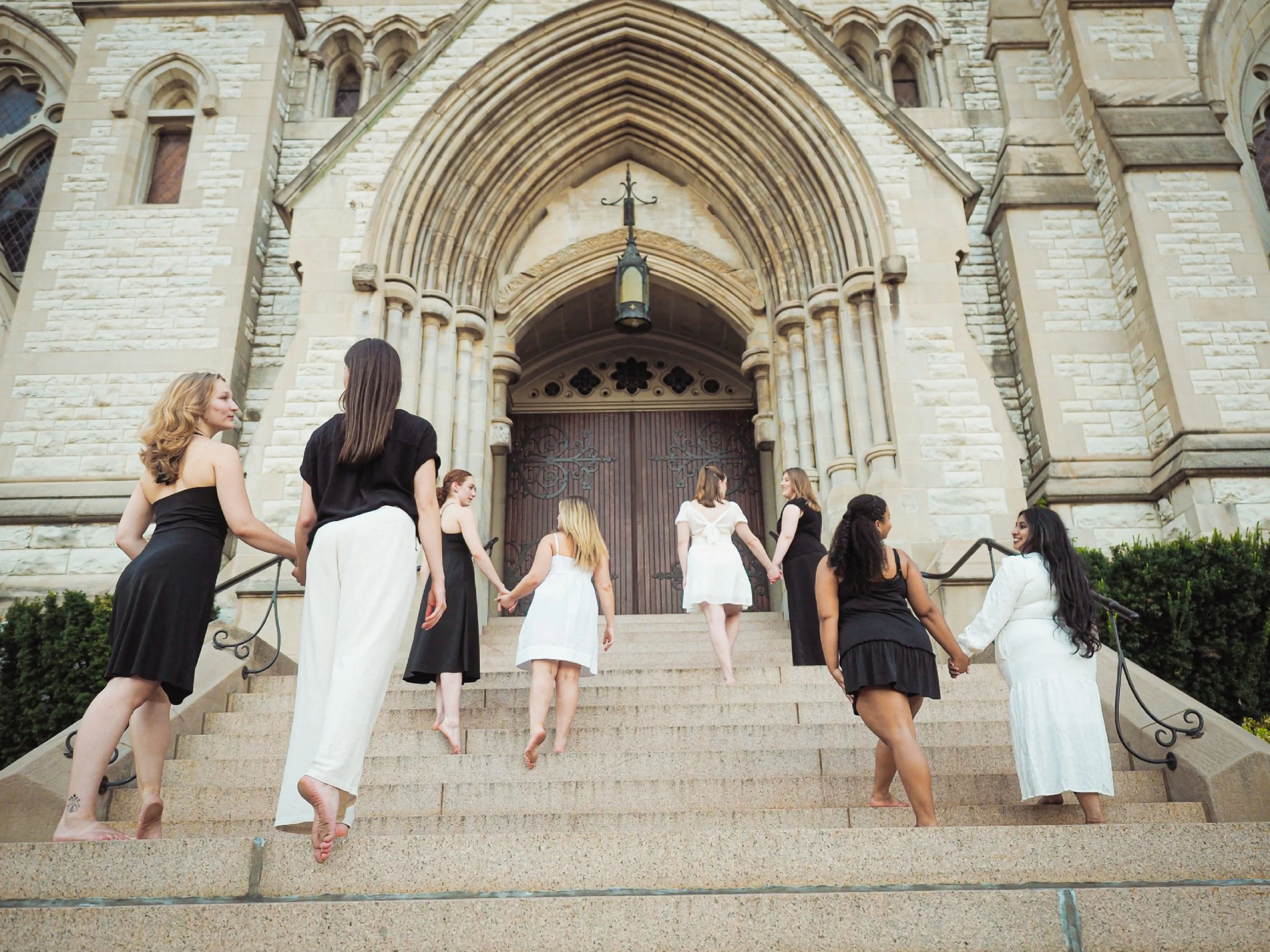
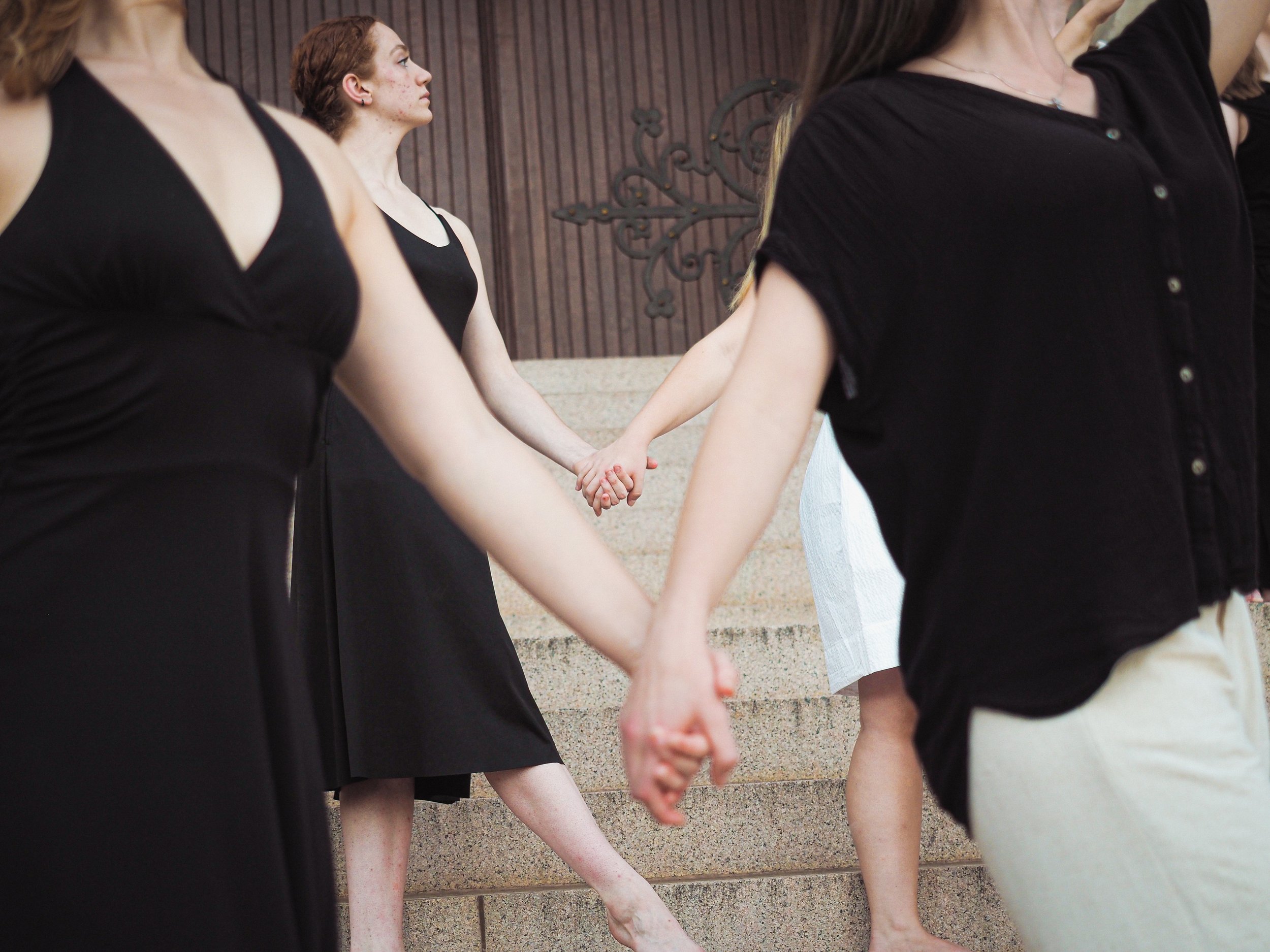

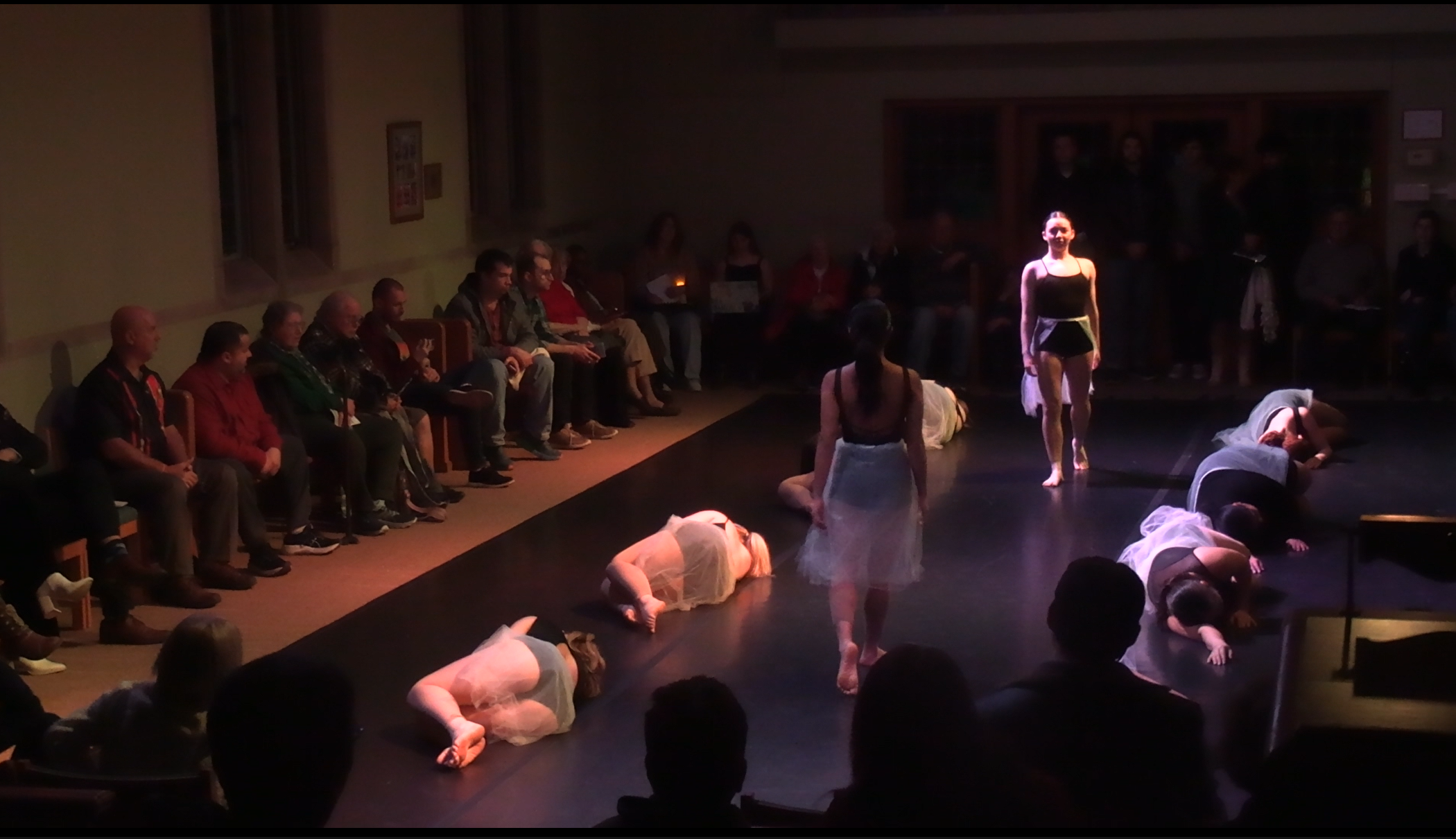
Encircled by stained glass and pews, Grace Meraki Dance Company made its performance debut at Hope United Church of Christ. The church served as a poignant setting for the Christian dance company’s first show, “Finding Home.”
Director and choreographer Nina Serigos began incubating the idea for the production through conversations with her mentors while deliberating about her next steps in her career.
“In 2023, I moved to STL for school and was quickly welcomed by a vibrant dance community. Despite this blessing, I did not quite feel at home. There was no space where I could authentically embrace my faith and art simultaneously,” Serigos wrote in the program.
The show, featuring 11 dancers, came together suddenly after Serigos reflected on past works she had created alongside ideas for two new creations. A cohesive storyline emerged, described in the program’s pamphlet as “a journey from the depths of depression to saving grace in Christ.” The pamphlet also included instructions for calling the suicide and mental health hotline.
Each of the five works was paired with a corresponding Bible verse referenced in the program. Opening the show, “It is What it is” featured five dancers with a verse depicting an overwhelmed King David crying out to God. The lyrical-contemporary movement of the quintet was weighted and evoked frustration, set to lyrics like “Father, save me from myself.” The piece reached a pinnacle as a circle formed around one dancer, who reached up to the sky in desperation. Ending just inches from the audience in the round, the music fell away until only the dancer’s breath could be heard.
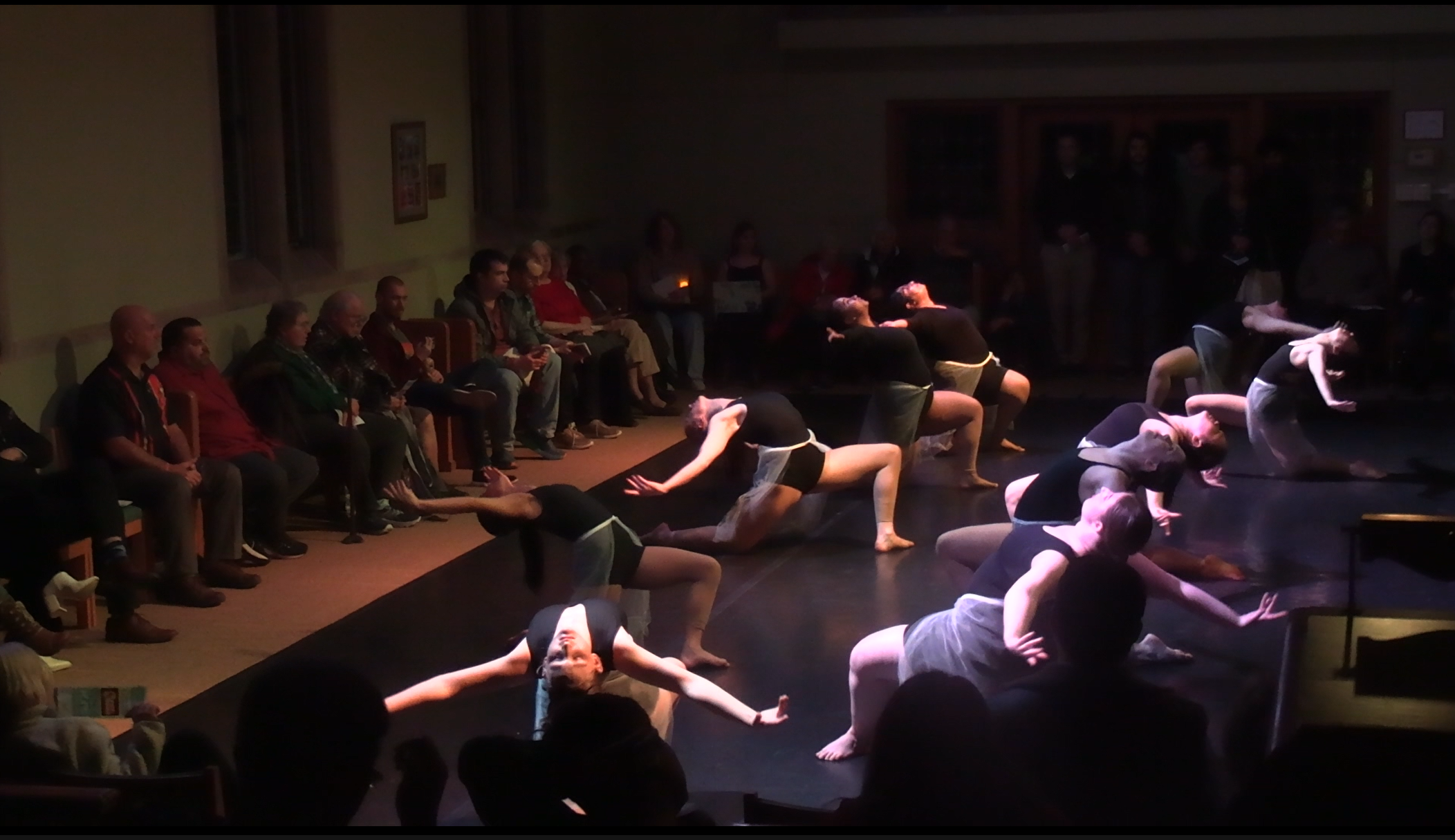
Continuing a tightly-rehearsed program, the second piece of the show “Pretty Little Devil” required flexibility, strength and technical precision. The performers sliced powerfully through the space with a strong focus and gestural specificity. Involving several backbending shapes and pinpoint timing, this piece brought a layer of darkness to the show. The dancer’s black skirts alongside the gritty vocalizations of the song hinted at original sin, confirmed by the corresponding verse, 1 Peter 5:8-11, which urges Christians to stay alert against the devil.
Serigos then took the stage for an invested solo titled “We All Struggle” alongside a spoken word monologue about battling suicidal thoughts and depression. Serigos slammed the ground with her fists, demonstrating a deep internal conflict. Moving up to stand and falling as if being knocked down by an invisible force, this solo was an emotional work, its physical intensity both moving and impressive. “This isn't the end for you; bigger plans have been made for you,” the monologue declared, as Serigos brought both heaviness and heart to the show.
Taking an opportunity to involve the audience, viewers were invited to find a new seat for the final two works which moved the show towards a hopeful resolution. “Just as the dancers step into a new perspective, we would like to offer you the opportunity to discover one as well,” read the program notes.
“Day by Day” provided a change of pace, the dancer’s unbuttoned work shirts emphasizing their airy movements. This work’s vocabulary was soft, delicate and carried an understated strength. With choreography at times directly complimenting the music, at some moments it fell away, allowing viewers to bathe in both the music’s flowing melody and the lyrical movement. This lighter work involved classically balletic sautés and fifth positions. A rootedness was evident in the artist’s movement, effectively referencing the work’s biblical inspiration, Jeremiah 17:8, which likens believers in Christianity to a tree planted by water.
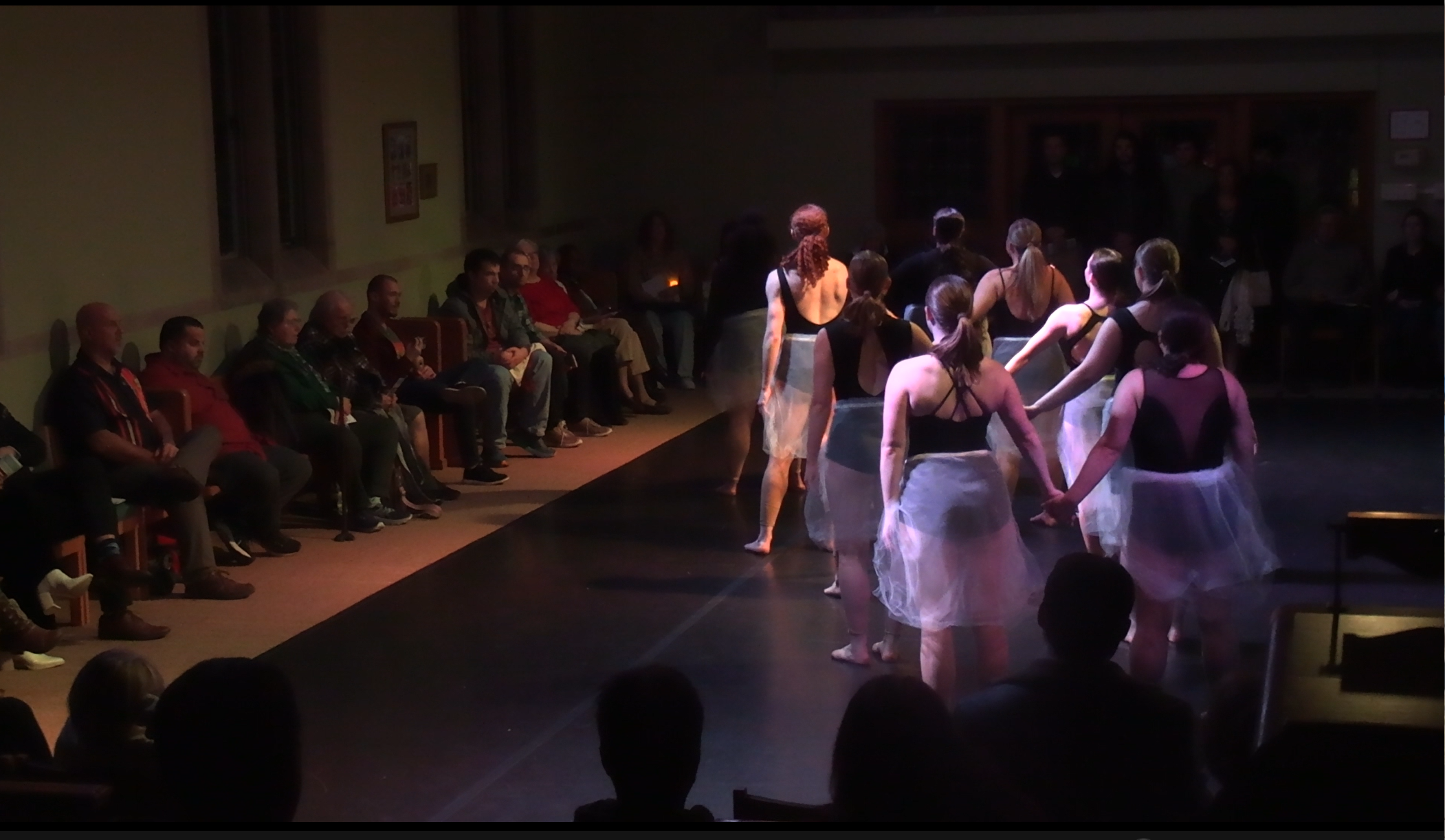
The final work, “Walking Each Other Home,” brought all company members excluding Serigos to the stage. In white lace skirts, the dancers embodied a tone of purity and optimism, ending the show with a hope built on support and togetherness. Throughout the piece, pairs of dancers walked hand-in-hand and ended in a group embrace on the ground. The program’s pamphlet explained that in lieu of a final bow, the show would end in a simple group embrace before exiting; “As we are given every gift from the Lord, we would like to return the praise to Him.”
Equal parts heavy and uplifting, it is evident that “Finding Home” was a personal work. As for the experience as an audience member, there were moments of apparent effort made to allow for audience members to find their own entry into the work, namely the opportunity for viewers to find a new facing in the round to experience a new perspective as the show made an about-face. Nonetheless, this show felt geared toward audience members who connect with Christian religiosity, providing a fairly clear-cut positioning on depression, faith, and potential redemption through Christ.
“Grace Meraki is only taking its first steps,” Serigos said. “We have ideas and plans for the future that we can’t quite announce yet, but we will continue our mission of ‘Creating Art that Reflects our Creator.’ We look forward to working with more St. Louis dancers and bringing our mission into places where hope is needed most.”
Photos provided by Nina Serigos