
HQ Review: MADCO and Jennifer Kayle present “PULSE/imPULSE”
At a time when the world feels like it’s burning down, we reach for a remedy; a quick pick-me-up, an escape, or the great salve of self introspection. MADCO’s PULSE/imPULSE concert Feb 20 at COCA’s Staenberg Performance Lab explored each approach with collaborator Jennifer Kayle, head of the University of Iowa’s department of dance. The evening highlighted the active artistic exchange between Iowa City and St. Louis.
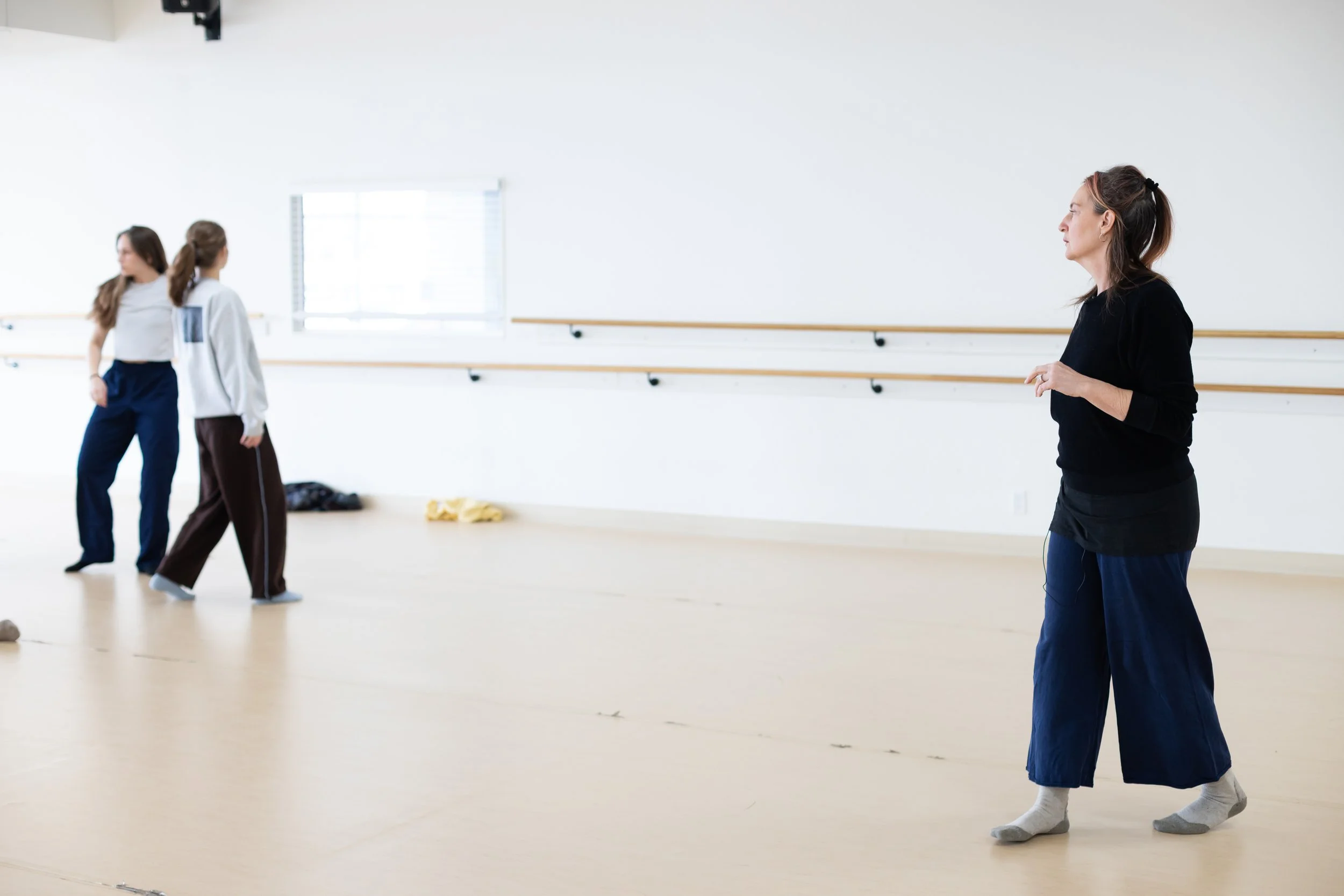
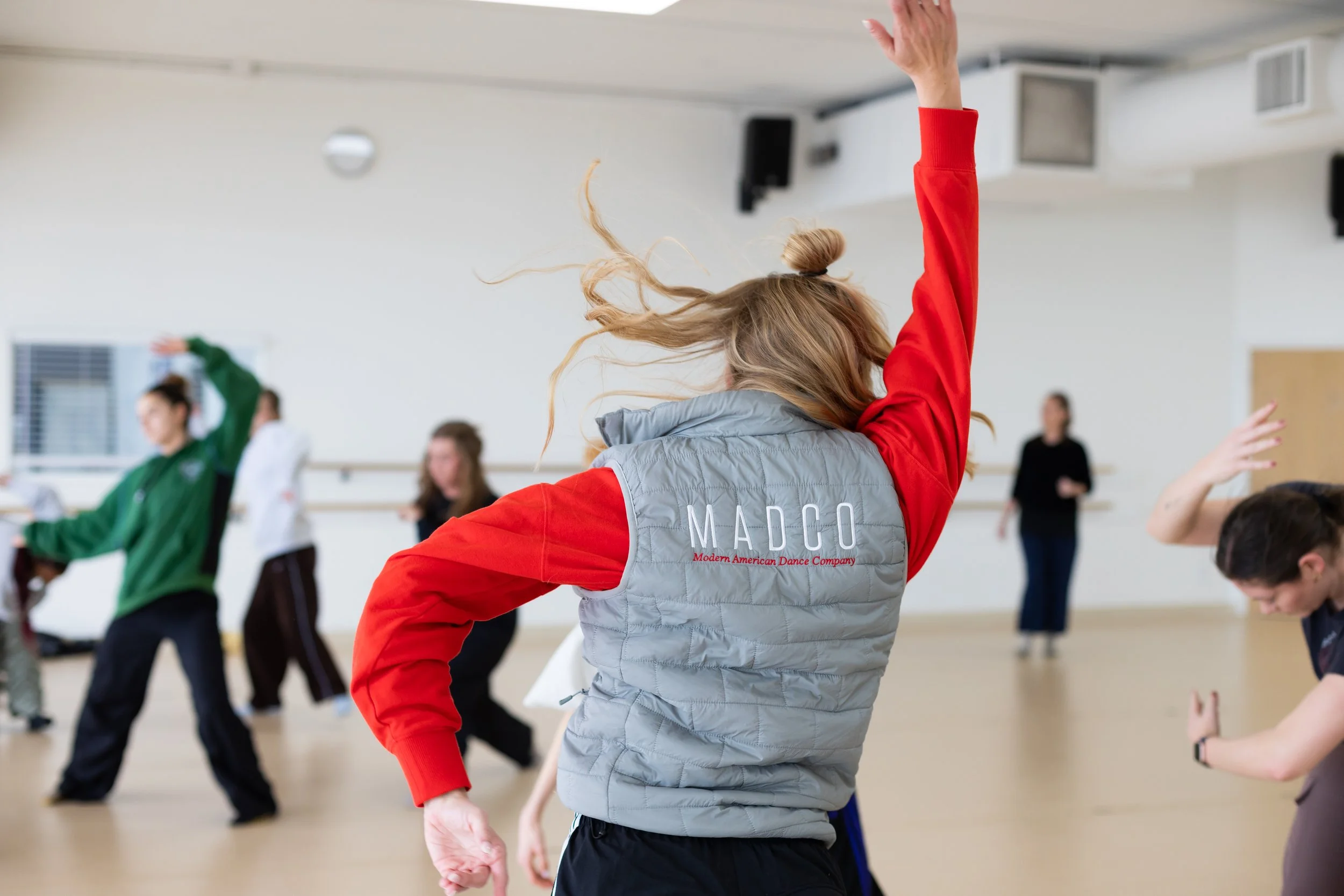
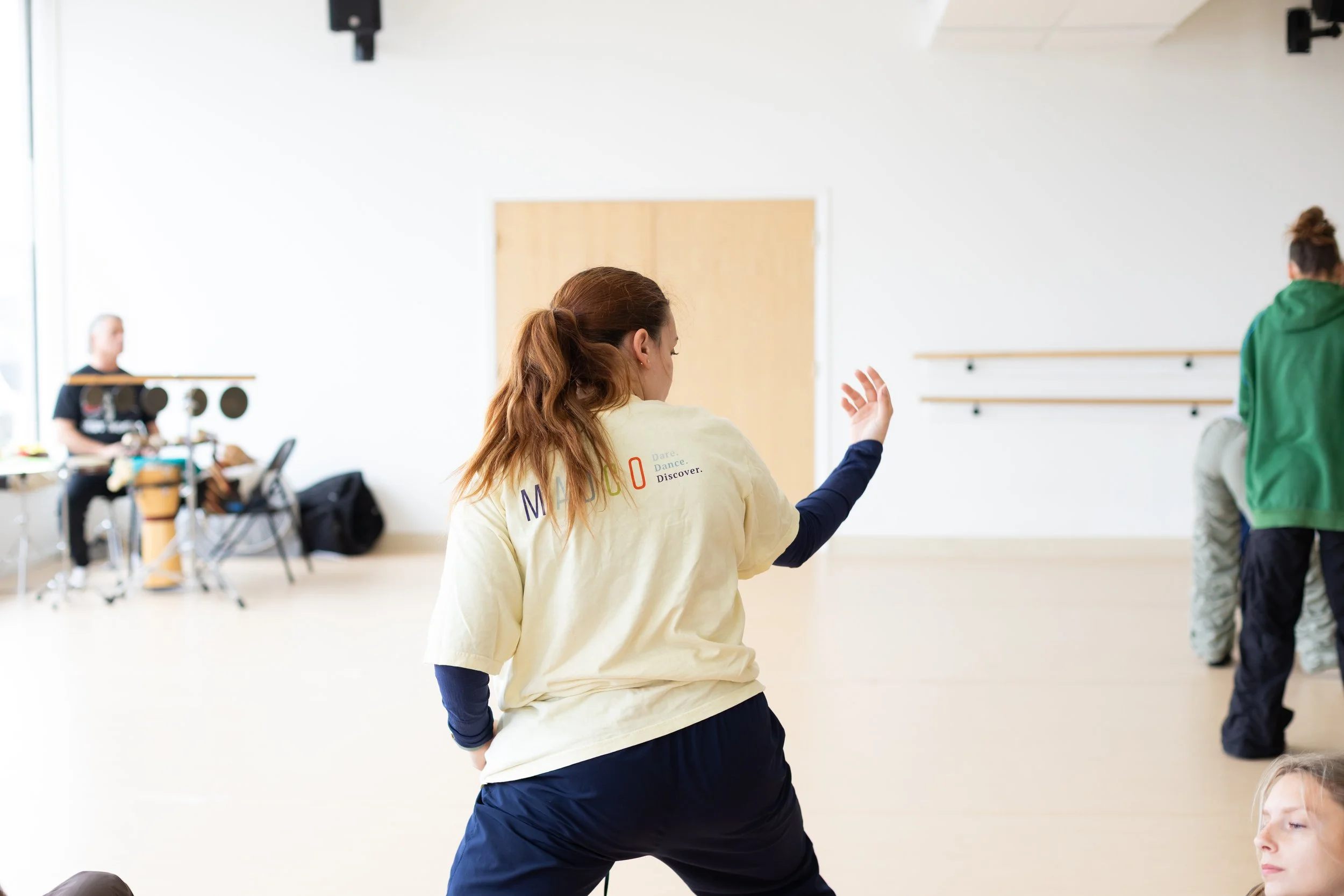
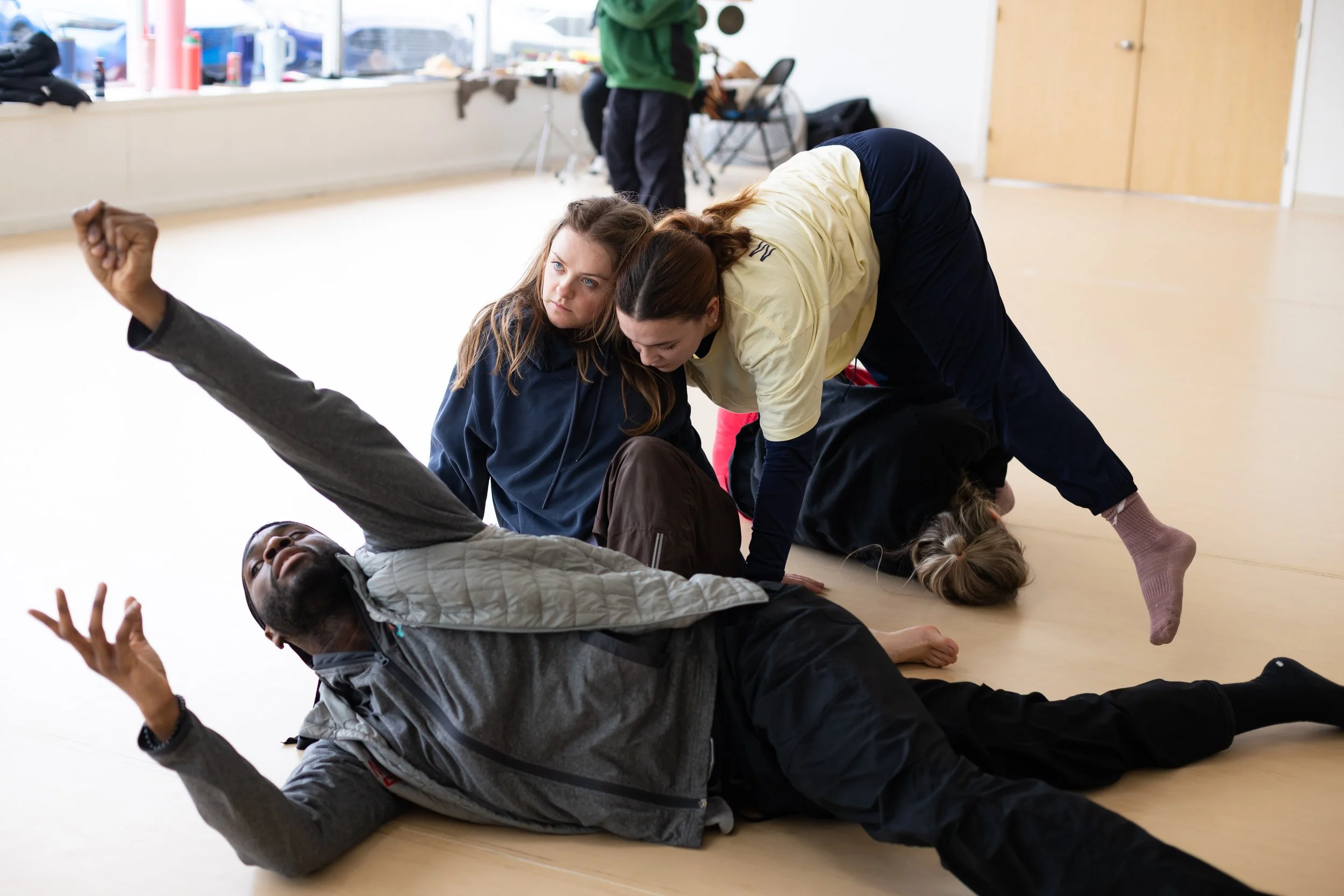
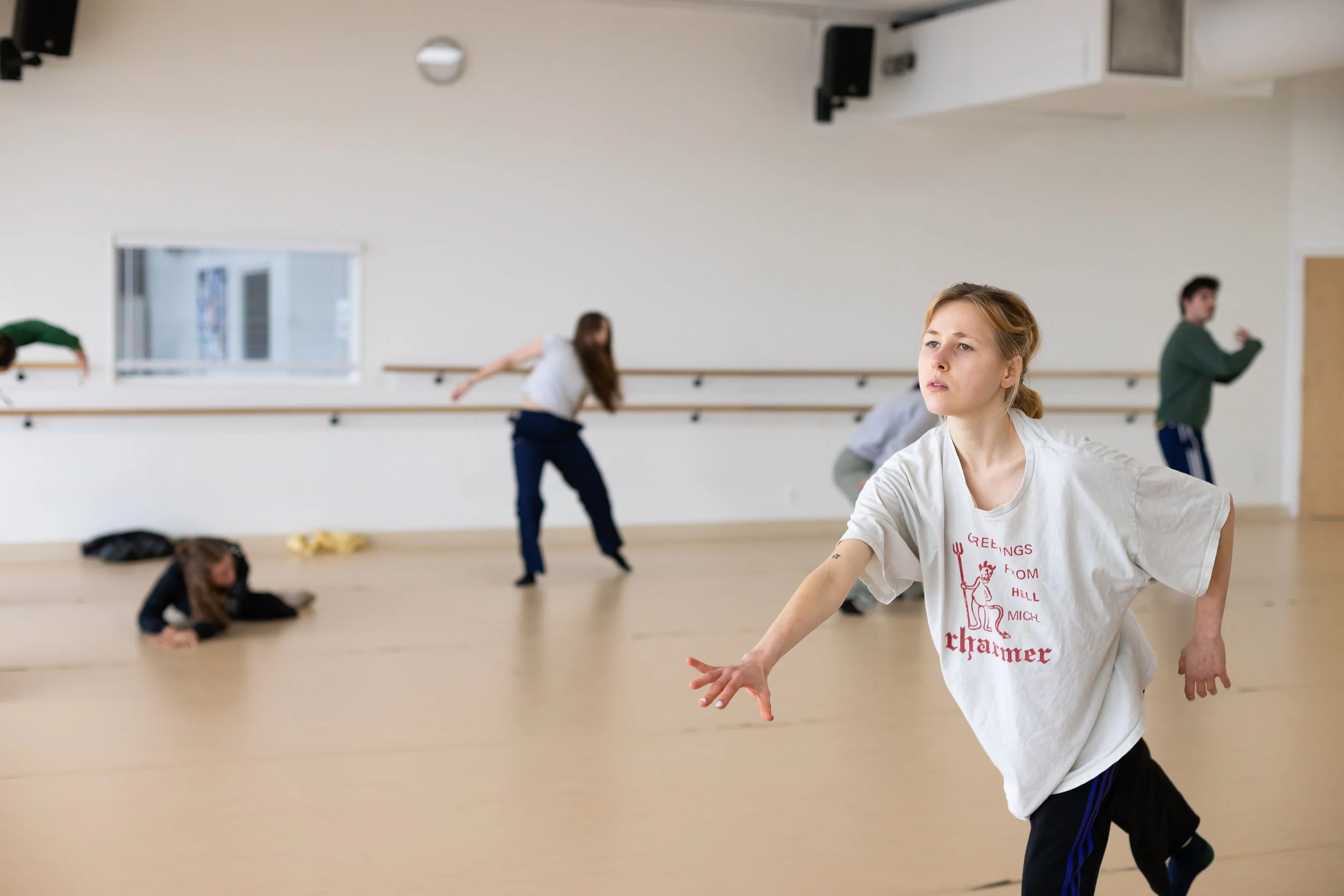
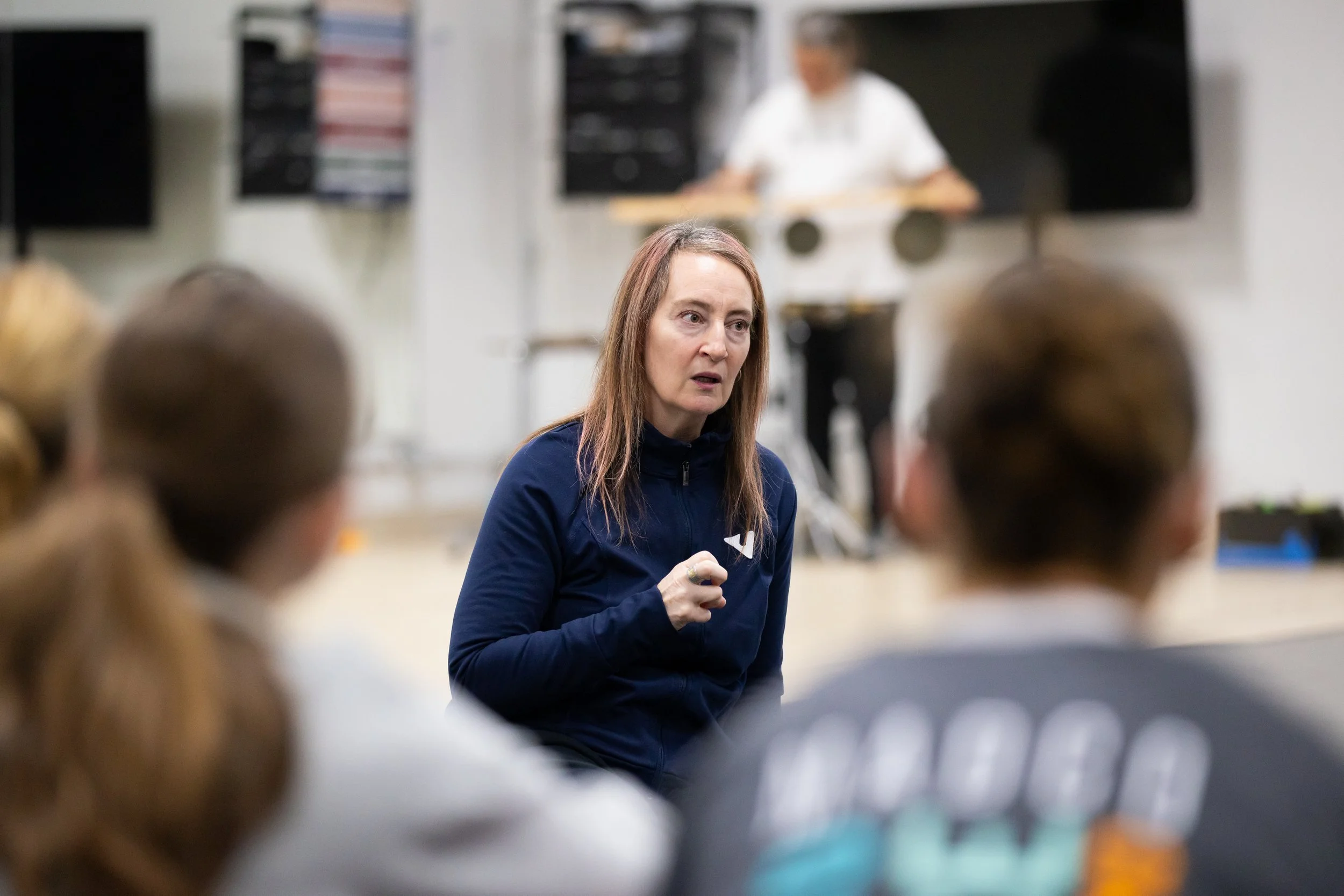
Preparation for the concert began about four months ago, with efforts ramping up upon Kayle’s arrival to St. Louis in the week leading up to the show. While Kayle was in town, she worked with MADCO Company artists on an improvisation score that opened the concert. Kayle’s book “Always in the Making: A Practical Philosophy of Ensemble Improvisation” is under contract with Routledge Press, her wisdom shaped through years of work with her collaborative group The Architects.
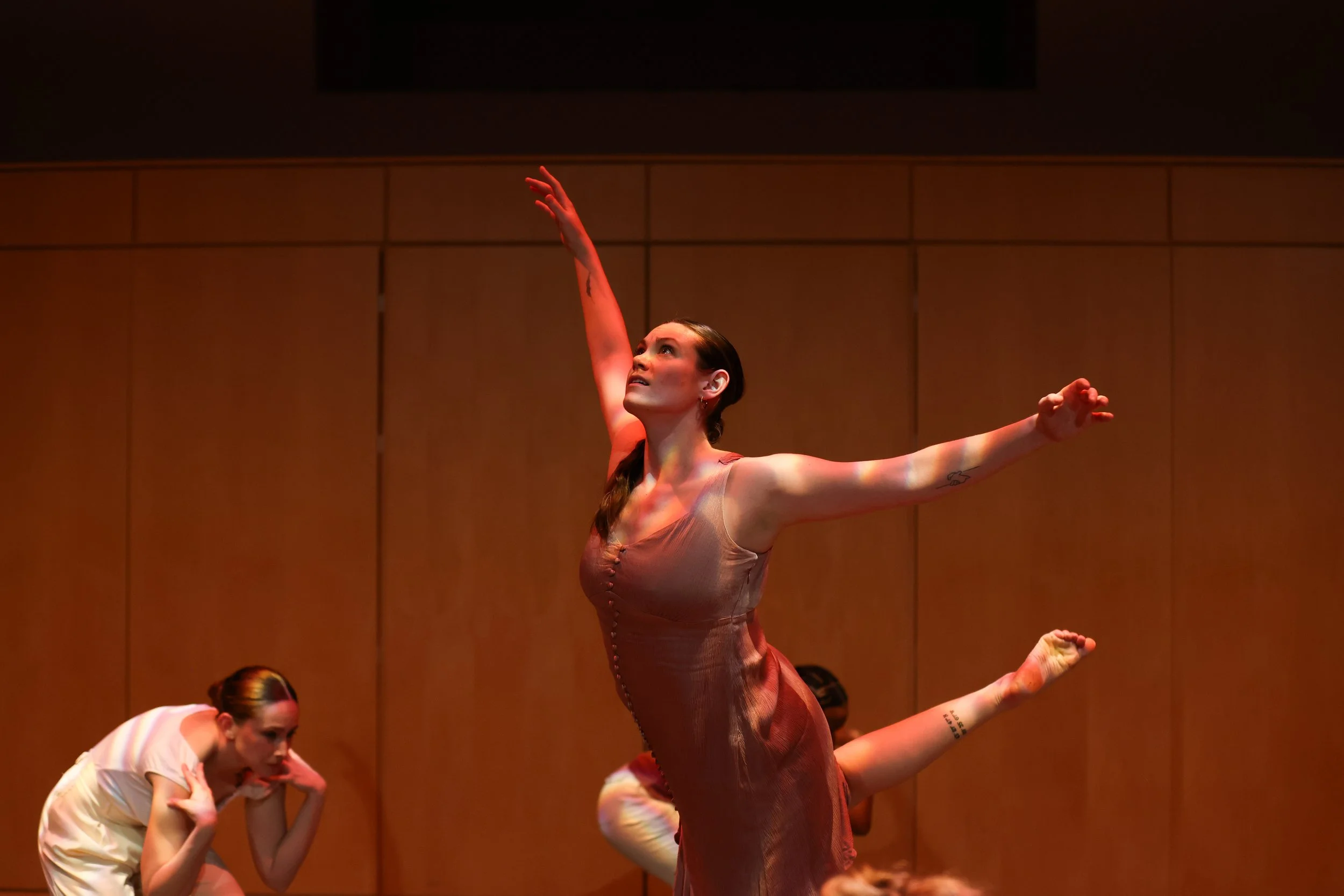
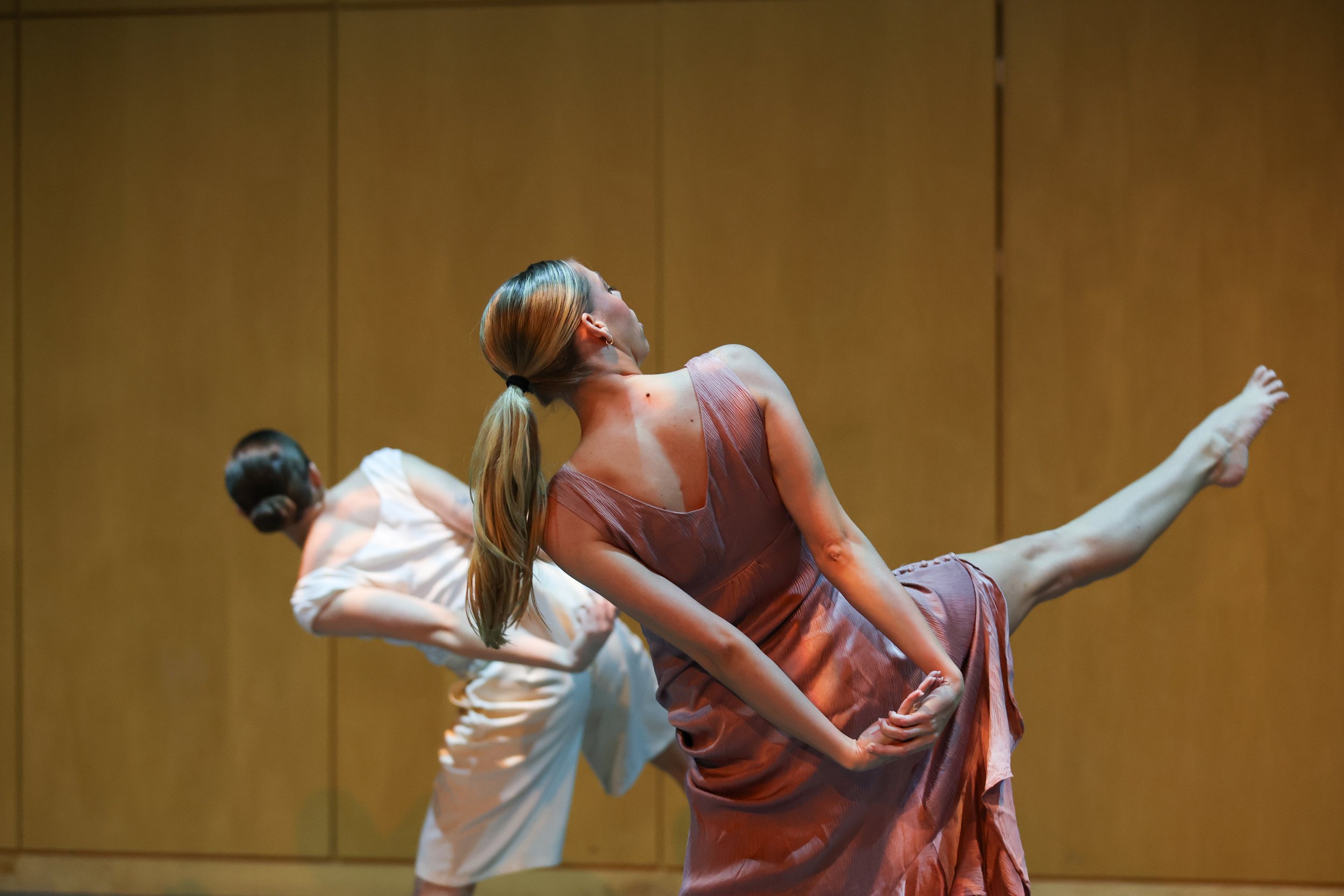
10 minutes before showtime the MADCO artists strolled into the space with an understated presence. With the houselights still up, they began to develop gesture phrases and echoing responses. Between the lighthearted groupings was a sense of levity; a dramatic cough spreading from one to the next, or a rhythmic applause that caught on and grew until musical collaborator Lance Garger settled upstage, signaling a shift. The lights were brought down and relays of group improvisations took shape. While MADCO is historically a repertory company, they took to the improvisations with admirable investment and attentive connection. The artists were allowed freedom to present their more expressive qualities, leaning into—but not on—character to bring life to these brief performances.
In the time Kayle spent with the artists in the days leading up to the show, she shared improvisational tools and countless quote-worthy insights. Of her advice, two quotes made such a clear impact that they were visible under the stagelights. To keep a group improvisation developing, her recommendation was to “challenge yourself to figure out how something you’re embroiled in separates.” To protect individualization while still holding to a group mentality, she noted that “there can be several disparate thoughts happening at once, but if no response is made out of clear watching and sensing, progress won’t occur.” Out of these insights, their creations felt spacious, dynamic and full of bold choices.
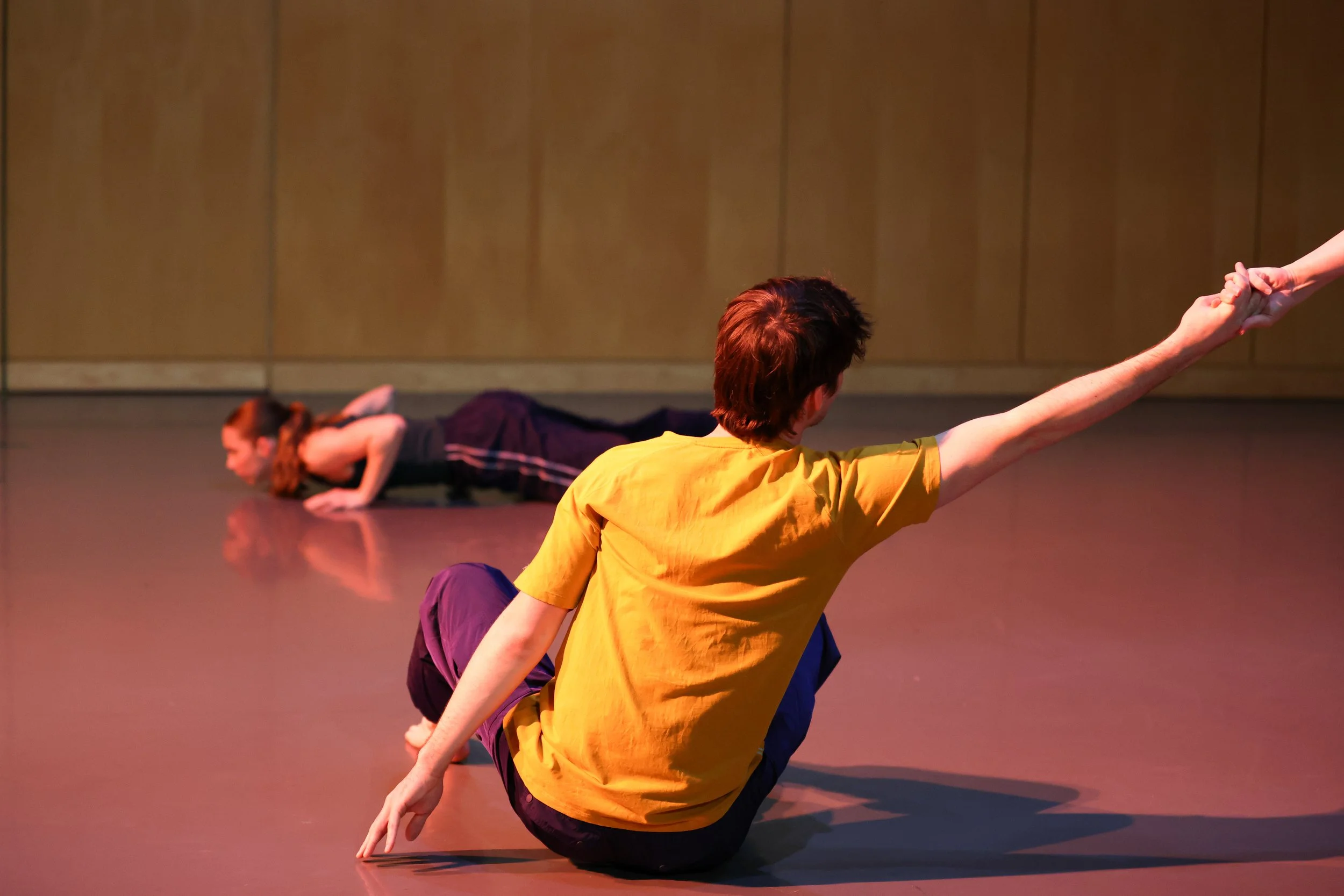
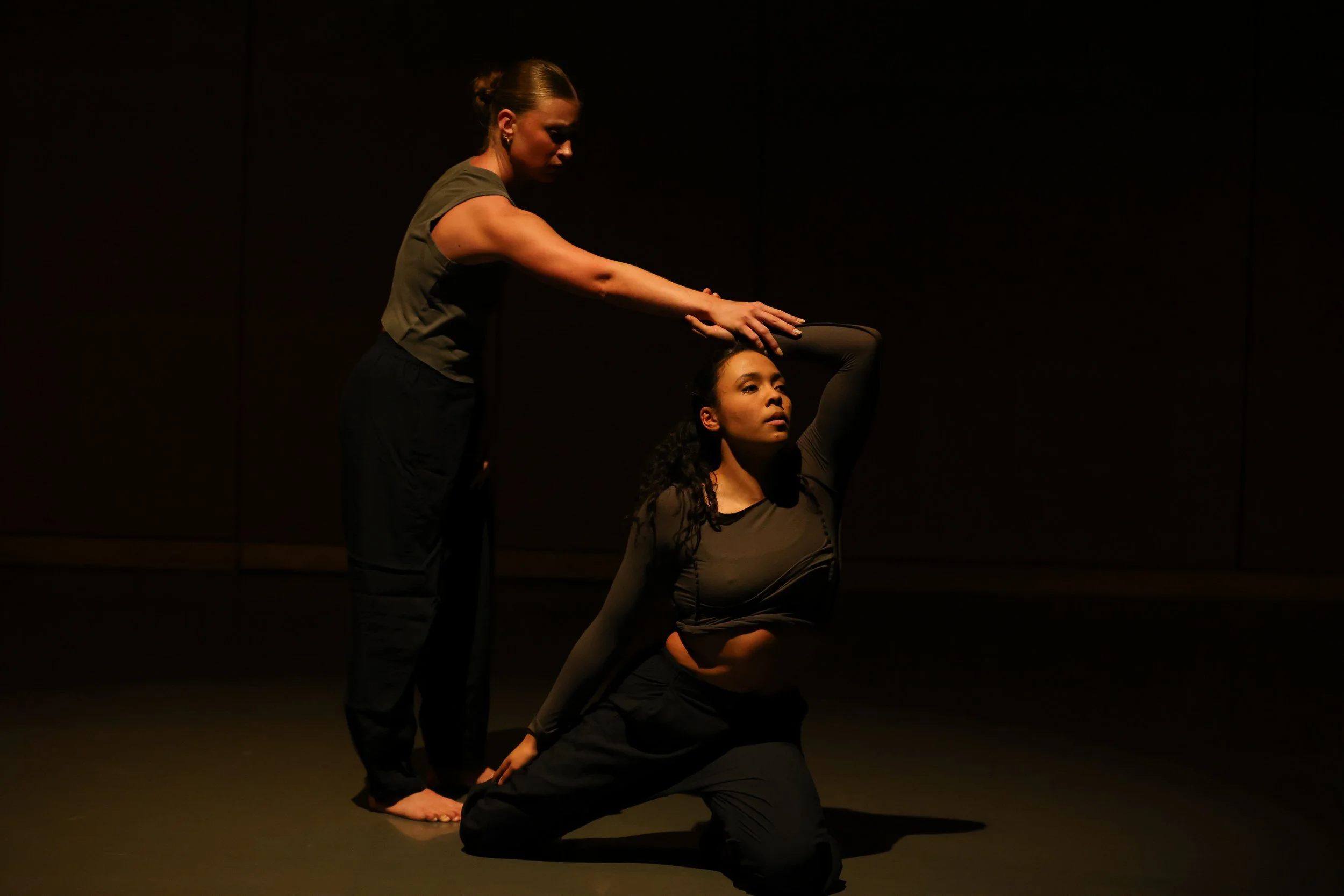
Continuing on the theme of collaborations between Iowa City and St. Louis was “Sleep,” a duet between MADCO company artist Sidney Cowles and Soraya Cohen, a company artist with Resilience Dance Company. The two are graduates from Iowa, as is MADCO’s Artistic Director Ariana Russ, who first choreographed and premiered “Sleep” in Fall of 2024. Under a spotlight, the piece began in silence with Soraya strewn over Sidney’s shoulder. Slowly rotating, Soraya slid down until her toes grazed the ground before being tossed back over Sidney’s shoulder. It was as if Sidney represented the grips of sleep, Soraya sliding out into the waking world. The dynamic was never so specific, but as delicate patterns of relationship developed, including restful moments where the pair lay together, it appeared to represent a gentle unfolding into life and then a return back into a dreamworld.
Russ presented “Bound” with an explanation of its origins: An excerpt from MADCO’s 2023 work “From the Ash,” it was originally made in response to the surrounding political atmosphere as she figured out how to process grief. As she was making this work Russ wondered, “What is good now, if anything?” To open, Katherine Kennedy entered the space weaving through the dancers who were spread across the stage, angled in upright statues like flowers suspended in a field. “All day, stars watch,” she began to speak, the artists transforming their formations. A memorable dynamic phrase saw the artists barrel down stage right in a syncopated phrase, their force emanating in the volume of their feet on the floor. “When you’re alone you’ll be alright,” Katherine continued, “even though the whole world is burning.” This phrase brought together the tone of this piece. First beginning in delicate forms, the dancers grew in power, signalling resilience. Ending in a lift, mid-inhale, the lights went to blackout, assuming an exhale, a continuation.
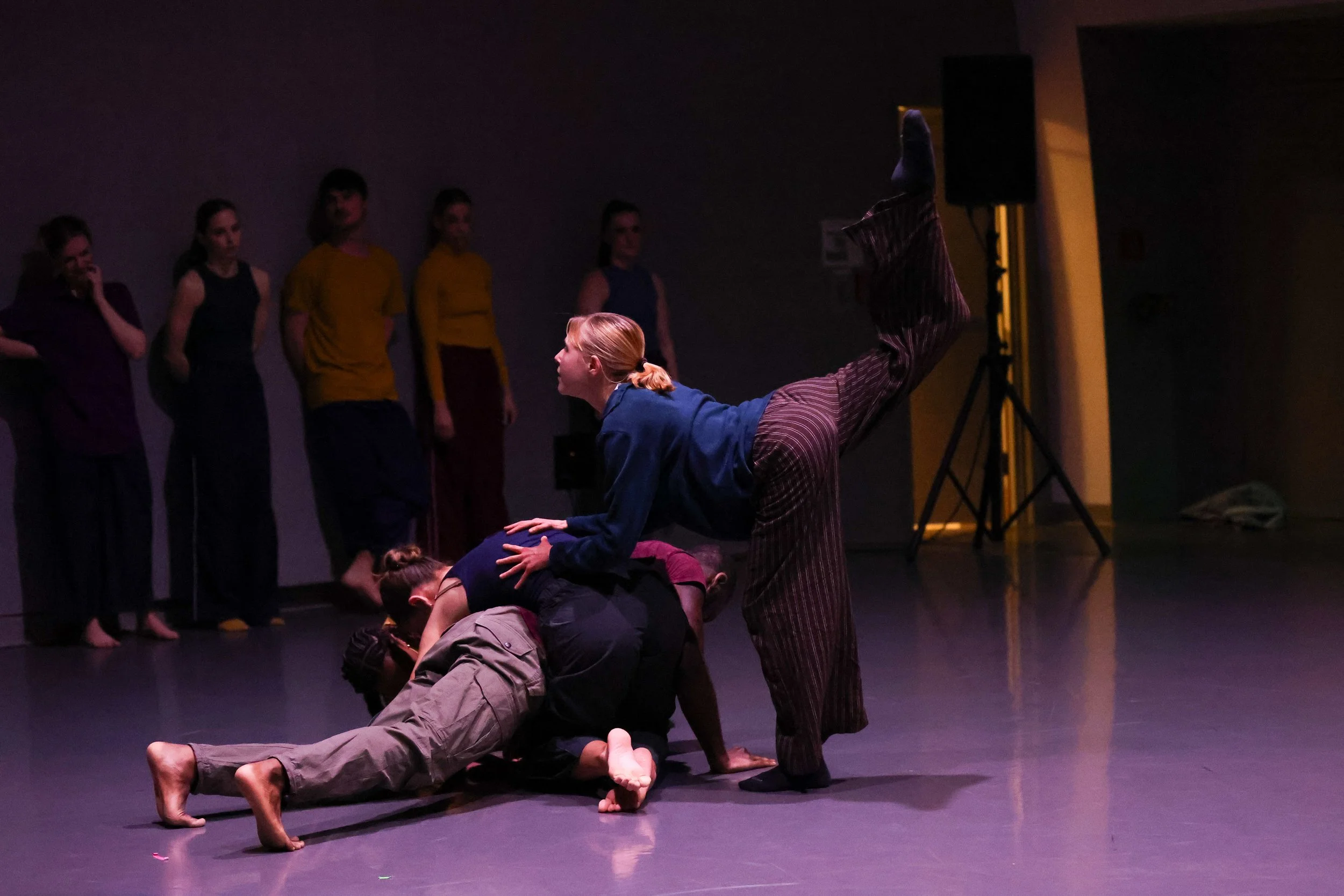
“Dr. G and the Betterfeels” was Kayle’s 55-minute contribution to the concert and featured three current students and two recent alums of the University of Iowa dance program. The work held to the unofficial theme of the night, addressing the ways in which we move through times of crisis. It is the longest work she has made, and for it she wrote a song and more than one cheer—yes, the kind you might hear on the sideline of a football field, if the game was to see who could win a positivity competition.
This piece demanded range from these artists, and they delivered. The work was densely theatrical and equally movement-specific. Kayle addressed striving for happiness with a strong dose of satire: the performers embodied archetypal spiritual gurus, the personalities that lead self-help retreats and preach occasionally tone-deaf dogma. It was like being dropped in and out of a strange self-help retreat where diversions like deep breathing and sleight of hand magic tricks are effective distractions, and the troughs when the next trick-to-happy inevitably fails.

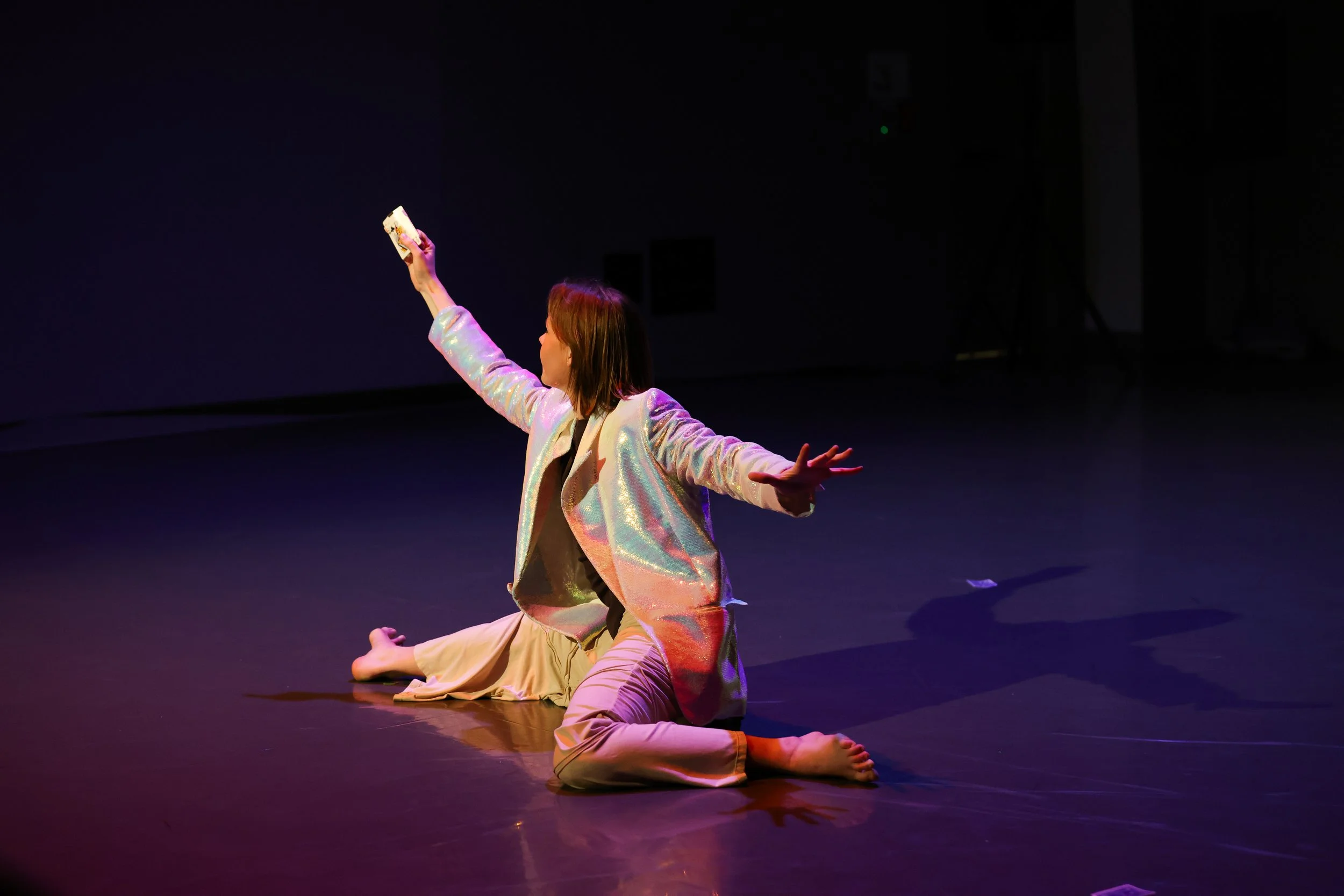
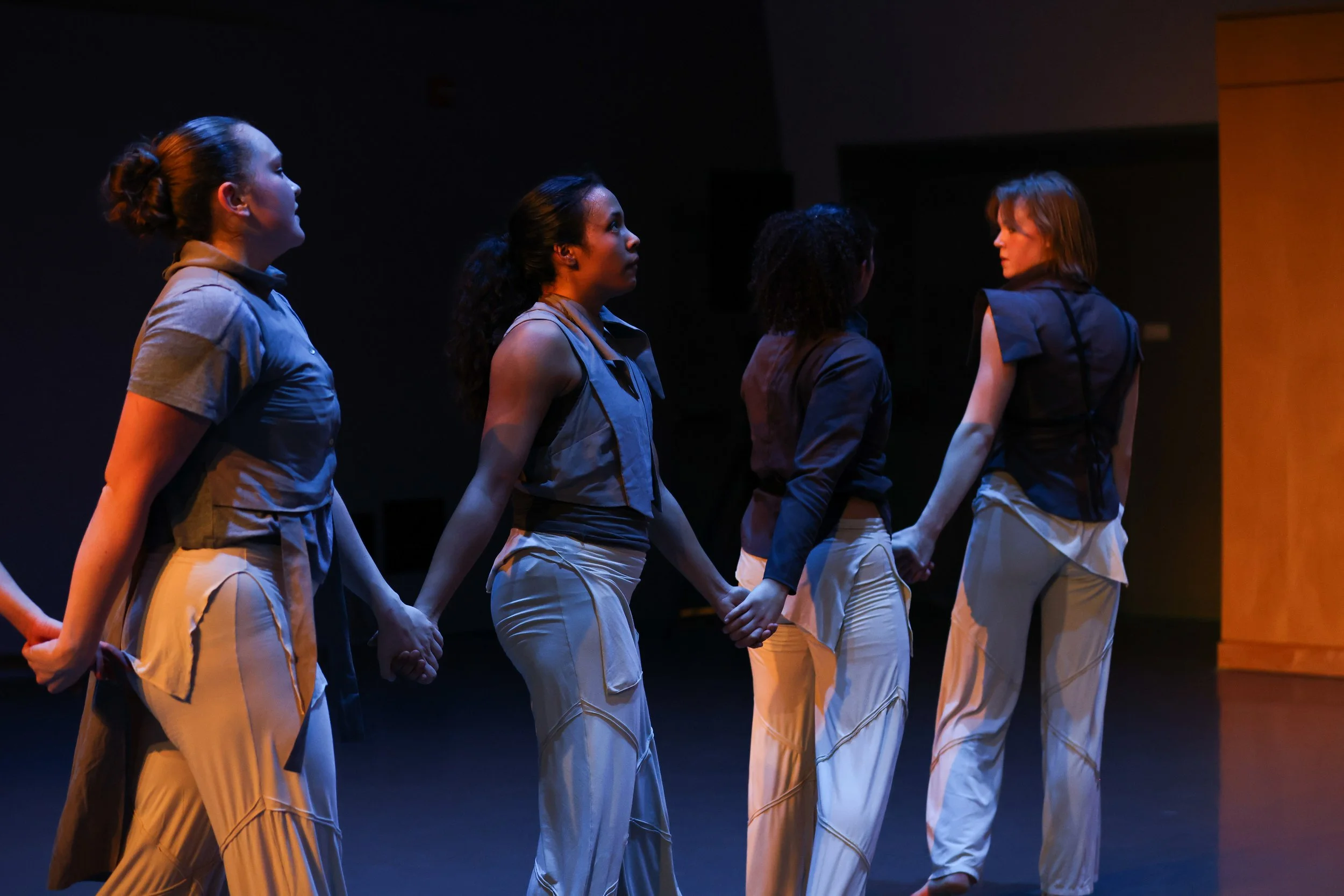

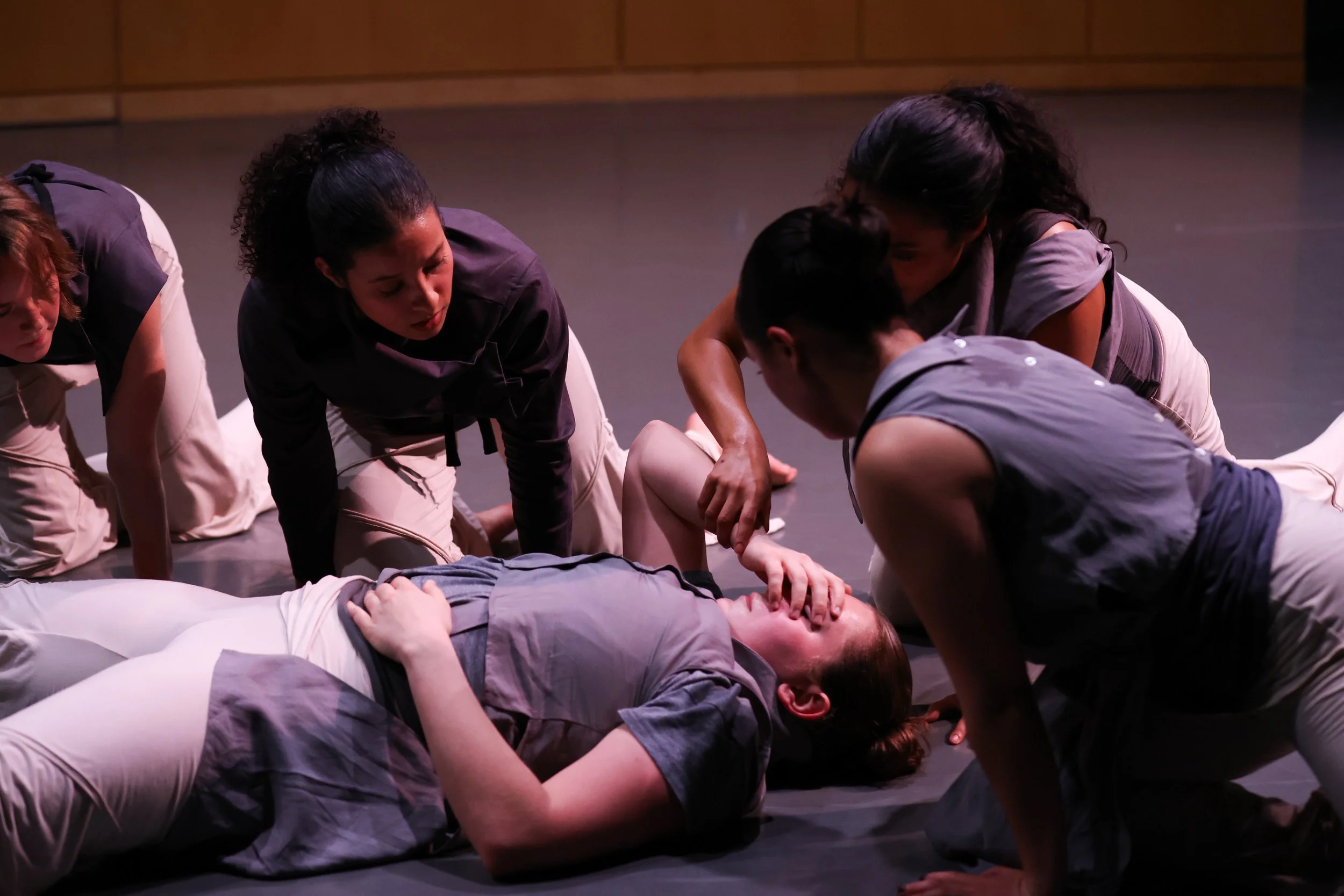
When Kayle began the process for this piece in the fall of 2024, she didn’t know what kind of dance to make. The bleak political conditions of the time made her question the purpose of making a new dance work. She wondered if she should make a political dance, responding to the issue itself, or if she should make a beautiful escape, something that her, her dancers and their audience could fall into or rest inside—something hopeful. The third option, and the one she went with, seemed inevitable; a dance about that exact dilemma.
This work was held up by several monologues written by Kayle herself. To write these, she reflected on what she reached for when she was in the depths of despair.
“There was a kernel of truth in everything I reached for, but a lot of it is BS,” Kayle said.
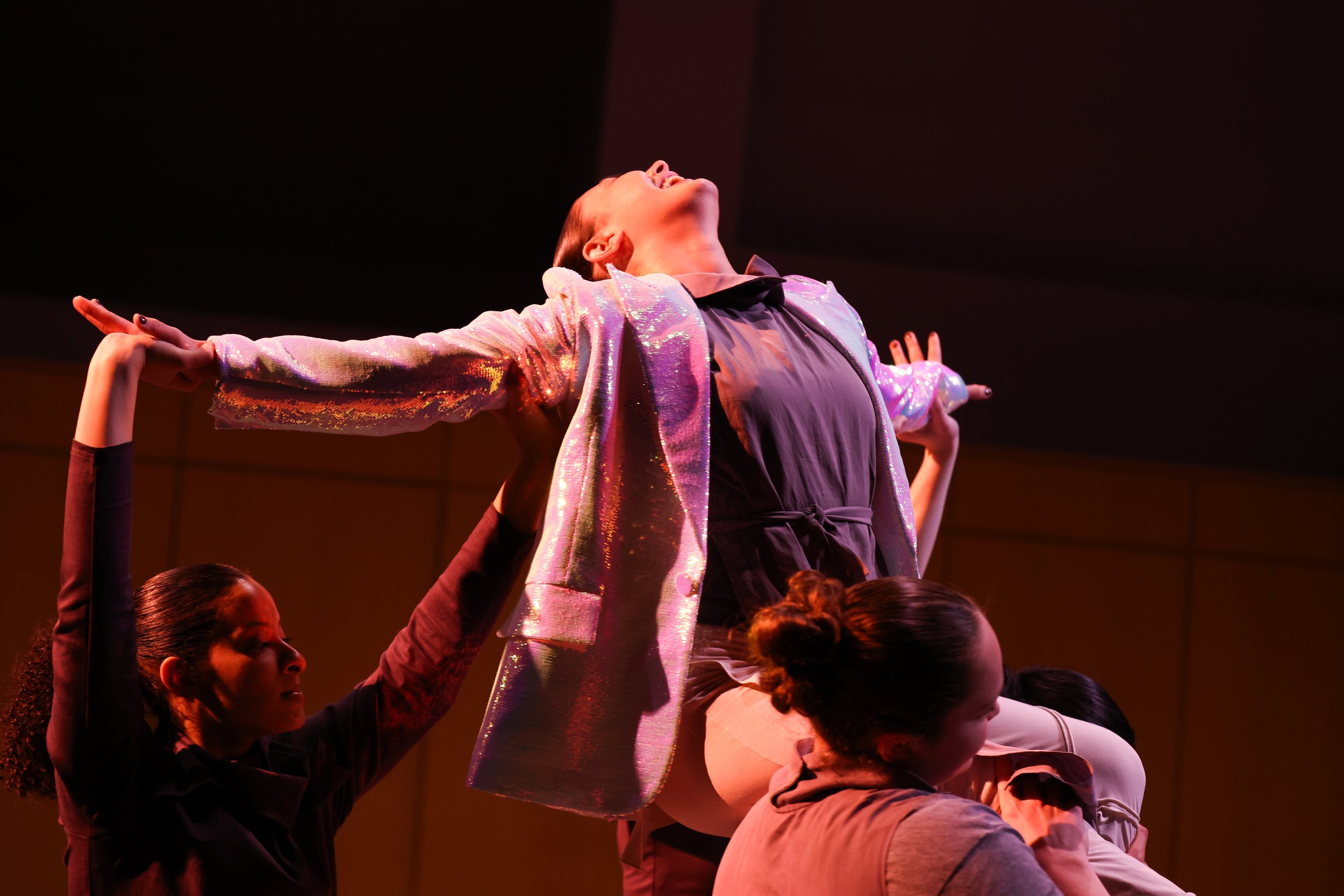
The result of this approach were several absolutely comical divertissements. At one point, the performers put on enormous button downs and performed vaudevillian box steps in desperation. In another, a range of sleight of hand card tricks and juggling by Claudia Jacobson. Throughout the work, a sequined jacket seemed to represent an elevated state of enlightenment whenever it was put on. Kayle and the artists expertly balanced levity with heaviness. The heaviness of this work was never a dramatic outburst; it was an ache for rest. Soon after the performers joined in on the lighthearted sections, they fell away, appearing to fall asleep. This fatigue feels familiar, the body feeling the weight of the external pressures despite the mind's attempts to overcome. The monotonous coaxing cheers repeated phrases like “the world is a mess, get up and get dressed.” Pouring out of this tune was that profoundly relatable effort of holding yourself together when it feels like everything is falling apart.
The characters these performers took on were in constant fluctuation: at one point, they are running about as cheery guides to optimism, and the next, they descend to the floor in complete shut-down. Kayle took on the role of the “all knowing” seducingly calm spiritual mentor through an audio recording played intermittently. The performers would desperately attempt to input her advice, embodying the struggle of that mediary state while one grasps for help. Keeping this voice disembodied furthers its own point— when you’re at your lowest, advice for self introspection might appear heaven-sent, albeit devastatingly out of touch. The undertone of this work is dystopian; it magnifies the highs and lows of existing in a volatile world. But throughout the work the audience is brought in on the joke, led through “three cleansing deep breaths” and cheers about overcoming imposter syndrome, interactions that were as genuinely comforting as they were self-aware. Despite their intentional irony, these moments cultivated a genuine team-spirit, shedding the boundary between audience and performer.
This show makes evident the symbiotic relationship between Iowa City and St. Louis. They are mutually nourishing, feeding artists, and art, across state lines. But on a conceptual level, this show highlights the value of art and dancemaking in times of great discontent; it provides the opportunity for escape, a medium through which one can call out against, and a form to navigate how to do both.
Photos provided by Carly Vanderheyden