
HQ Review: MADCO presents Remnants
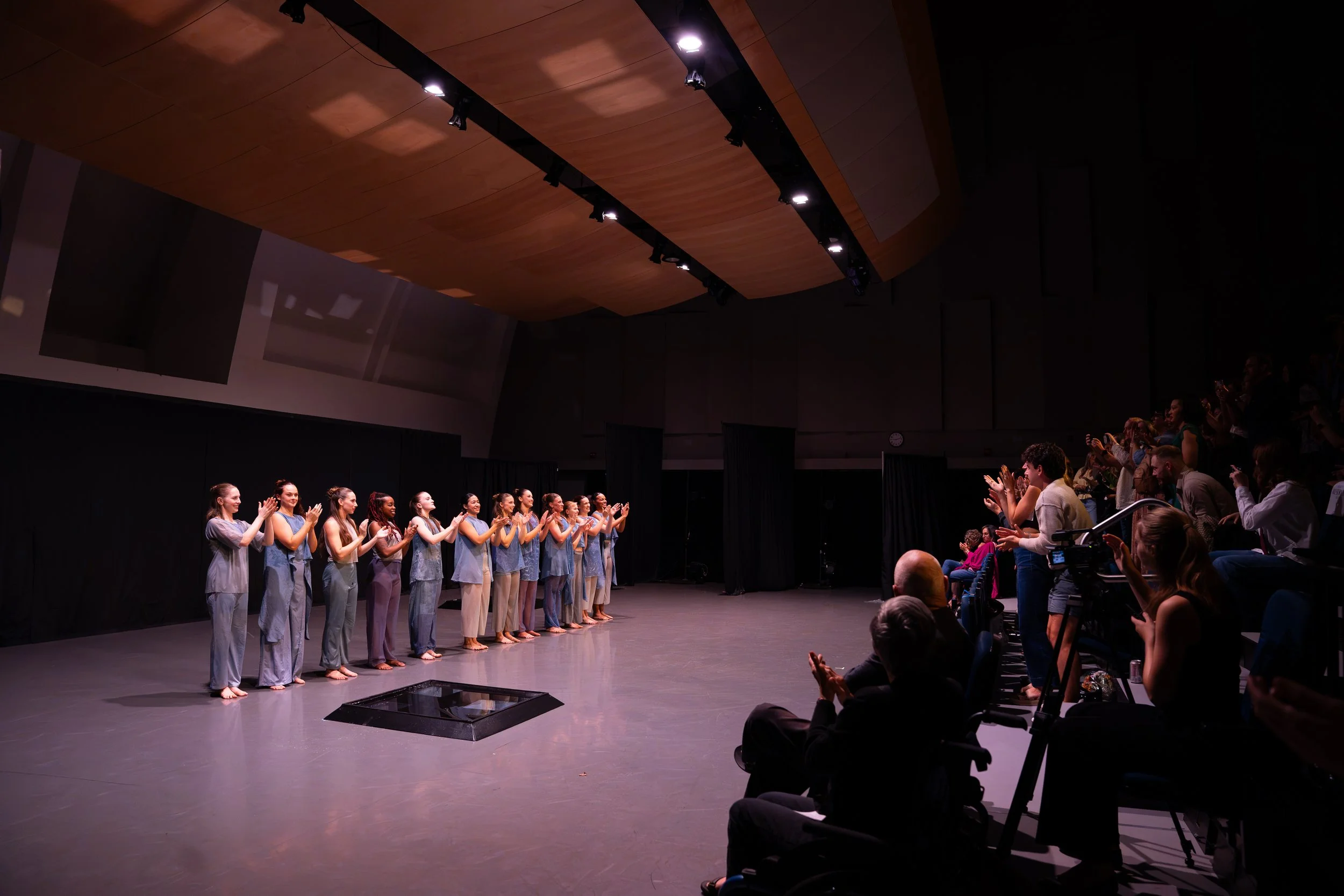
As Modern American Dance Company vaults into their 2026-2027 Season, they carry with them the legacy of 50 years of dance. Their latest concert, Remnants, is simultaneously a celebration of the company’s extended legacy, an acknowledgement of the past, and a herald of the future. The show weaves in themes of memories, community, and grief through a mix of new works and MADCO repertoire; despite this, the program feels fresh and relevant. As artistic director Arianna Russ shares in the opening statements of the concert, Remnants explores how the past stays with us, as well as what it makes way for moving forward.
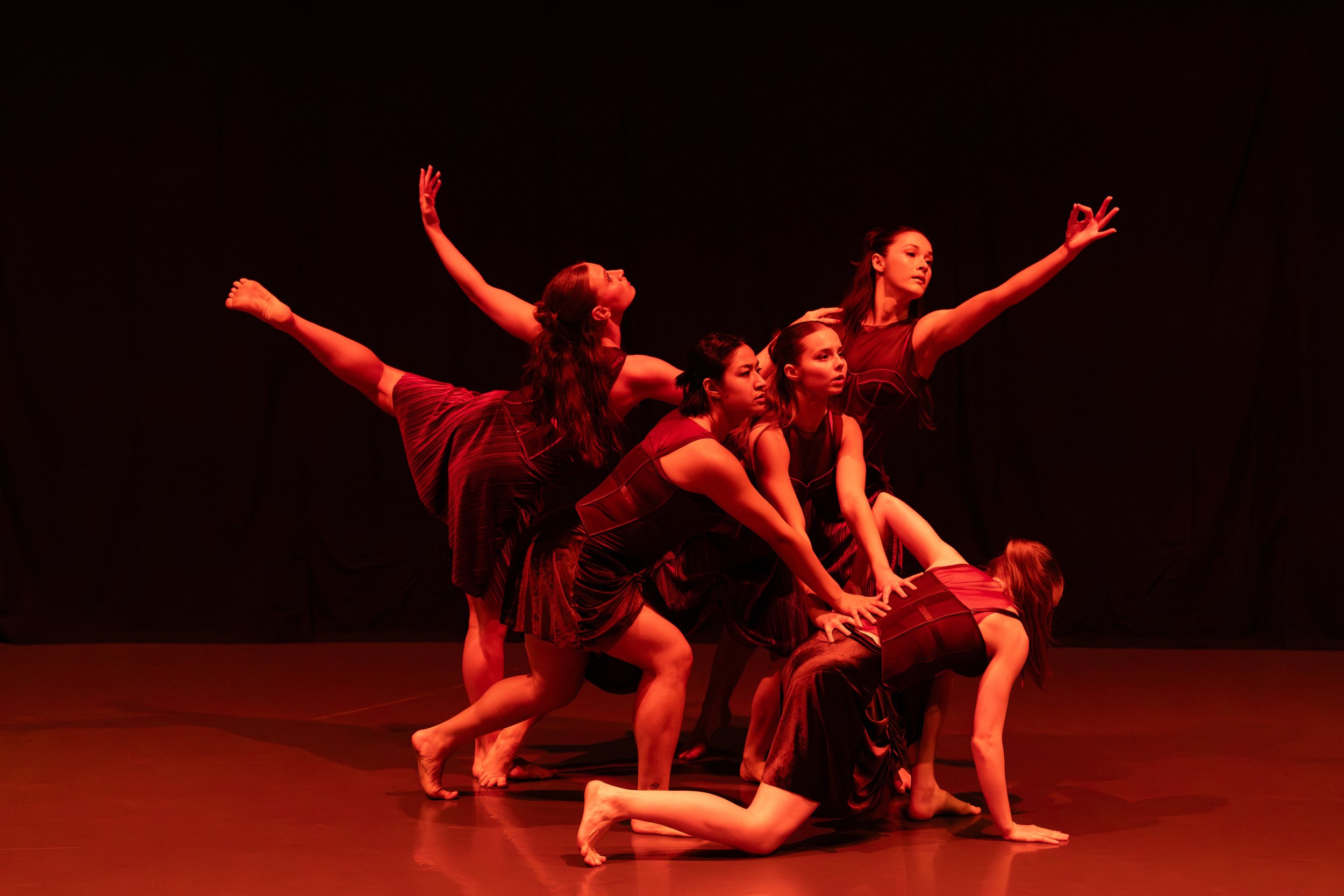
Carly Vanderheyden’s new work opens the concert. Memories from a Keepsake simultaneously weaves both bodies and stories with an expert hand. The lights rise on a statuesque gathering of five interconnected dancers, slowly spiraling in an endlessly morphing formation before dissolving into whirling trios and duets. Each movement was an exceptional display of athleticism and grace, perfectly suited to those dancing it. Suddenly, the dancers all turn to the back as the atmosphere becomes moody. Dancer Julia Lucarelli turns forward, eyes distant and focus internal. She begins to move, sharing her individual story. The others encircle her; another dancer joins Lucarelli, and Lucarelli runs off, leaving a new solo to occur in her wake. Solos continue to unfold in a daisy chain, each overlapping stories with the previous dancer. As all five gather back in the space, they unite to build each other up and break each other down in rippling canons. Slowly, the dancers all return to the initial stately shapemaking as the lights fall, returning to form with the new knowledge of the memories each holds dear.
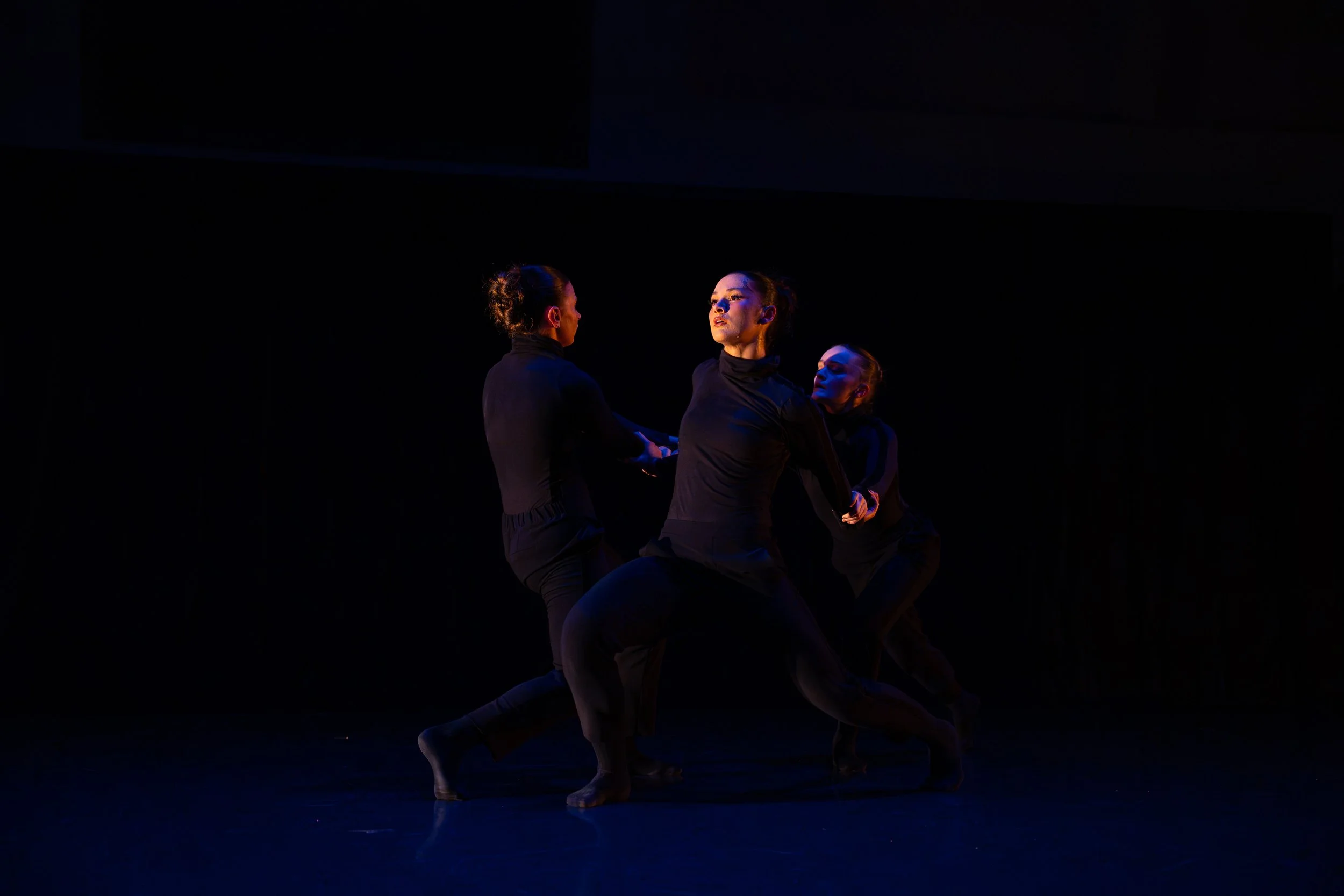
The second piece in the concert is a restaging of MADCO repertoire, An Alternate You by James Gregg. I found this work to be my favorite of the concert; the mesmerizing, hypnotizing performance felt burned into my memory. The piece begins without you realizing it, lights rising slow enough to be your own eyes adjusting. From the darkness, a monstrous creature moves forward on many legs; as it slowly steps into a brighter spotlight, it is clear the creature consists of three dancers moving as a collective being. The trio remains connected, heads pressed together and limbs fading into one another, eerily threading through each other in a pulsing, tangled mass. Arms unfold overhead, a giant jaw unhinging. As dancers stretch apart from one another, legs fly through the air and bodies move without pause. Each moment lasts a little longer than what is comfortable, creating a constant ebb and flow where time becomes elastic. The dancers are a collective, all existing as mirrors of the others, permanently tangled. Each dancer slowly finds themselves as an individual, and must reckon with the shadowy counterparts they once leaned upon. They delicately explore their newfound singularity, with the others haunting the periphery of the stage, simply observing. Each dancer feeds off the others’ movements, fluid and mysterious; eventually connecting back into an amorphous blob, united again. The dance begs the question: can you ever truly separate yourself from the qualities that haunt you?
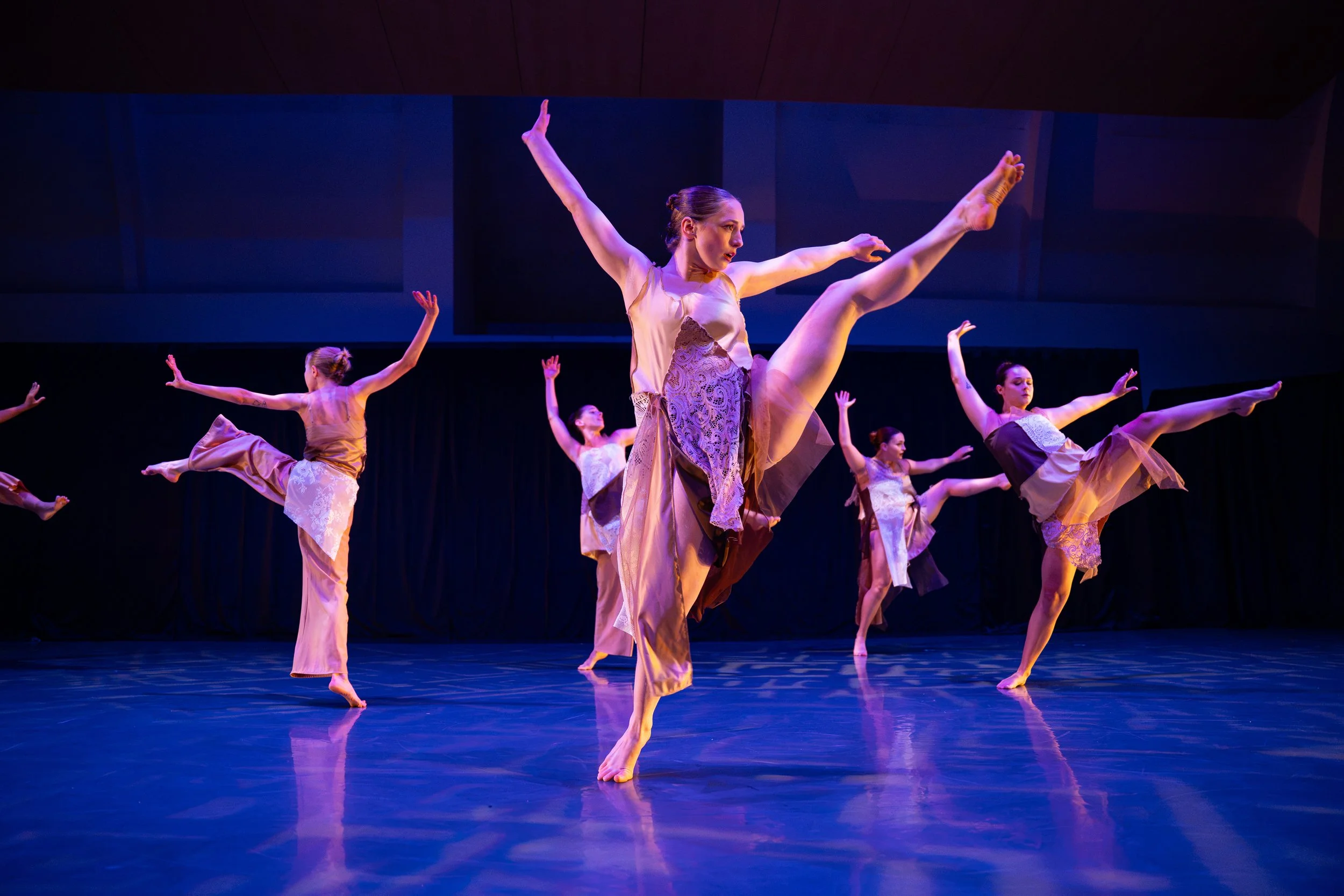
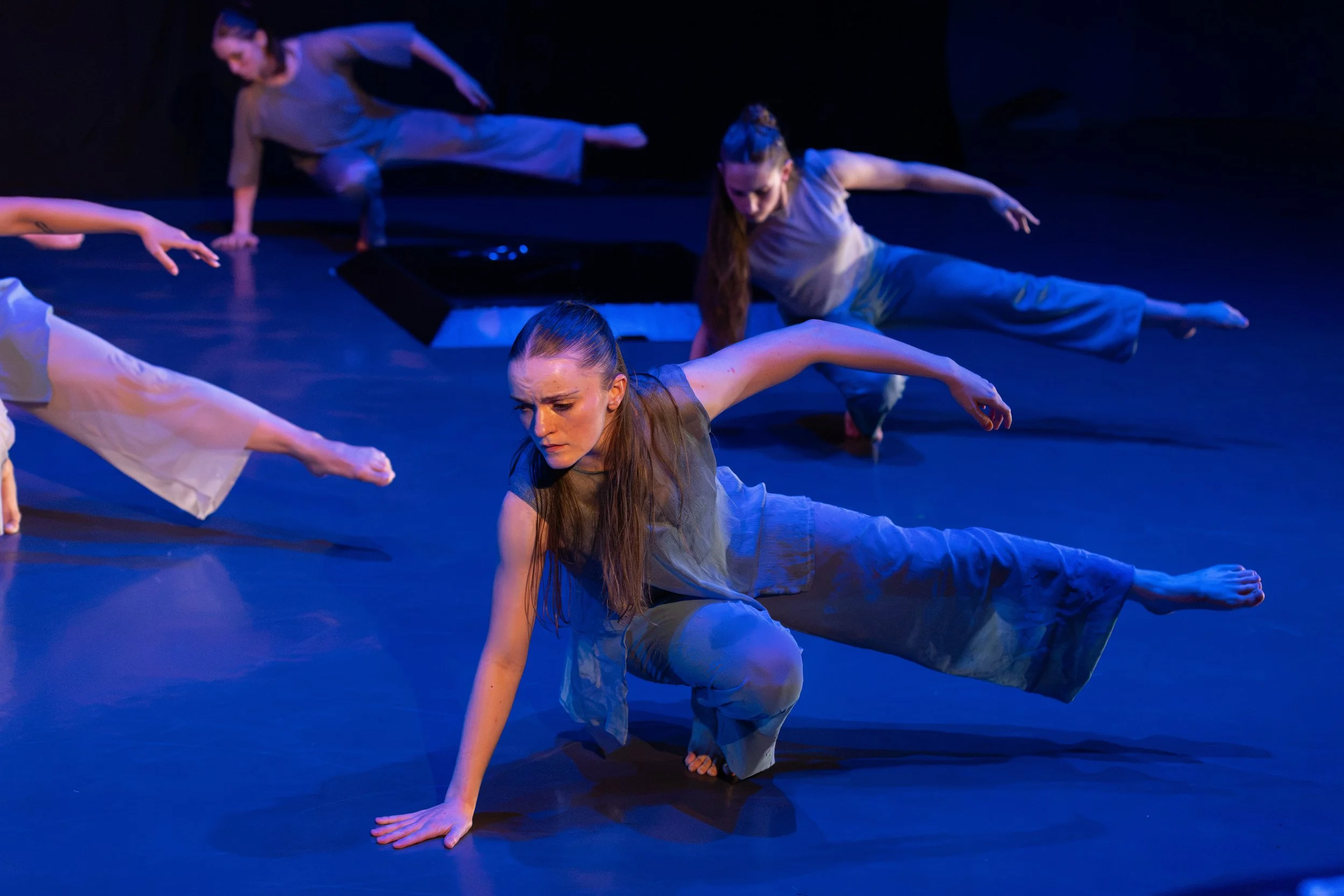
Continuing with director Arianna Russ’ new work, The Residue of This ricochets between intimate moments of self reflection and community to fast, powerful ripples of ecstatic movement. The work begins with a simple gesture, a covering of ears, that rapidly expands into a full lexicon, individualized to each dancer. One dancer, Olivia Cesarano, begins to shake. The group shifts into pacing around the now ostracized Cesarano, observing her tribulation. Communities build up around her, groups moving across the stage in waves, a montage of reaching limbs and fluttering silk. Dancers move through gestures as if they are holding the ghost of a dance partner in their grasp, a duet with a memory. One standout of this piece is the stage presence of the cast: grounded, commanding, full of emotion, and readily conveying it all as the work marches onward. Later, the dancers find solace in duets, except for Cesarano, leaving her to reckon with her solitude as she bears witness to the connection around her. Ceserano is reeled back into the collective as the dance becomes frenetic, fast, and powerful. Russ’ movement emphasizes what is left behind, and explores how memories linger in the body. The work ends on Ceserano, now paired with Mady Buerck, as both parse through their memories. Each returns to personal motifs as they dance together while lost in their own thoughts.
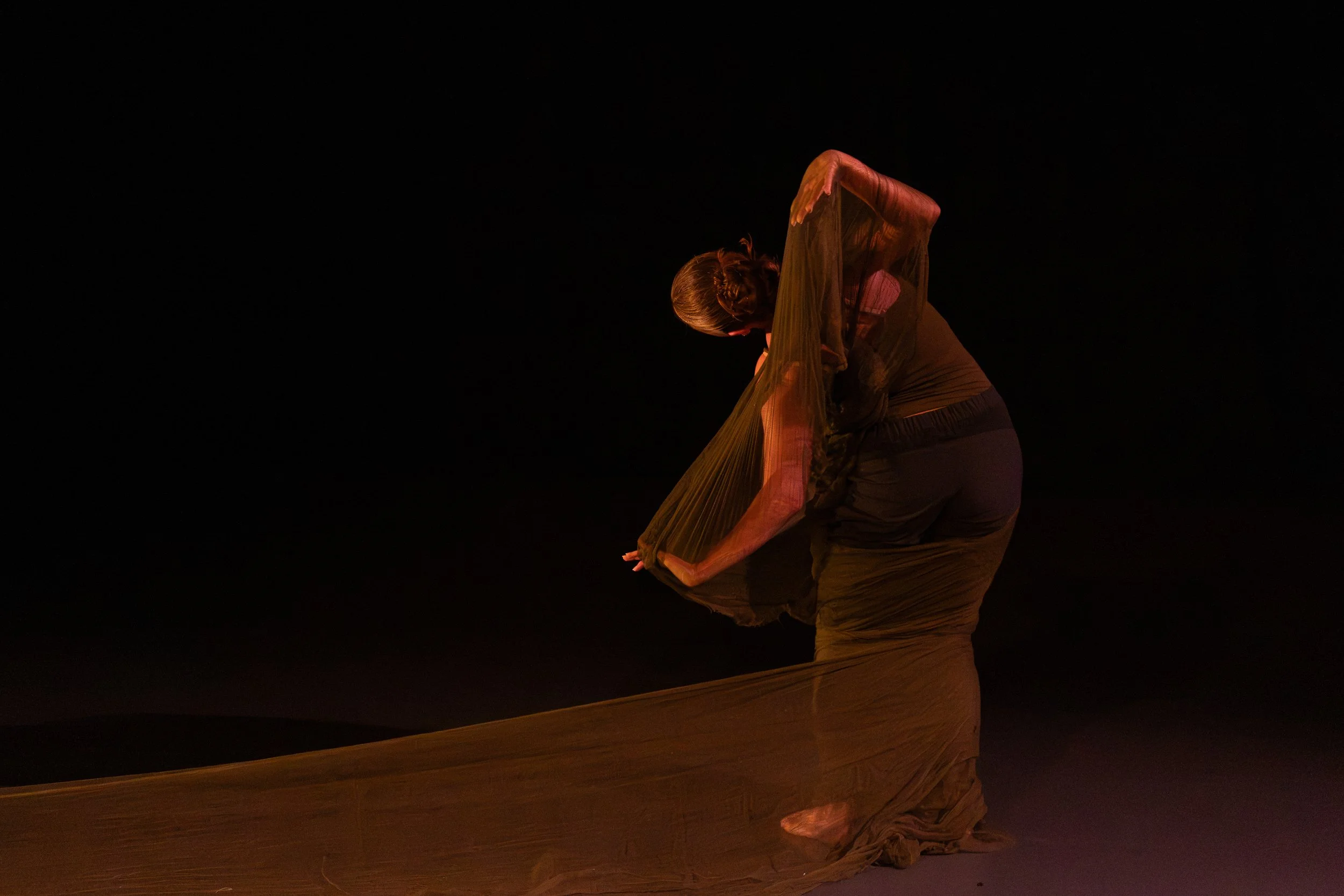
Raveled feels like the core of the concert. As the only solo of the night, it certainly stands out. Created by Arianna Russ, dancer Sidney Cowles is the poster child of the show, entangled in green gossamer fabric that emerges from the wing and pools on the floor. The fabric comes to be a tether, the weight of history upon one’s back. Cowles interacts with the fabric in many ways. Occasionally it is a restraint, sometimes a safe space, sometimes a path to walk along, a lesson. Cowles slowly entangles herself in the fabric before rapidly spinning out, moving through the restraints of the winding material around her. She breaks out of the tether connecting her and begins to view it with a different eye. Music swells in the space as she cautiously walks along the fabric strewn across the floor, as if it was a tightrope. She alternates between drawing herself into the safety of the fabric, and similarly, the past, just to burst back out of the cocoon she made herself. Breathing heavily, Cowles searches the space and slowly lays down. In silence, she winds herself up into the darkness.
Closing the concert is a very special work from MADCO’s repertoire: Reflections in the Pools of Solace by Joseph Mills. This work was created in the wake of 9/11 as people across the country grappled with grief and searched for peace. This recent performance is a look back into the past, as this piece was created in 2011, but also a lesson for the future, as we move forward into unprecedented times. Reflections features two pools of water on the stage, the bottom of each pool embedded with mirrors. When the lights come up, shimmering webs of reflections are thrown onto the ceiling. Dancer Julia Dawson runs onstage, searching in alarm. She kneels over a pool and lets the water drip through her fingers. Dawson appears unsettled; turning weightlessly, hair fanning out in the air. Some dancers flit across the stage like birds, running and leaping, while others quietly observe. The metaphors of this piece are clear and strong: the dual reflection pools, the marching of dancers across the stage, the holding of dancers. One particularly poignant scene featured dancer Cassie Callahan fireman carrying a limp dancer downstage, lights casting shadows along their figures and Callahan’s face drawn up with grief. In the final moments of the dance, Dawson returns to the pool and steps in. The water provides a moment of solace. She cups water up to her face and lets it cleanse her, both literally and figuratively. Overcome with emotion, she lays down, curled up in the water. The dancers lean on each other in this work, reminding us that healing from tragedy can only occur when we rely on our community.
Remnants was a memorable concert, and not just because of the gorgeous dancing; the natural through line of the works was expertly curated, and negotiated the questions any longstanding company will face in its time. Beyond that, the lessons felt just as relevant to me as an audience member: What are the memories I hold dear? How does grief shape me? What legacy do I want to leave? With that, I left the show inspired and excited to see how MADCO continues to unfurl this season.