
HQ Review: RESILIENCE Dance Company and Continuum Vocal Ensemble present “Speak Easy Move Loud”
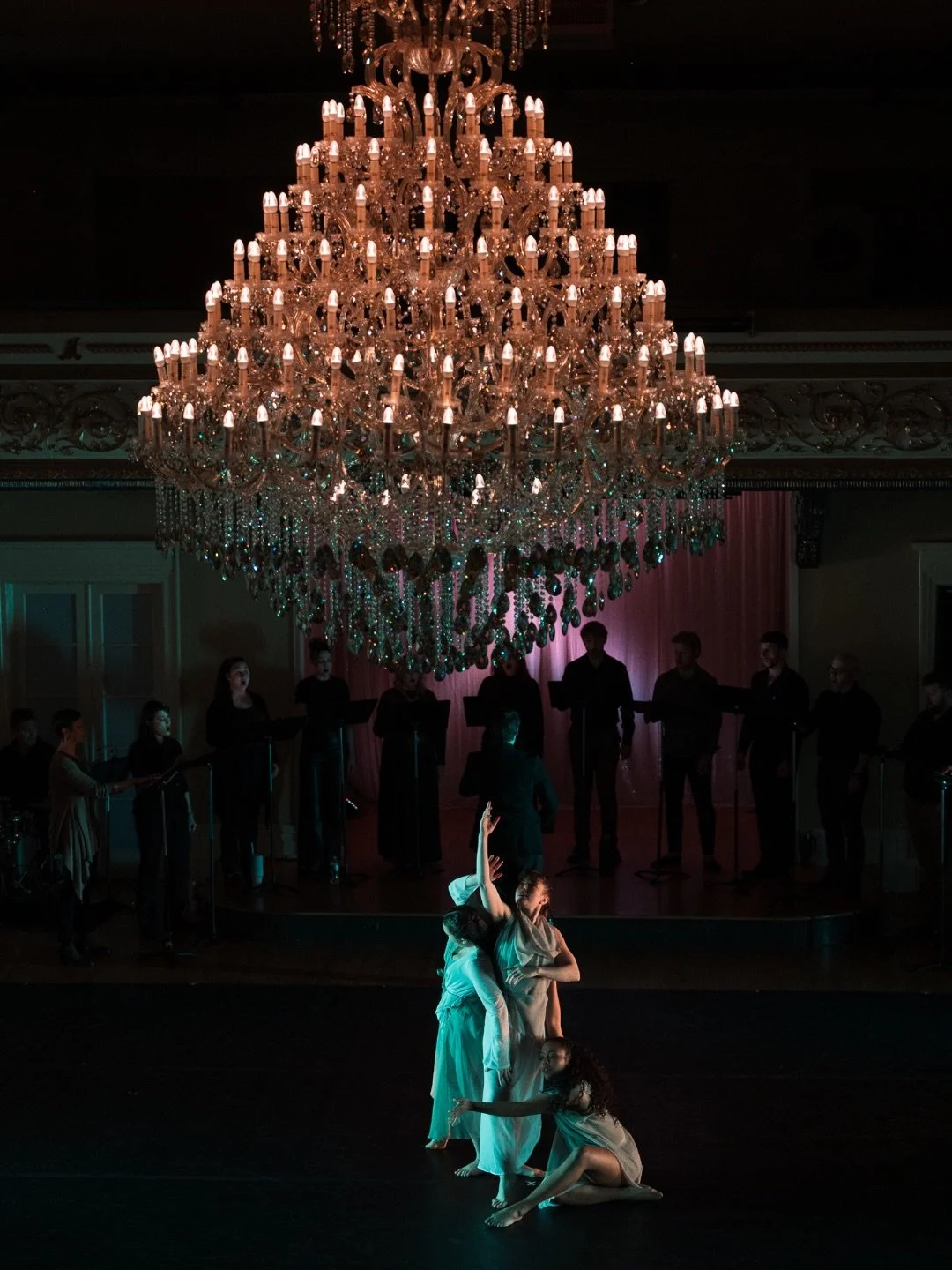
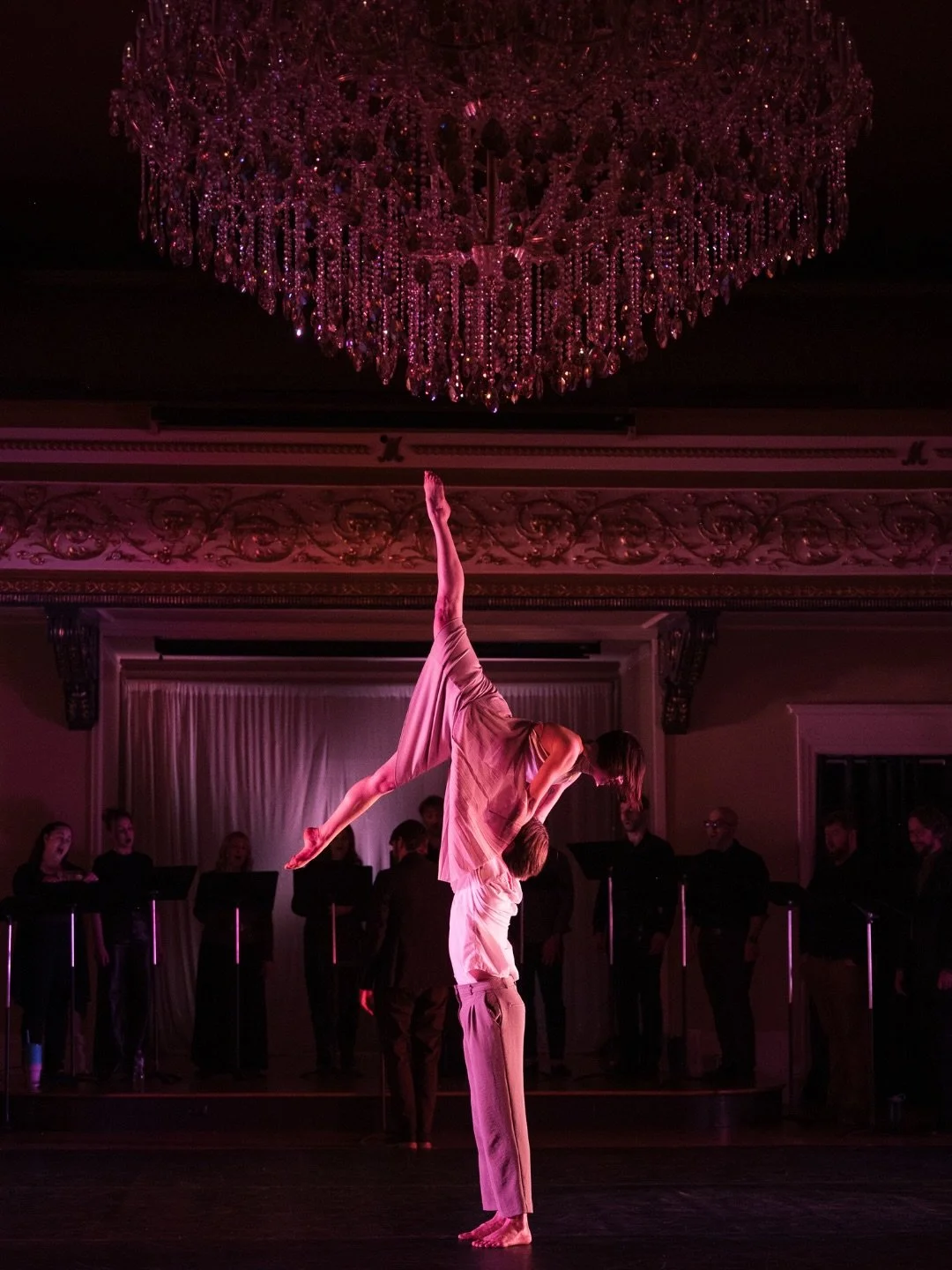
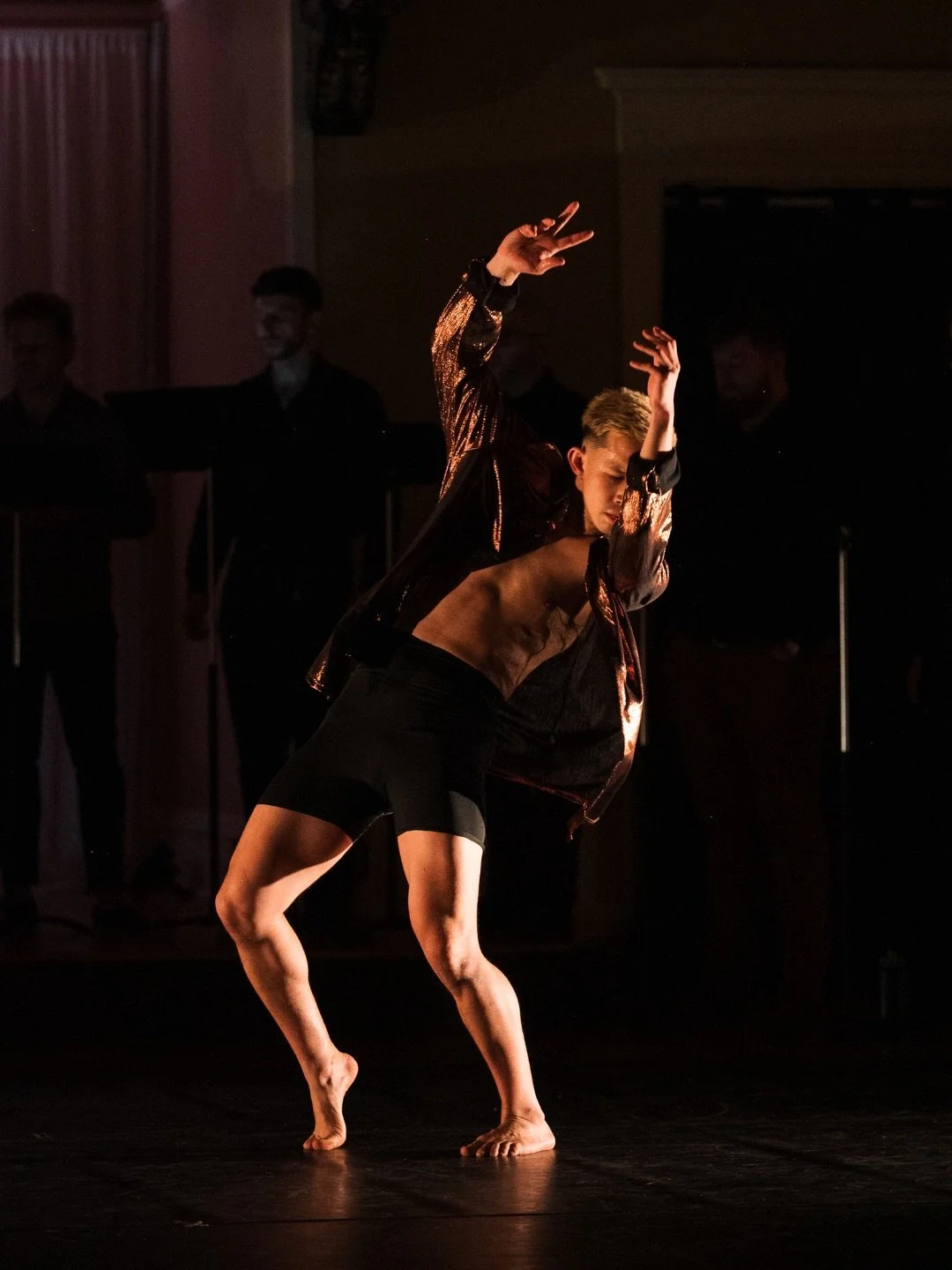
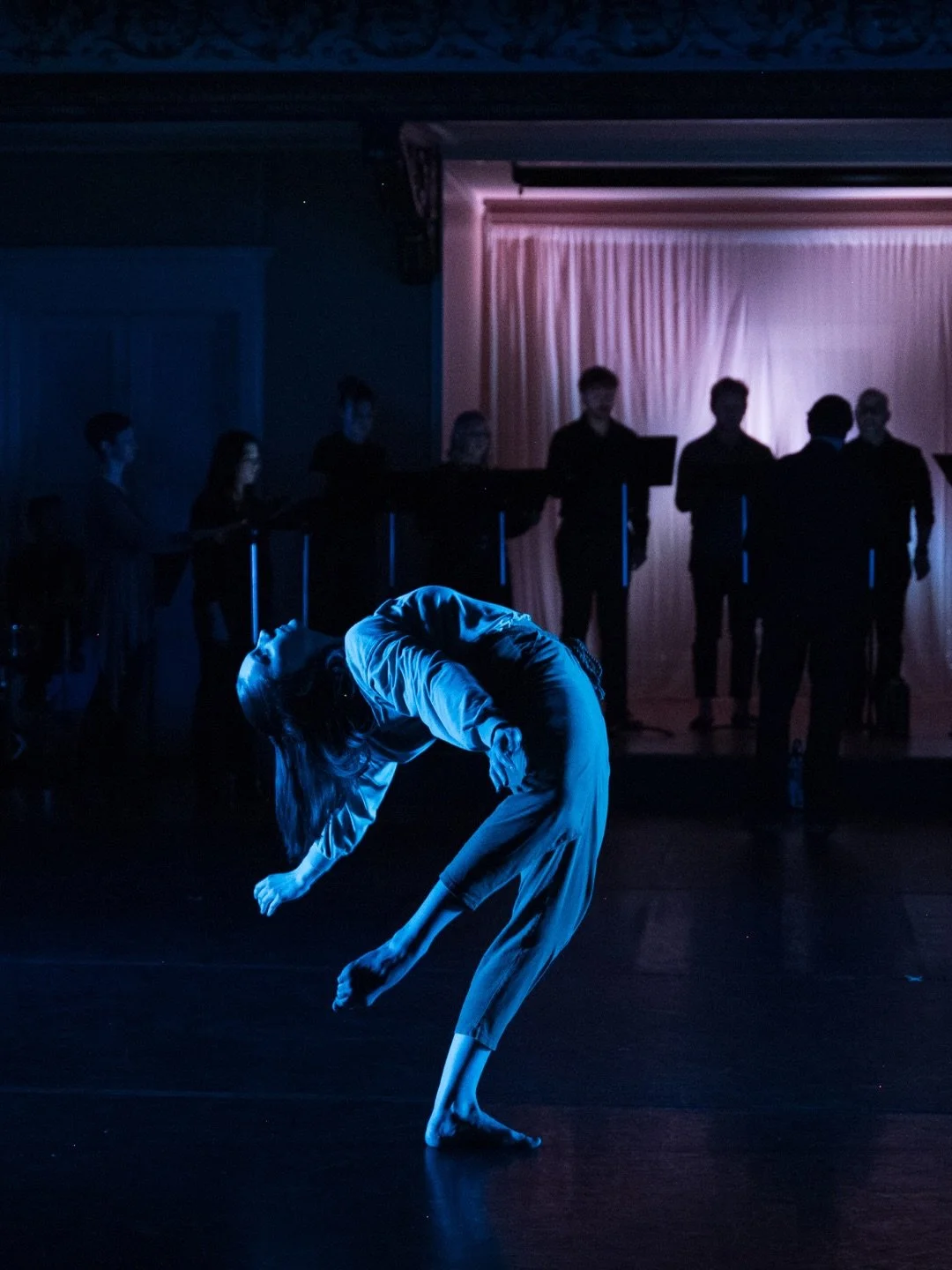
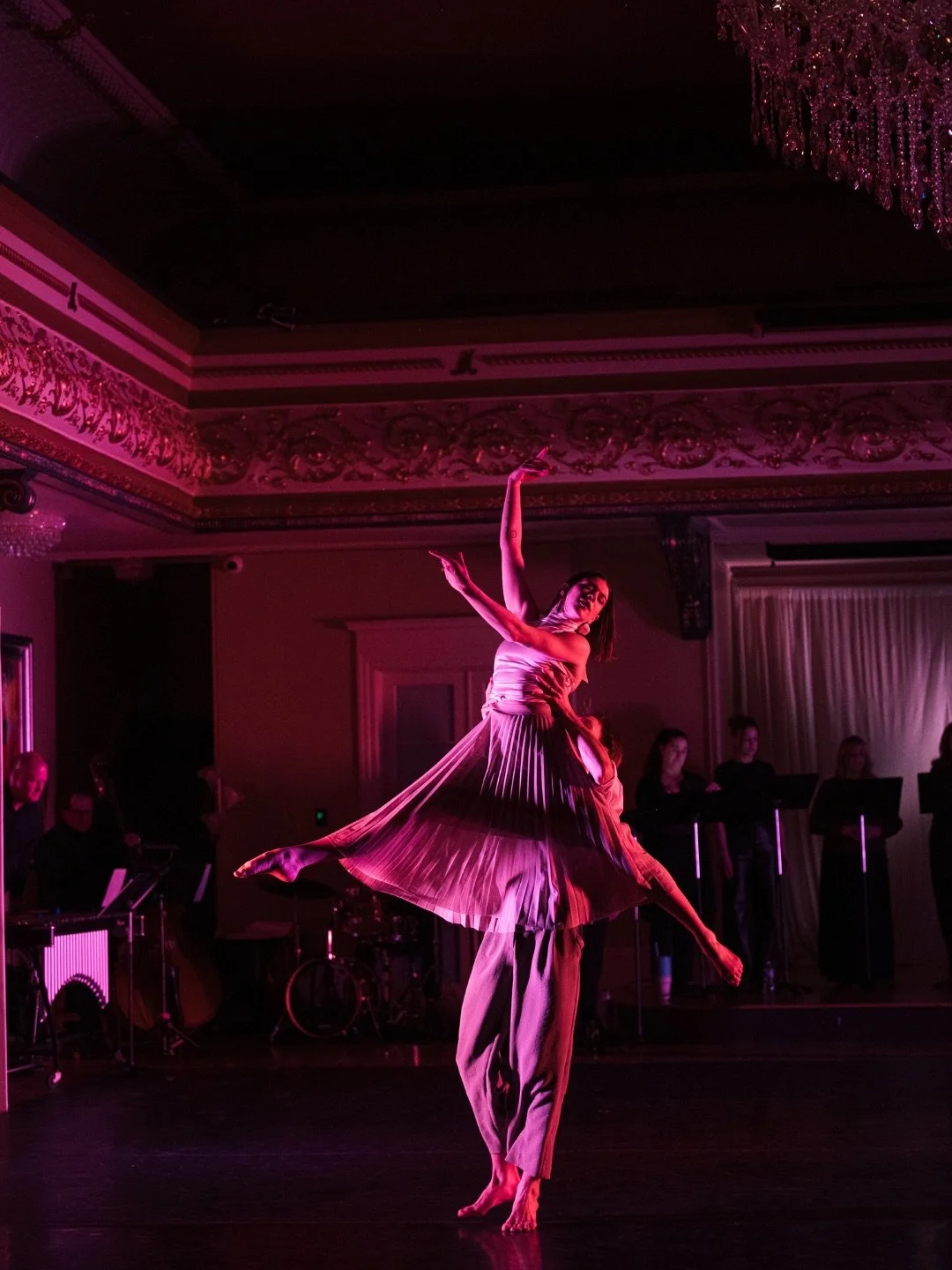
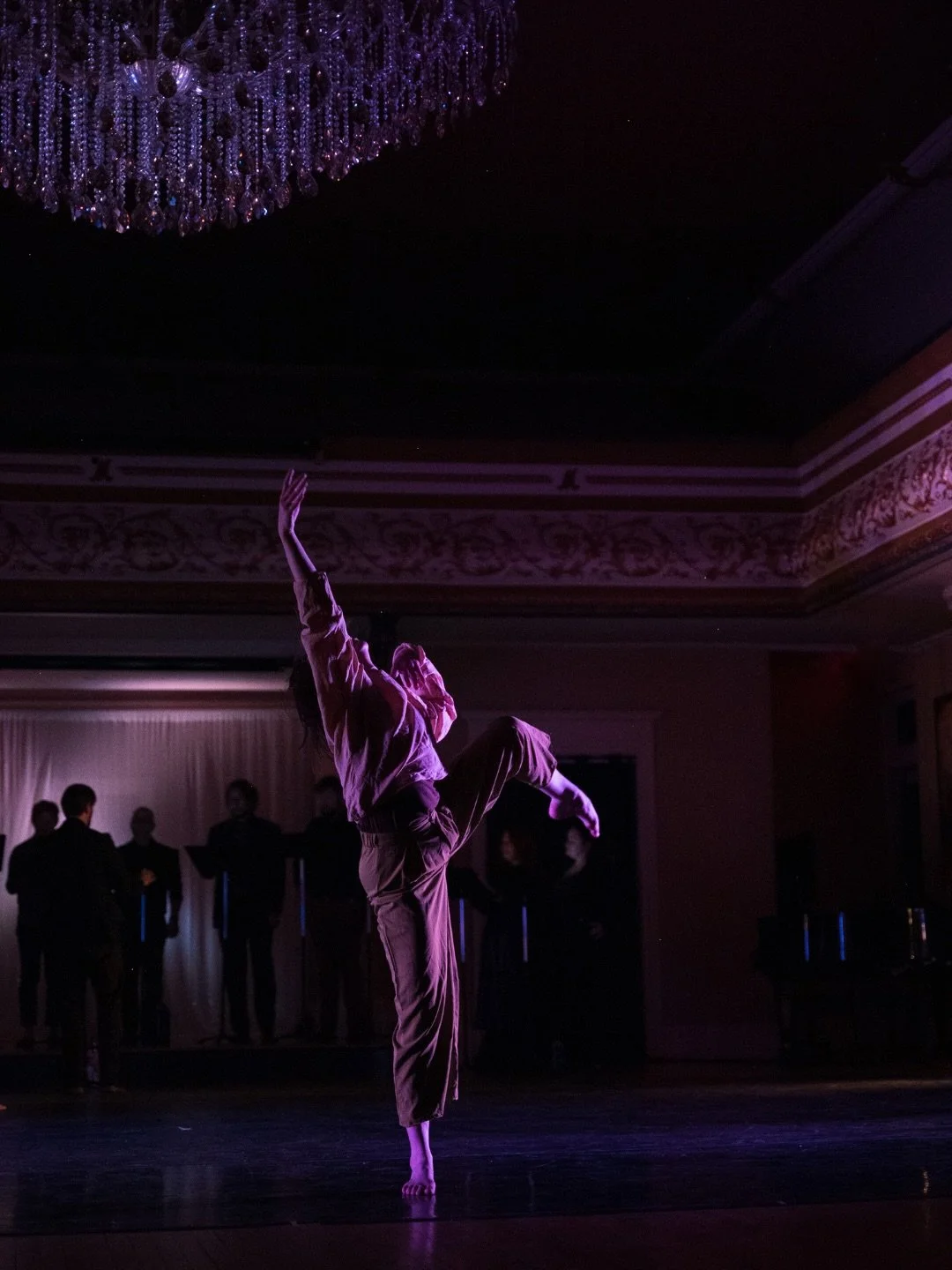
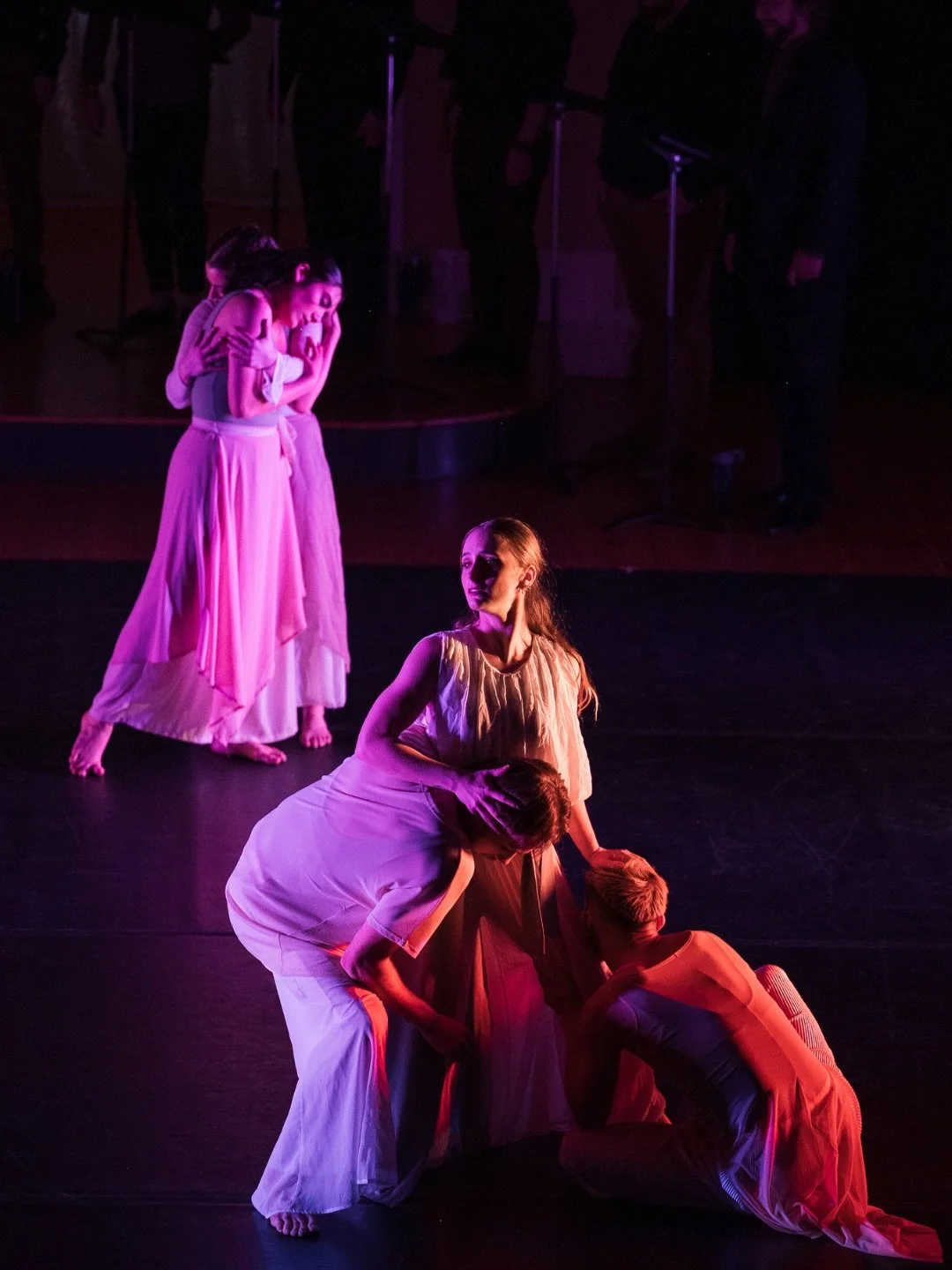
Under the lavish chandelier of the Mahler Ballroom, Resilience Dance Company and Continuum Vocal Ensemble came together with a similar extravagance for “Speak Easy Move Loud” February 6 and 7. The two young companies combined their hunger for interdisciplinary collaboration with a cross-era program, aiming to bring the political and creative upheaval of the 1920s into conversation with America’s current climate.
Resilience debuted eight pieces created in response to a selection of choral works. An outstanding effort by Continuum’s Artistic Director John McDonald to select musical compositions from both the 1920s and the 2020s featured text from celebrated American social reformists and writers like Langston Hughes, E.E. Cummings and Walt Whitman. The opening remarks by McDonald and Resilience’s Artistic Director Emily Haussler recommended the audience try not to “figure it out,” but to “figure out what engages you.” For two companies that value community, this advice was one of several attempts to bring together Resilience’s typical viewership with an audience who is potentially less primed for viewing dance.
The digital program accessible via QR code included a dense reading list featuring texts that investigate queerness, gender identity, and the Black American experience. Books relating directly to St. Louis included “The Last Children of Mill Creek” by Vivian Gibson and “Gay and Lesbian St. Louis” by Steven Louis Brawley. On paper, and surrounded by the echoes of the historic social hall that no doubt saw its heyday in the Jazz Age, the evening’s programming held the potential for an insightful exchange between decades and artistic forms.
The program note for the third dance work, “Song of Myself,” brought up layers of identity. “How do we, as a community and a society, make space for individuals to thrive as their authentic selves?” Albeit a broad investigation, throughout the work we see the establishment of individual and group identities as the artists weave between full company connections into solo moments.
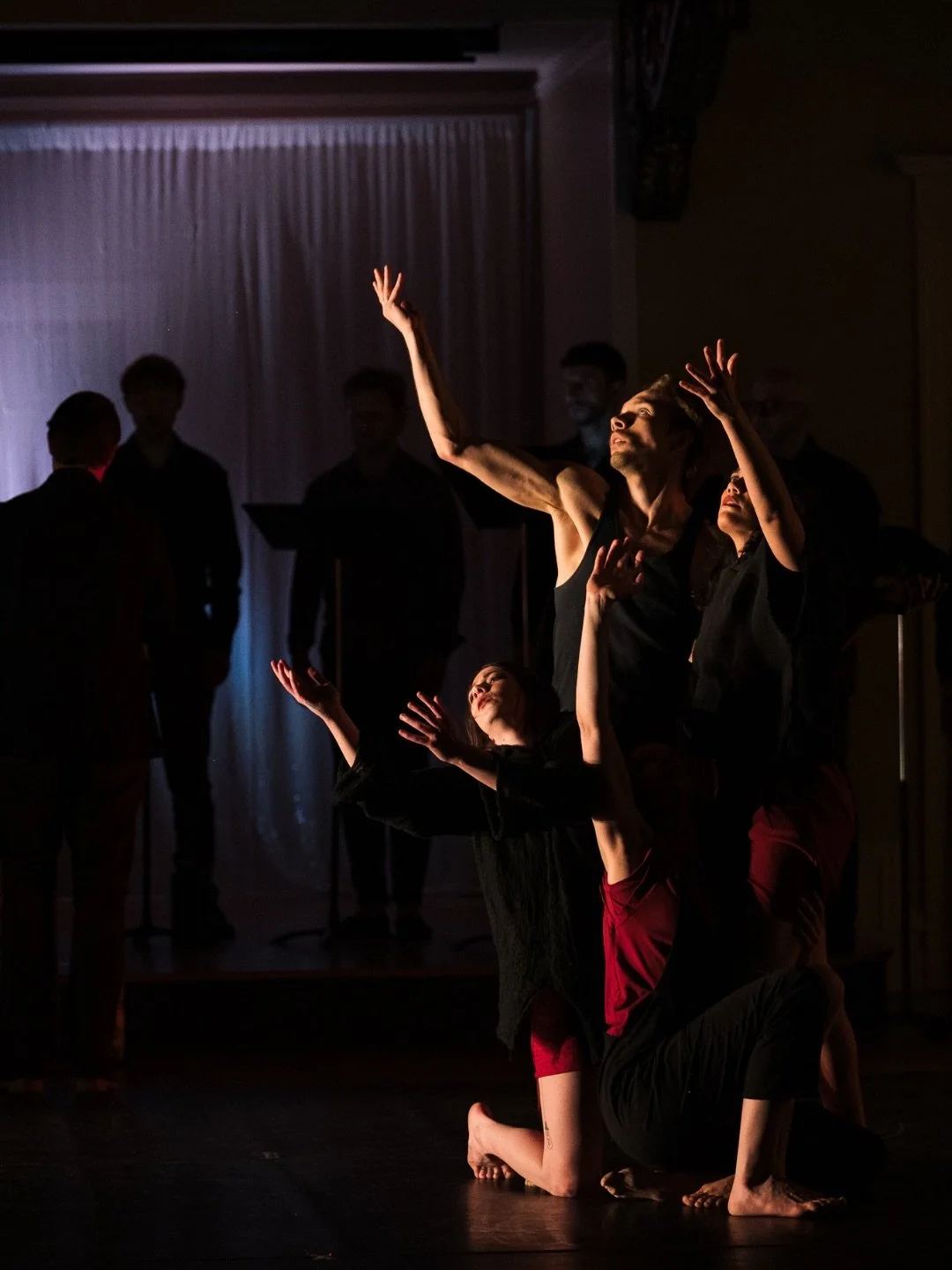
Falling in with individualized qualities, the company collected to a central point, arching and diving with increasing risk to the rising volume of the vocalists. Spreading—or more accurately exploding—into technically meticulous phrases, they showcased a faster-than-light transitional skill that kept the eye active and the space alive. As a whole, and as feels characteristic to much of Resilience’s creations, the progressions of these works throughout the show are rarely, if ever, expected. The makers and dancers don’t just ‘use’ the space, but consume it.
The heart of this dance came into clear view as the flurry settled, four dancers sat facing upstage, watching as Josiah Gunderson took center. The lighting shifted, and for a moment we see a man, maybe embodying Whitman himself, exploring his own rich internal world while still facing the external. Wearing his guts on the outside, the source of his impulses are unnamed but clearly arresting, and boil down to the phrase being repeated by the vocalists, “I exist as I am.” This moment of humanity, holding both the beauty and the tragedy of being, brought Whitman’s words in Song of Myself to life.
This show made noticeable attempts to connect to a broad audience, this decision bleeding into content most visibly in the fourth work of this show that brought together a romantic duet titled “Always” with a quartet performance to the plucky jazz composition titled “Blue Skies.” Both works underscored the company’s range. Using classical ballet forms in a contemporary context, the duet “Always” performed by Chrissy Clair and Nathan Krueger was fluid, dreamy and playful. Complete with kick-ball changes and Suzie Qs, the quartet “Blue Skies” soundtracked by the lively instrumental trio Jazz Troubadours was a direct call to the jazz undertones of the show’s concept. Gauging by the audience's applause, these were successful crowd pleasers, and well received for good reason—these artists show a clear ability to effectively engage and excite an audience in any style they choose to take on. Taking nothing away from the impressive range of the artists and choreographers, the result of these content-level decisions were works that felt—to use a musical pun—fairly “one-note.” They exist for what they are, not necessarily dedicated to moving forward the conversation we were primed to engage in, a dialogue between decades. A valid point could be made that the conversation is held within the movements of the dancers themselves; works made in the 21st century, using contemporary forms but holding hinted echoes of the past.
To further that point, a live improvisation build designed “to honor the improvisational aesthetics of the 1920s” saw a duet by Lexie Hoehn and Michelle Parkhurst alongside a full company response to audience suggestions. On opening night, these suggestions were for the artists to run, gracefully, drinking coffee. The result was a comical diversion from the highly set preceding works. Conceptually, this was a fitting way to call back to the conversational, spontaneous emergence of jazz music and movement; the backbone of the act held up by the Jazz Troubadours’ playing.
Diverging in tone, “America Will Be!” choreographed by Jorrell Lawyer-Jefferson and danced by the full company brought together technical prowess with a more understated emotional intensity. While virtuose, there was a fullness of emotion that was amplified by stillness. After bursts of unison and frenetic discord, a moment stood so solidly on its own it could speak for much of the nation at present; as the vocalists sang “America was never America to me,” the dancers slowly lifted a shaking right hand across their chest, seemingly battling the urge to cover their heart in a gesture of patriotism. “And yet I swear,” the song continued, the dancers swarming into movement once again. Then dragging pressed palms up their body in a sort of prayer, and with the resolute final note, “America will be,” they dropped with an exhale, turning their heads to the left—seemingly to the future.
It was “Lincoln,” a solo choreographed and performed by Josiah Gunderson, that brought into full view the question left hanging in the air following this concert. The dynamic shift began with a slow crawl in from upstage left into a shaft of light, a welcome appearance of somatic vulnerability. Transforming as the vocalists rose in volume, his soft aliveness began to convulse from a place deep in the gut, shifting the manner in which the works of the night engaged with the music thus far; the dialogue felt less like a one-sided conversation and more like an emerging response. The nature of this solo work, performed with such individual conviction, allowed a truth that transcends the pick-a-side political allegiance of our American landscape: it's about people. To witness a singular voice, a sole body, figure through pressures that have stalked the American people over the last century—pressures like oppression, greed, lies, and how to go on through the mess—made the agony of these times that much more personal.
So then, the question hanging in the air is this; in what direction is the company growing? Josiah, the most veteran member of the company, refreshed this show with an experimental quality that once felt vital to Resilience’s programs. This collaboration between the dancers and the accompaniment seemed to urge more dramatic responses throughout the show. Powerful washes of sound resulted in equally potent material that at times felt overwhelming without sufficient pause. It is difficult to point to any one cause apart from the nature of this collaboration and the sonic landscape it provided. What was lost, then, might be a more nuanced subtlety present in previous shows by the company. In terms of concept, Haussler found a way to highlight the company’s range within a timely theme, avoiding the pitfall of overwhelming the audience with overly depressing material that could proceed from a show questioning our political climate as it relates to the 1920s. Collaborations press forward toward a shared power, but can run the risk of blurring individual voices in the pursuit of exchange. That said, Resilience did not shy away from the challenge set before them, overcoming any possibility of being overwhelmed by Continuum’s commanding presence.
Photos by Lumosco