
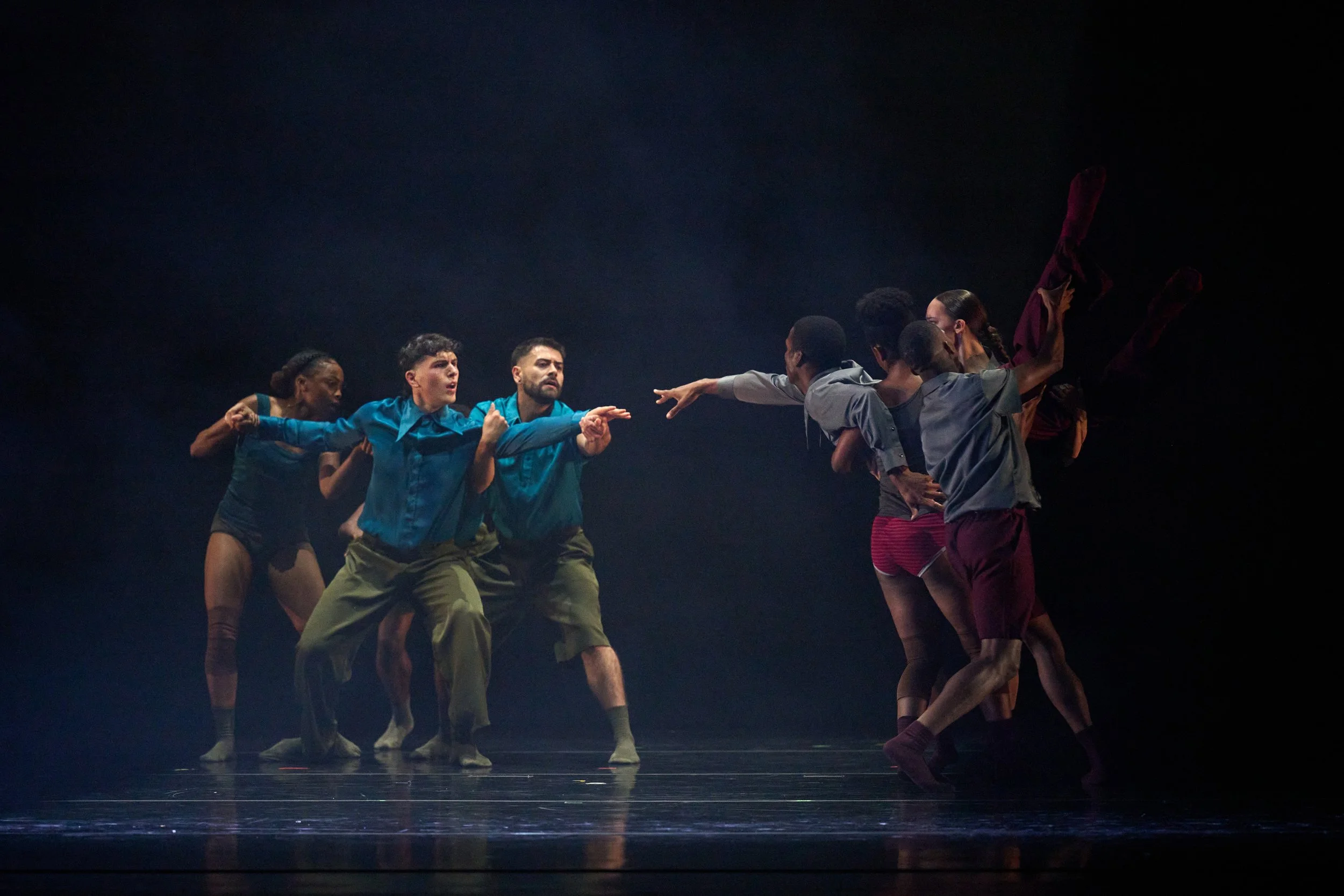
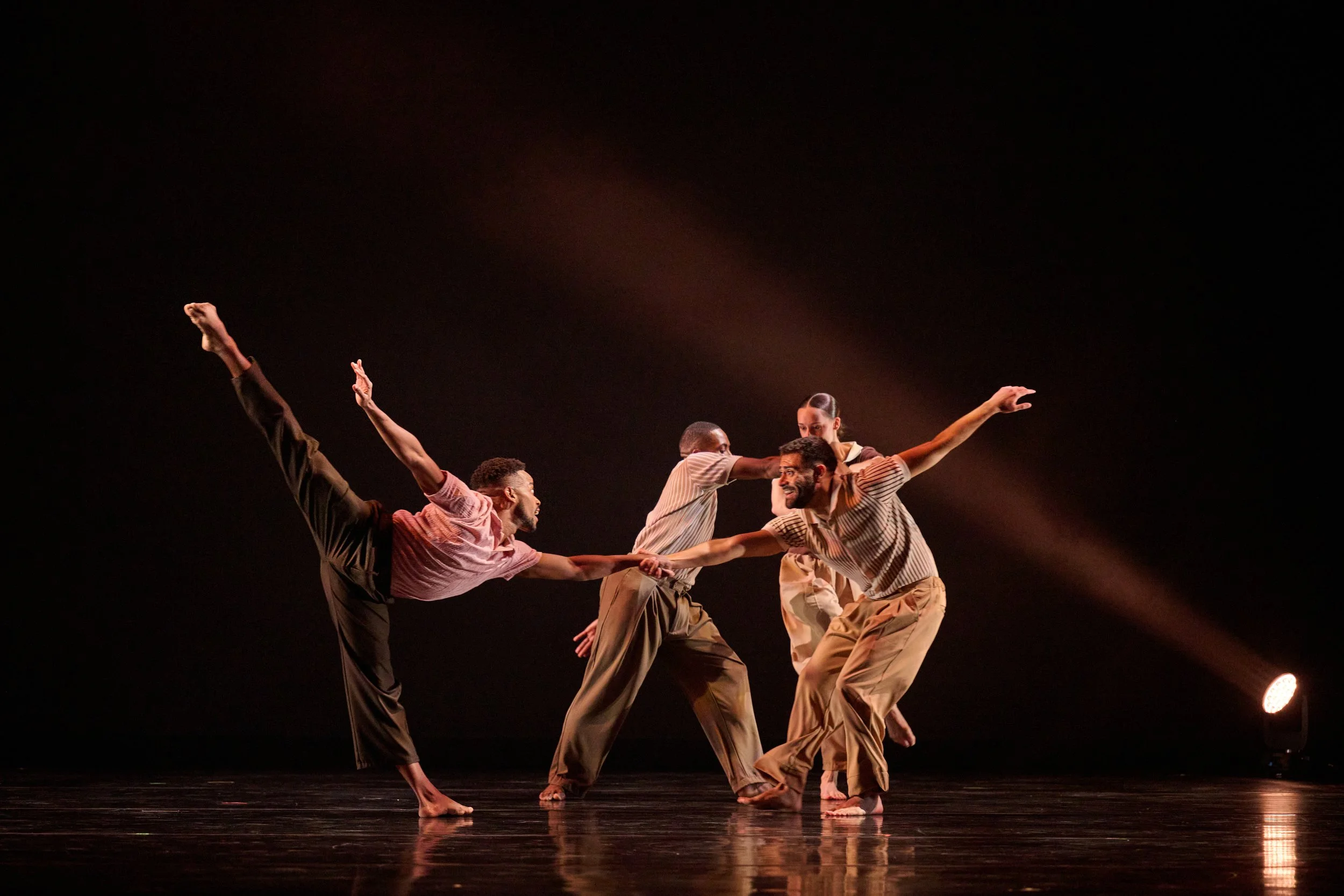
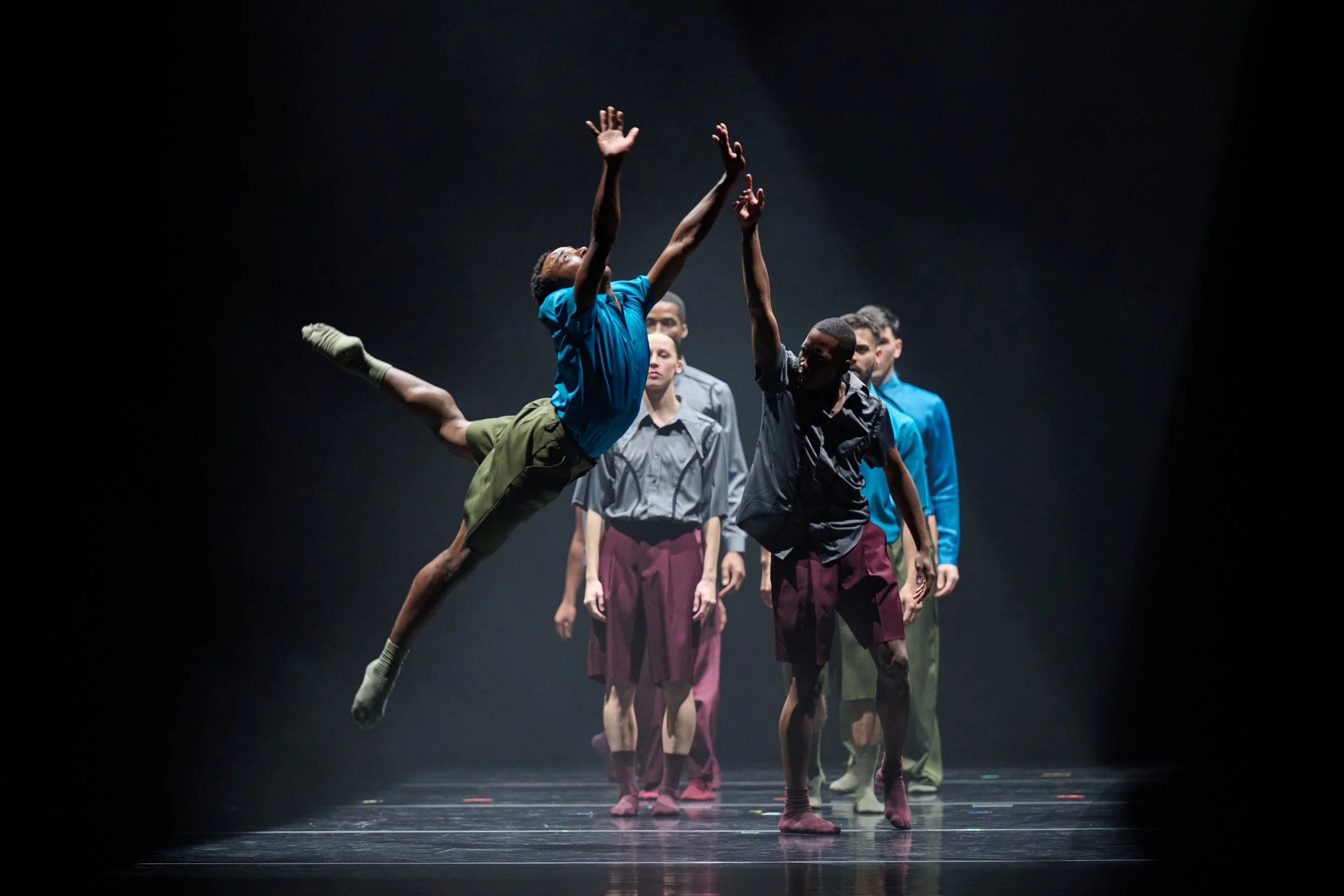
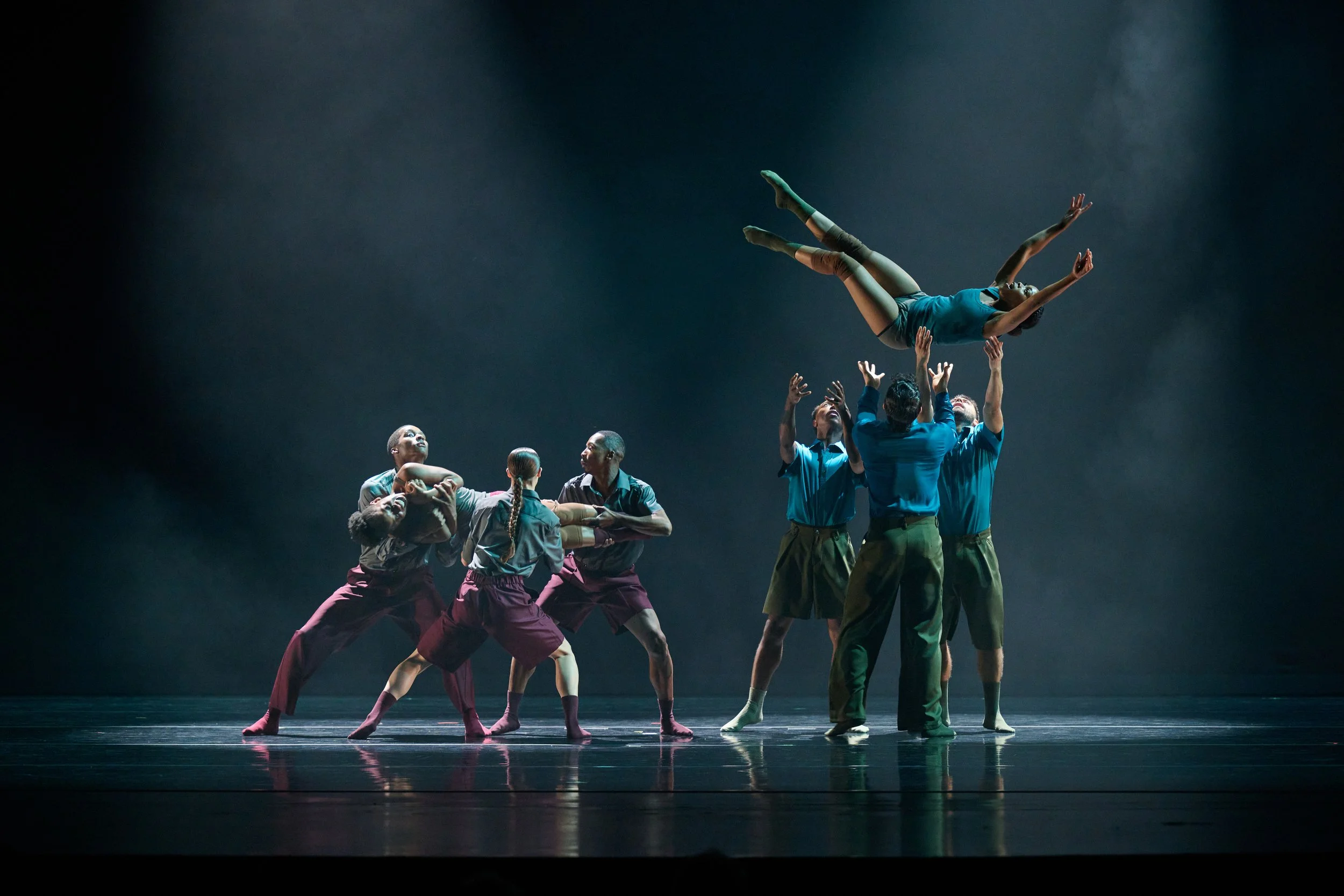
“Boys enter the house.” These words echo against the cavernous walls of the Touhill. “Boys enter the house.” Two columns of dancers. “Boys enter the house.” They unravel themselves in a dialectic manner. “Boys enter the house.” They slide through each other’s bodies, stick out their tongues in a grotesque manner, drop their hips into the floor and grab at their crotch.
This world premiere of “BOYS”, choreographed by Rena Butler, “explores the complexities of coming of age through…[tracing] four distinct stages of transformation from boyhood to manhood.” While these different stages are at times slightly obscene (dancers play fight and stick their fist down their pants in sexual discovery), there are also moments of heaviness. The spoken word is reflected within the choreography as the dancers convey moments such as an ailing sister or a father who unexpectedly passes away. However, these moments come and go with quick ferocity so that no moment feels entirely resolved. Additionally, its tone is neither celebratory nor necessarily critical of these complex stages of life. This allows boyhood to be represented as something worth investigating with curiosity, rather than judgement.
The physical language that encompasses the spoken dialogue is an ever-evolving template for what Dance Theatre is capable of. They slither effortlessly in and out of the floor, they gyrate their hips with angst and joy, they extend their limbs into every corner of space with exceptional ease. Though this is Butler’s first time choreographing on Dance Theatre, the way she utilizes their corporeal tendencies, as well as pushes them into unknown territory allows the movement language to feel both innovative and seamless. A multitude of experiences pass through these dancers’ bodies, illustrating how coming of age is a cacophony of feeling. And in this world, both the obscene and melancholic hold equal weight. In a landscape of dance that sometimes ignores the more transgressive matters of the human body, it is refreshing to experience a work that acknowledges these themes without judgement. However it takes place for these eight dancers of various gender identities, it is one worth noting and examining, so that we might collectively raise boys into men worth fighting for.
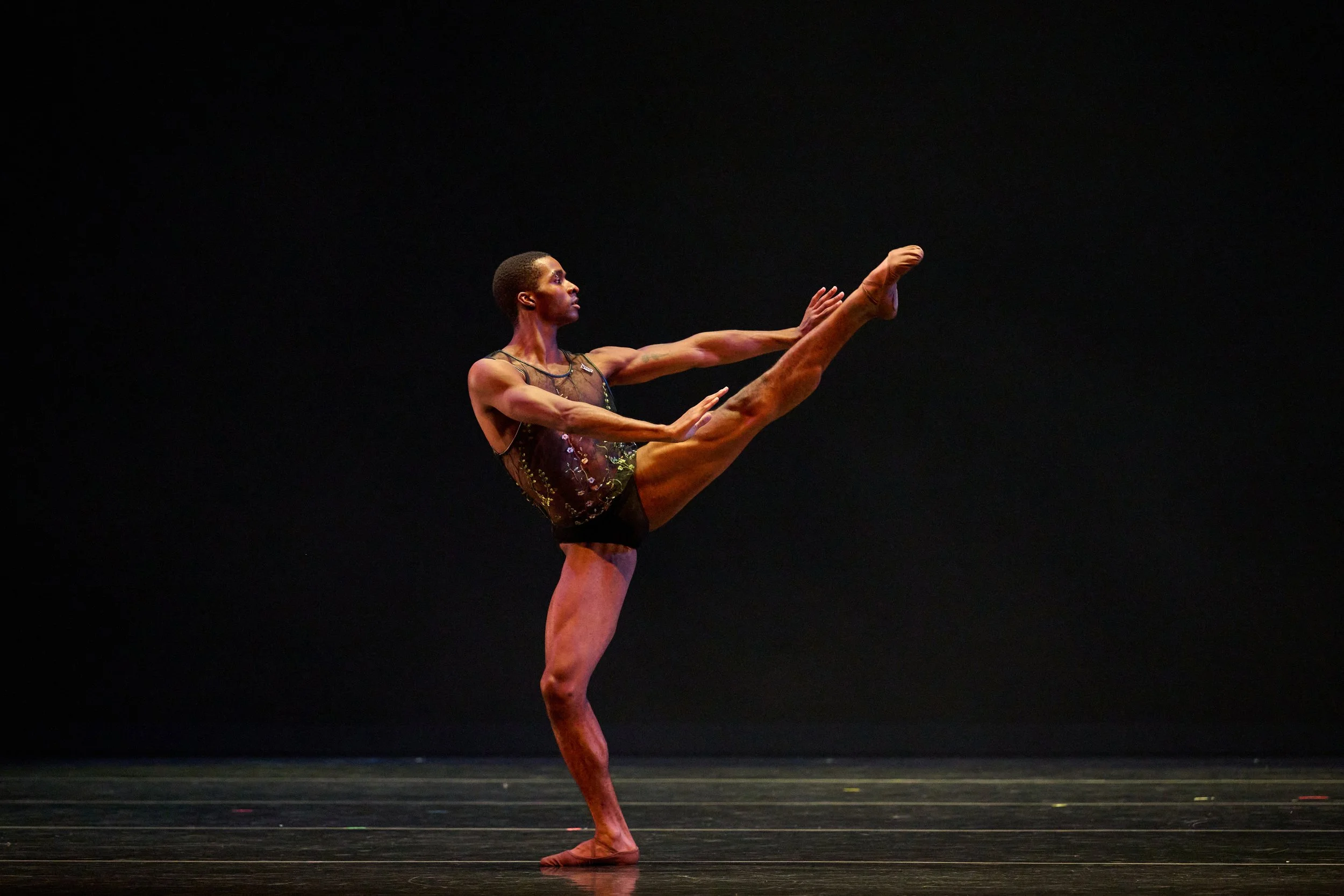
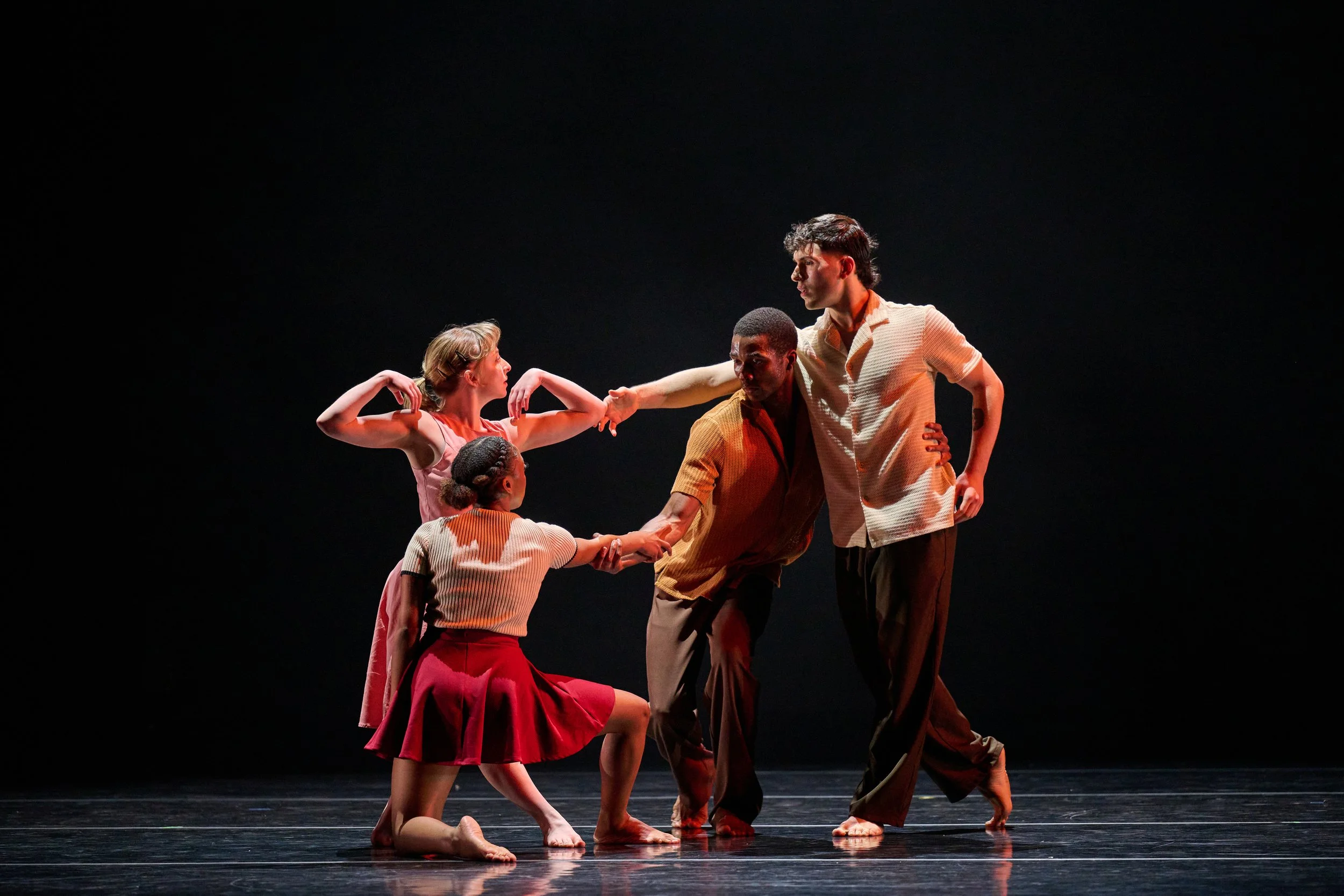
The second world premiere of the night, “Sands of Time”, and choreographed by Keerati Jinakunwiphat, introduces the entire company (and Second-Year Trainees Lillian Beeler and Olivia Wilton) in a flurry of movement. An onslaught of dancers enters the stage from every corner and edge. They spiral through intersecting floor patterns and gallivant through space. The mood is pleasant and glimmers of enjoyment unveil themselves on the dancers’ faces. Barefoot and grounded they travel efficiently. Soft palettes of texture unfold from their bodies. They approach each other with care. The stage is busy with momentum, yet they flow naturally through each other as a flock of birds flitting amongst the trees.
In the St. Louis Dancescapes podcast, Jinakunwiphat states that qualities found within her ideal dancer are “grounded, dropped pelvis…and backspace.” She also mentions her background as a figure skater and how that influences the way she carves through space and approaches edges along the body. While Dance Theatre certainly carries some habitual ways of approaching movement, Jinakunwiphat’s choreography expands the natural tendencies of this group to indeed be more dropped in their pelvis and circumvent their way through space in a way that feels full of breath and glide. A stark contrast to the piece choreographed by artistic director Kirven Douthit-Boyd that precluded Jinakunwiphat’s. To witness Dance Theatre inhabit both worlds so proficiently highlights the range that Dance Theatre continues to expand into.
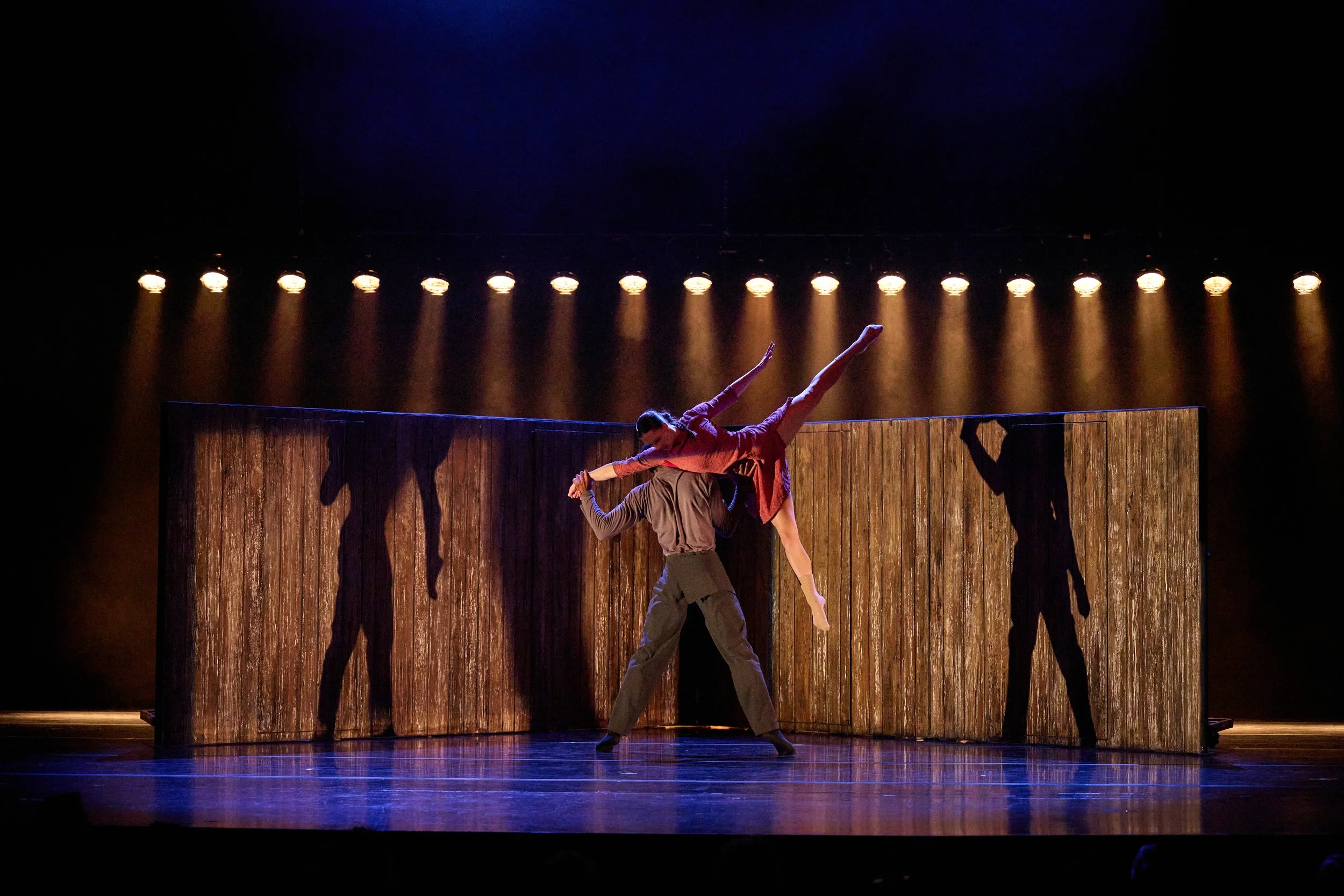
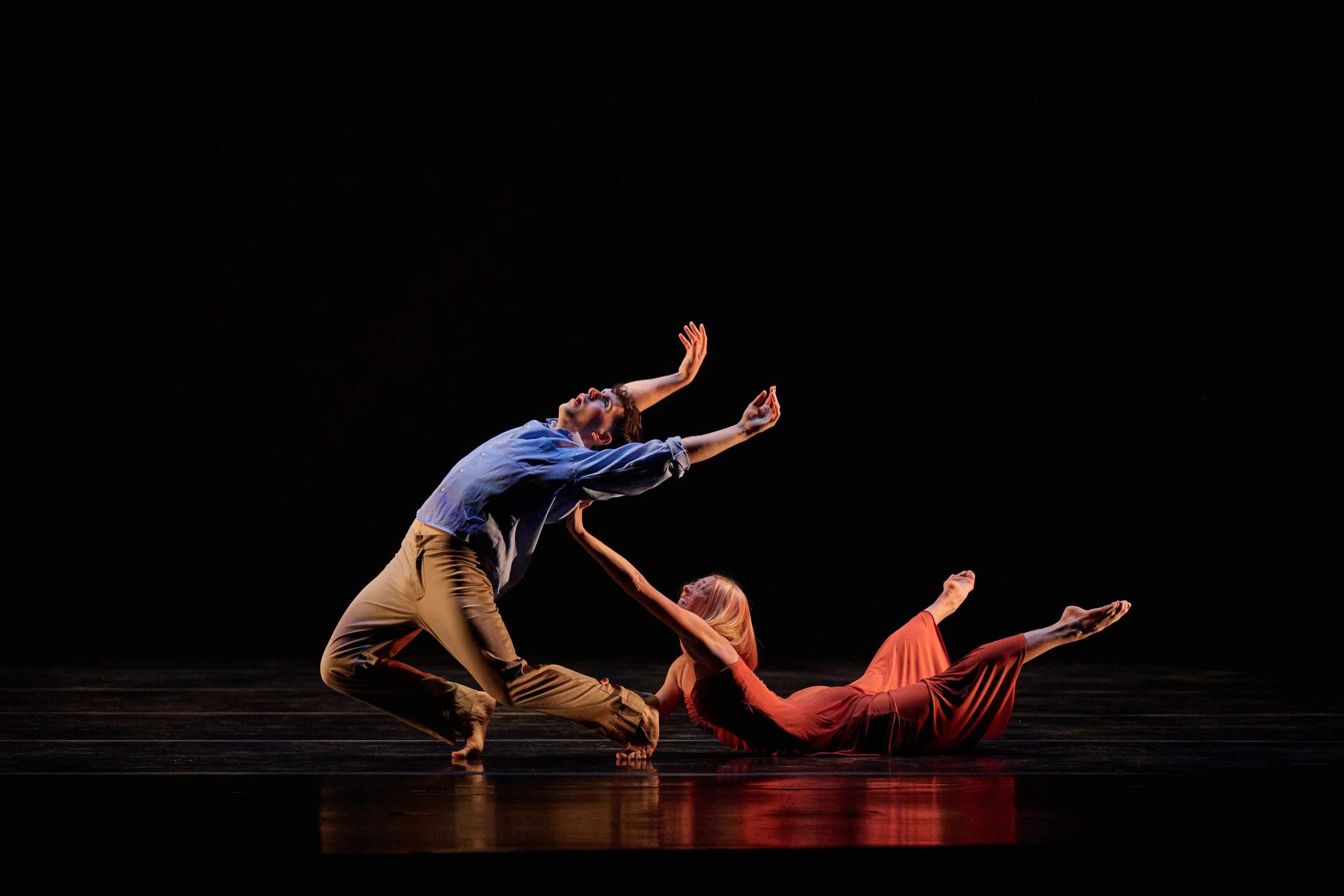
Joining these two world premieres for Dance Theatre’s Fall Series were two works that first premiered by other companies in the early 2000’s, as well as an excerpt from Dance Theatre’s 2024 collaboration with the St. Louis Symphony Orchestra. The first of these was “Unfold”, first choreographed by Robert Battle in 2005. Having already seen this work twice before, and written about it in my 2024 Fall Series review, I was rather privy to how this work would unfold. While Molly Rapp and Angel Khaytyan continue to be rapturous in their dramatic appeal, the archetype of their relationship is rather straightforward, making multiple viewings of this work diminish in intrigue. Douthit-Boyd’s excerpt from “Picture Studies” features Miles Ashe, Demetrius Lee, and Dave McCall with heightened grandeur. Moving with exceptional dexterity, and exhibiting the most balletic patterning of the night, the work is straightforward in its premise, yet still mesmerizing to encounter. Finally, “Walking Mad”, choreographed by Johan Inger in 2001, closes the concert with utmost theatricality. Though nine dancers are featured in this work (particularly the electrifying work of Keenan Fletcher, Molly Rapp, and Gillian Alexander), the main character of this work is the giant set piece that inhabits the space. This hefty and horizontal wall, detailed with the likes of rustic wood, transforms the space as dancers jump on it, bend it in half, lay it to the ground, climb on top of it, use it as a partner, gyrate on it, open doors to walk through it, and catatonically walk off of it into the abyss below. Though some kind of strained relationship is interwoven into the work between Fletcher and Rapp, the most captivating element of the work for me is how this wall mutates the space, and in turn becomes a personification for something greater which these dancers entangle themselves within.
From Jinakunwiphat’s sense of grounded flow, to Douthit-Boyd’s quick-witted feet, Dance Theatre is not constrained to one modus operandi. While this concert did carry some more conventional stylizations within its heartbeat, it was not in service of regressive aesthetics. In the St. Louis Dancescapes Podcast, artistic director Douthit-Boyd remarks of the dancers in Jinakunwiphat’s work that “they have to be present and human in the space in a way…that I feel is quintessential to what I want us to be looking like. One of the many facets of our identity.” Jinakunwiphat furthers this idea by later stating “it’s like that melting pot. You also have to do the work to stir it.” And so, Dance Theatre continues to stir the pot. Melding and mixing a multitude of flavors as they formulate their multiplicitous identity within this landscape of dance.
Photos by Pratt + Kreidich
