
HQ Review: “STAGED” presented by Karlovsky and Company Dance

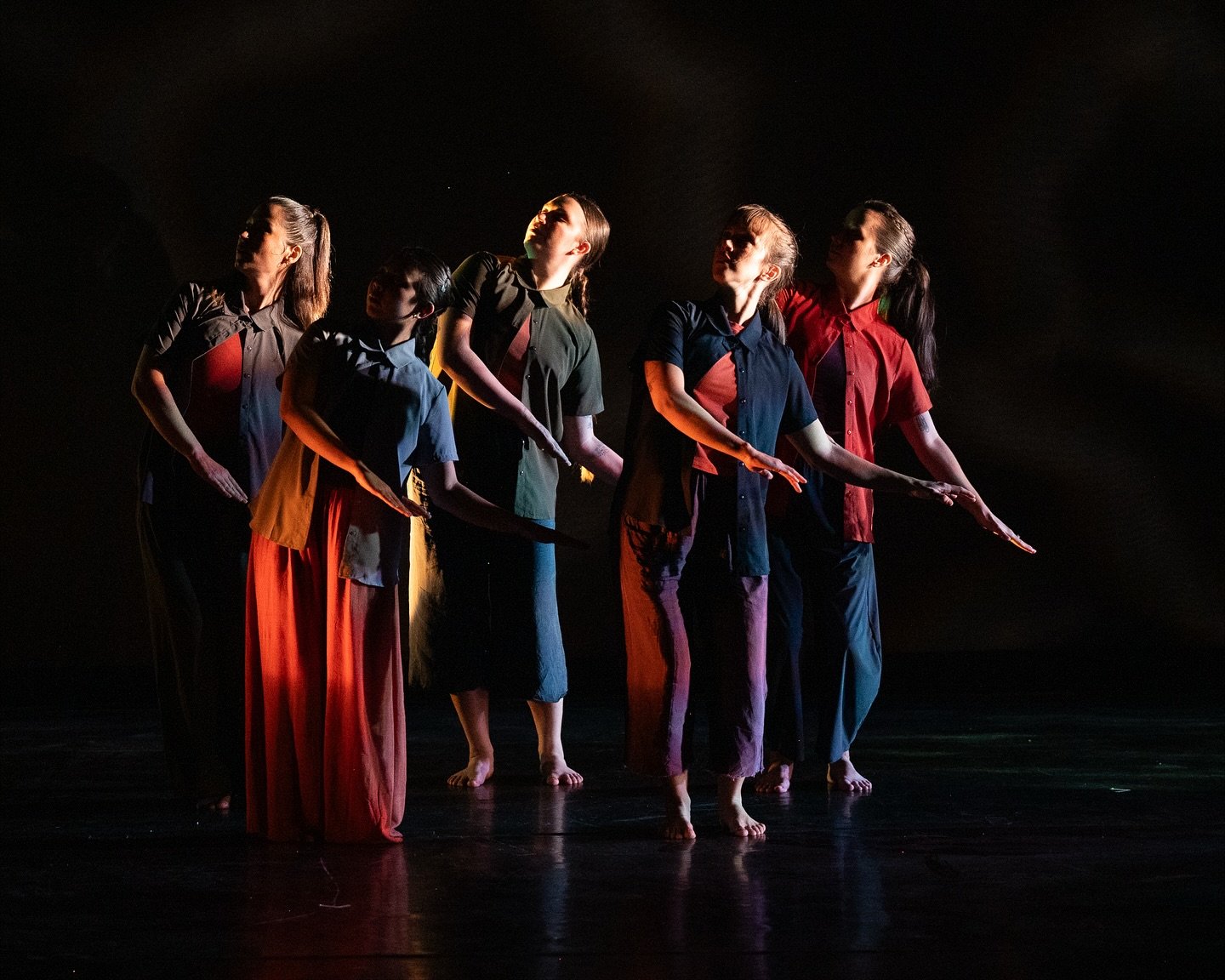

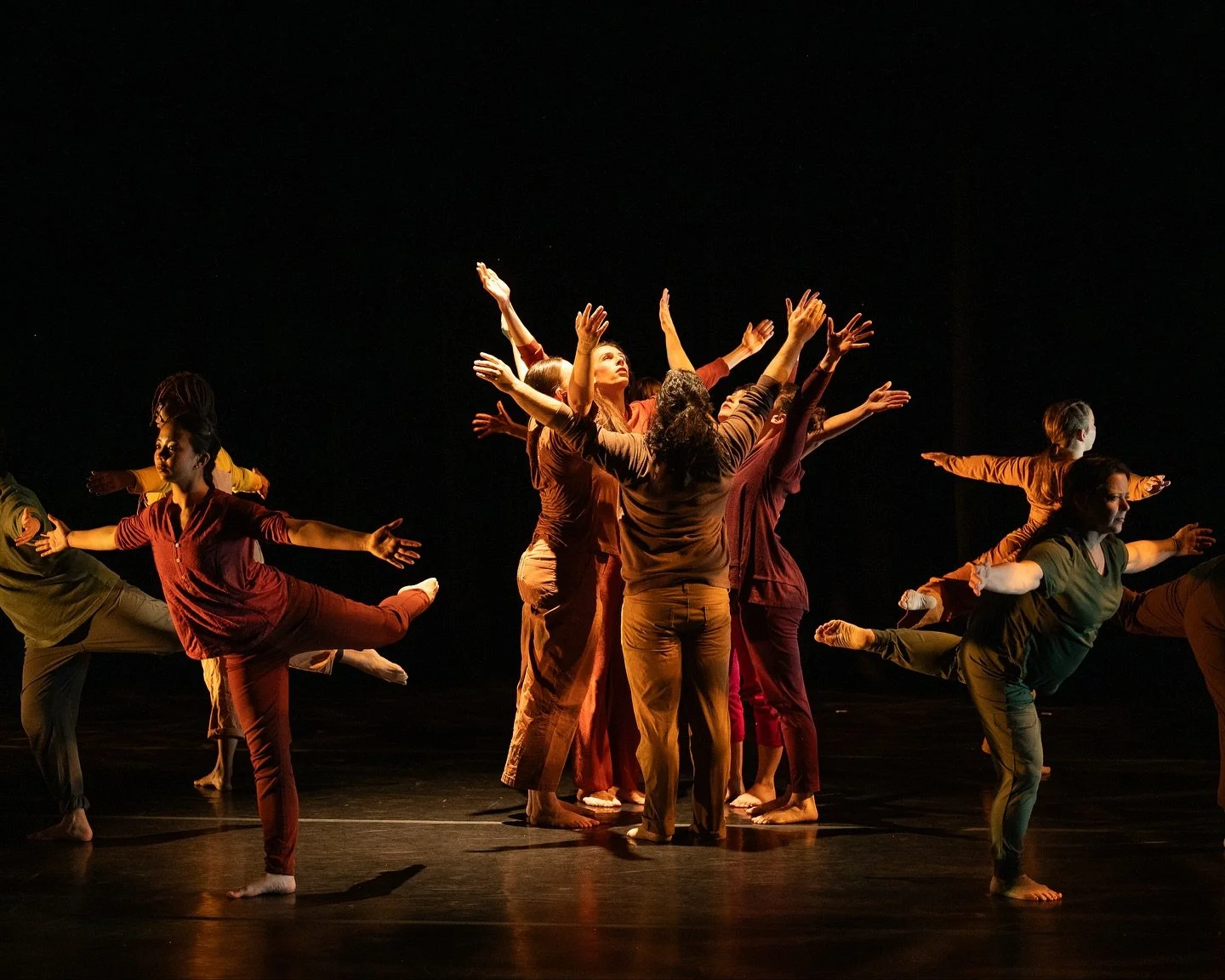

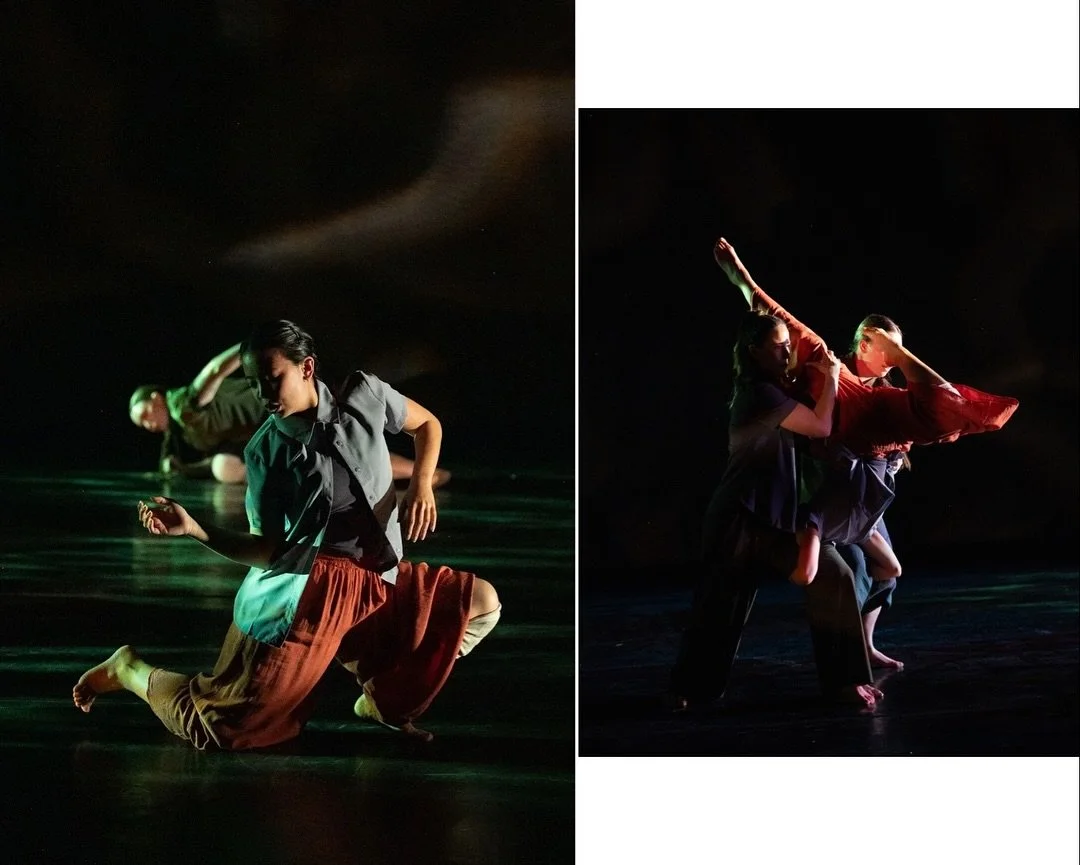
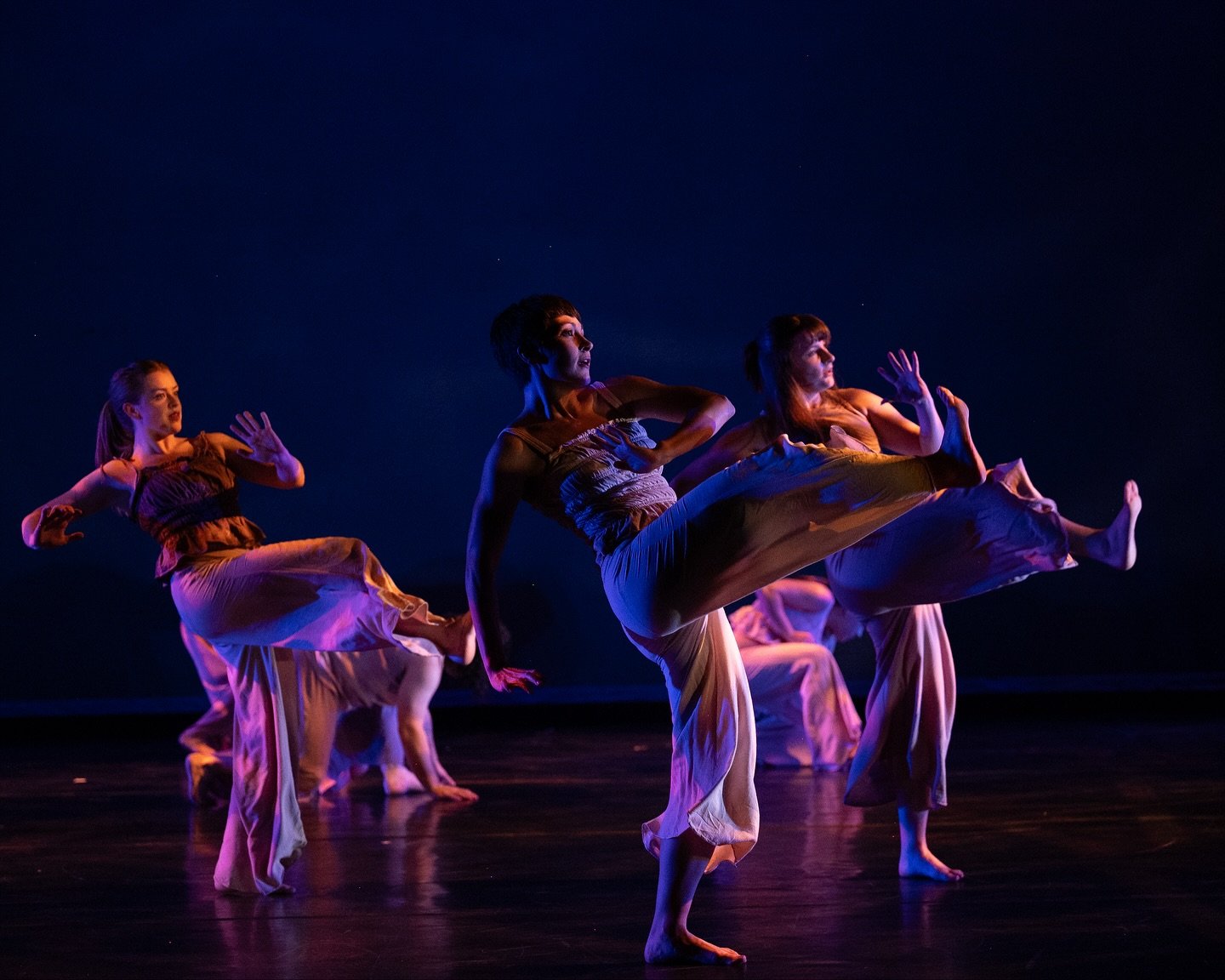
On November 21-22, 2025, Karlovsky and Company Dance showcased 5 pieces, each created by a different choreographer: Corpus Missa, Last Train Home, Catching, How Come We Never Talked About It, and Seeing You, Seeing Me. With the collaboration of nine company artists, twelve guest artists, three musicians, and one set designer each piece was filled with a unique voice and powerful emotional resonance.
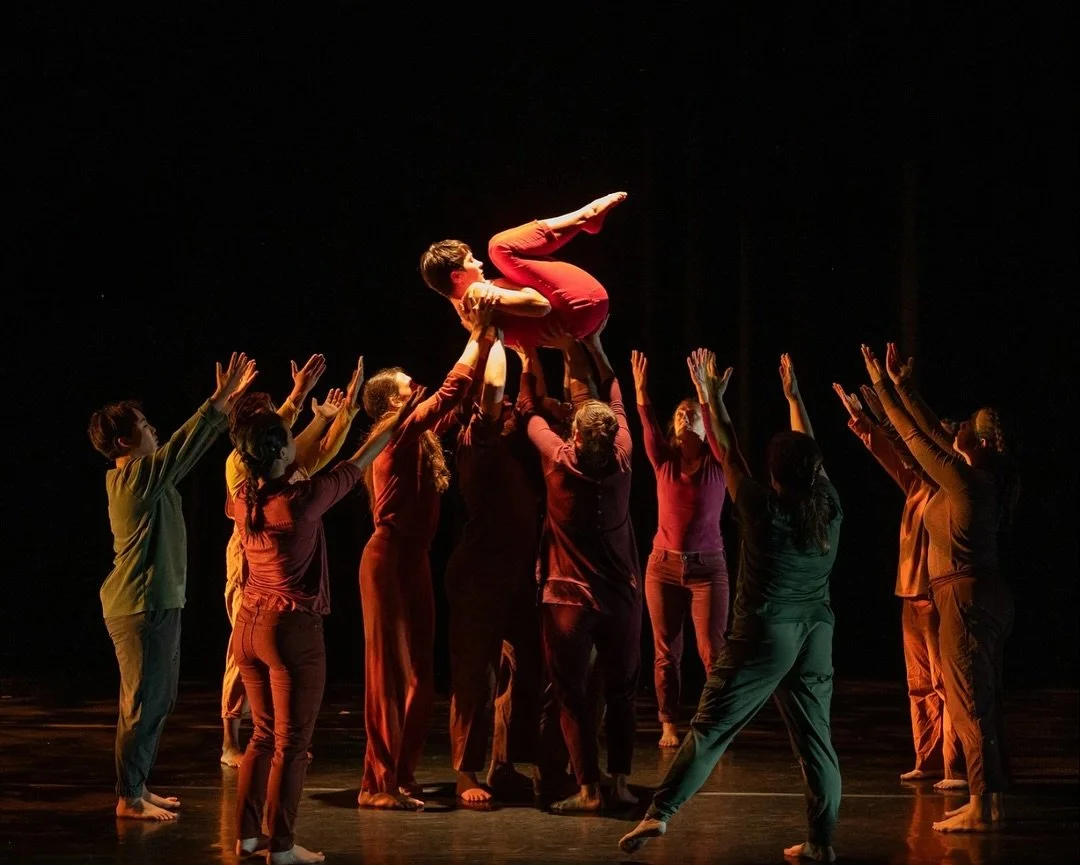
Mary Ann Rund’s Corpus Missa was the opener of the night with live music from percussionist Lance Garger. The piece began with dancer Rachel Wu, who walked aimlessly onto the stage pantomiming as if she was scooping up water and washing it down her face. The rest of the cast joined in similar fashion eventually breaking out into an ensemble phrase. At the height of the unison phrase the dancers collapsed onto the floor, and began crawling around. They stayed in contact with one another while forming one giant clump. Mary Ann Rund expressed in her program notes that Corpus Missa was created to showcase what happens when personal grief and trials of expression shift from individual intensity to collective purpose. The dancers started the piece by metaphorically washing their griefs onto themselves, and later, when they crawled across the floor, it symbolized the momentum of these grieves reaching its critical mass. The critical mass finally hit its limit and the transformation to collective purpose began. The dancers began to flow into duets, except for dancer Tayler Kinner, who stayed still, watching her comrades. She twitched and contorted as if struggling alone with her inner thoughts and grief. Tayler’s solitude caught the attention of the other dancers and they stopped dancing to surround her. They then lifted Tayler in the air as she curled up in the fetal position. She looked calm and safe as the dancers slowly turned her in a circle. Lance Garger's drumming became more intense as the dancers placed Tayler down, and they all began to run, momentum building once again. This chaos fizzled out with the dancers finding themselves spread across the back of the stage in a line. They charged towards the audience, with arms extended as if offering support. Collective purpose was achieved and the lights faded out. Corpus Missa was an exposing piece for the dancers. Forcing them to allow their individual frustrations to transform into “collective purpose,” until finally letting it go to the audience. And through this exposure, Corpus Missa allowed the audience to let their defenses down and be more open to the creativity, collaboration, and innovation of not only Corpus Missa but also the rest of the dances yet to come.
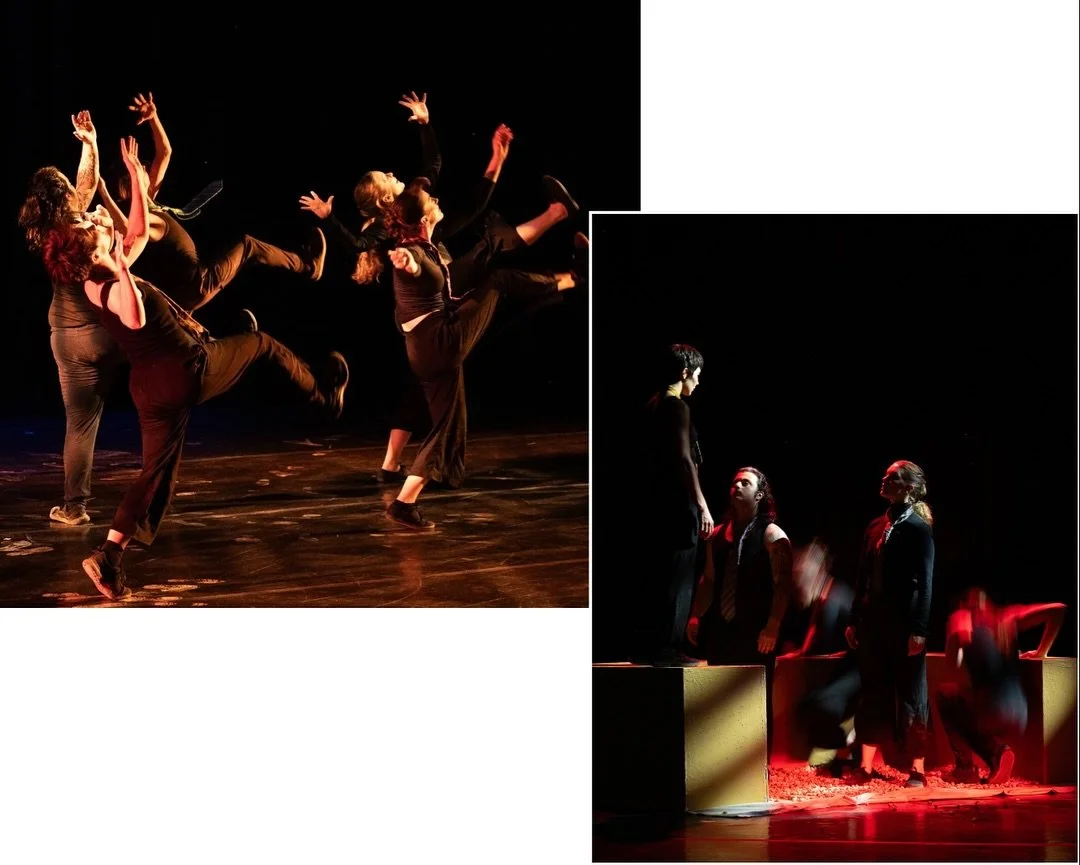
Before the second piece of the night, Last Train Home began, Assistant Director of Education, Summer Beasley, went on stage to thank sponsors and inform the audience how to support the company. All of this was done while stagehands and the musicians, Kalo Hoyle and Tory Starbuck, set the stage for the piece in the dark. One thing caught the attention, specifically the ears, of the audience when a stagehand dumped a bag full of rocks/gravel into the now set raised square on stage right. The noise was loud and made the audience perk up in attention. Then the dancers, Abagail Hinrichs, Tayler Kinner, Ramona Orion, Sam Schenkein, and Rueben Thomas, placed themselves in the square and began to shuffle their feet on the rocks. When the music started, and a red spotlight illuminated the dancers, they continued to shuffle their feet and stare down blankly at their actions. However, right when the noise of the rocks became a sound of comfort, they stopped, leaving the audience missing the previous drone of the scuffling. After some coordinated corps work, Reuben seemed to trip and fall out of the pile of rocks. The other dancers lost poise as they quickly scrambled to get Rueben back into formation. Once again, they dance in coordinated efforts, but eventually another dancer falls and breaks the line. Tayler Kinner fell and then got up to climb on top of the square to observe the other dancers, occasionally joining them to be partnered, until she crawled behind the square of rocks. Eventually, Rueben followed suit, and then Abagail, Sam, and Ramona all fell behind the square. Rueben re-entered, as if in a cold sweat, and proceeded to dance a solo that one would define as a cry of desperation. She sits upright on the rocks, with her head hanging low in her lap, and then quickly convulsed and scrambled to multiple corners of the square like a trapped animal. As her solo ended and the music swelled in drama, the rest of the dancers all rejoined Rueben, crawling on the floor. Suddenly, as if out of nowhere, a complete tonal shift happened. The dancers got up, moved to stage left for the first time in the piece, and smiled as the song Lost Highway by Hank Williams began to play in the background. They seem happy as they danced in pairs and comically shook hands with each other repeatedly. When the song died down the dancers exited, all except for Tayler, who found herself back on the pile of rocks, running in place, leaving the audience with nothing left but that all too familiar sound of shuffling…
Last Train Home successfully created tonal shifts without feeling disjointed. The reason for this could lie in the final song. The very first line in the song is, “I’m a rolling stone all alone and lost.” Quickly, the audience can realize that the lyrics to this Hank Williams song are reflected in the darker tone of the piece, while the quirky Honky-Tonk melody is reflected in the comical finale. Overall, with its clever use of props, live music, and passionately charged choreography, Liliana Merifield’s Last Train Home was an easy audience favorite of the night.
The third dance of the night, Catching, choreographed by Elise Harowitz in collaboration with the cast, was an enjoyable dance that experimented with sound and movement. The piece opened with dancer Elyzah Gasmen traveling to the center of the stage, using her knees as she vocalizes the sound of the wind blowing using her mouth. The rest of the cast, Lillian Berry, Liliana Merifield, Melissa Millar, and Jane Tellini, entered similarly until they all met up in a diagonal. From there, they pose silently, slowly lengthening through their extremities. For the remainder of the piece, the dancers correlated sound with movements. A cute hoot for a jump, a swish sound for a lunge, and a train sound for a hand gesture, to name a few examples. The newly constructed language would be used in cannons, and the order of the movements would change in relation to where the dancers are in comparison to the rest of the ensemble. It was intriguing to see how each of the sounds created a different emotional response, whether laughter from the hoot or serenity from the swoosh. The dancers created one final “sentence” ending with the hoot, making the audience chuckle as the lights faded out to applause. Even though Catching was not the most intense or complex piece of the night, it was a delightful watch and served as a nice break from the more intense pieces curated in the program.
Set to the music Mean to Me by Anette Hansaw, Bedruthan Steps by KEYNVOR, and Rooftop Reprise by Andrew Wyatt, Melissa Miller’s How Come We Never Talked About It? is an intriguing solo work that takes a deep dive into the concept of self-imposed silence and how understanding can arise when that silence is finally given a voice. A fan blows, and a costume rack with shimmering silver tinsel sits idly while blue lights illuminate soloist Hayley Barker. She looked tranquil as the fan blew behind her. She slowly approached the silver tinsel as Mean to Me began to play. Hayley danced to the sweet melody in a Fosse style. The silver tinsel became her partner as she pushed, pulled, and twirled it around the stage. As the song faded, Hayley repeated her last series of steps faster until it looked like she was in a frenzy. A soundtrack of applause played, and Hayley took a bow, but as if realizing that the real audience was not clapping, she stared into the crowd with a lost sense of confusion and stroked her hair in nervousness. She then contorted her body into quick, sharp angles until she fell on the floor. After a moment of silence, Hayley got up and moved the rack of silver tinsel in front of the fan. This was an ingenious moment as it created a rather stunning sight. Rooftop Reprise played, and Hayley proceeded to execute a more lyrical dance, performing softer movement qualities and more floor work. At the climax of the solo, Hayley rips the silver tinsel and wraps herself in it. The once beautiful tinsel now gave off a more sinister tone as Hayley crawls on the floor, as if trying to escape from the tinsel's clutches. In the end, Hayley stopped her struggling and sat upright in the tinsel, as if content with her fate… Melissa Miller never provided program notes to give the audience a deeper insight into the piece, so we are left to our life experiences to decipher what is going on in this rather serene yet intense work of art. With the aid of music, acting, and prop choices, a theme arises: self-imposed silence. Self-imposed silence is used as a tool to manipulate a person or situation to avoid conflict or hide the manipulator's true feelings. This is evident in the first section of the piece when Hayley danced to Mean to Me. Her campy facial expressions and showgirl steps give off a façade, as if trying to hide her real thoughts. The silver tinsel could also be a physical representation of this silence. At first, Hayley dances around the tinsel, using it as her partner in her dancing. But when Hayley places the tinsel in front of the fan, blowing the façade away, she dances more sincerely and seriously. This does not last long, though, as Hayley then wraps herself in the tinsel, as if she could not handle such exposure, and ends up on the floor, content and safe with her self-imposed silence. Overall, Miller’s work was a thought-provoking marvel that forced the audience to self-reflect on what self-imposed silence they are content with and if they should let that silence have a voice.
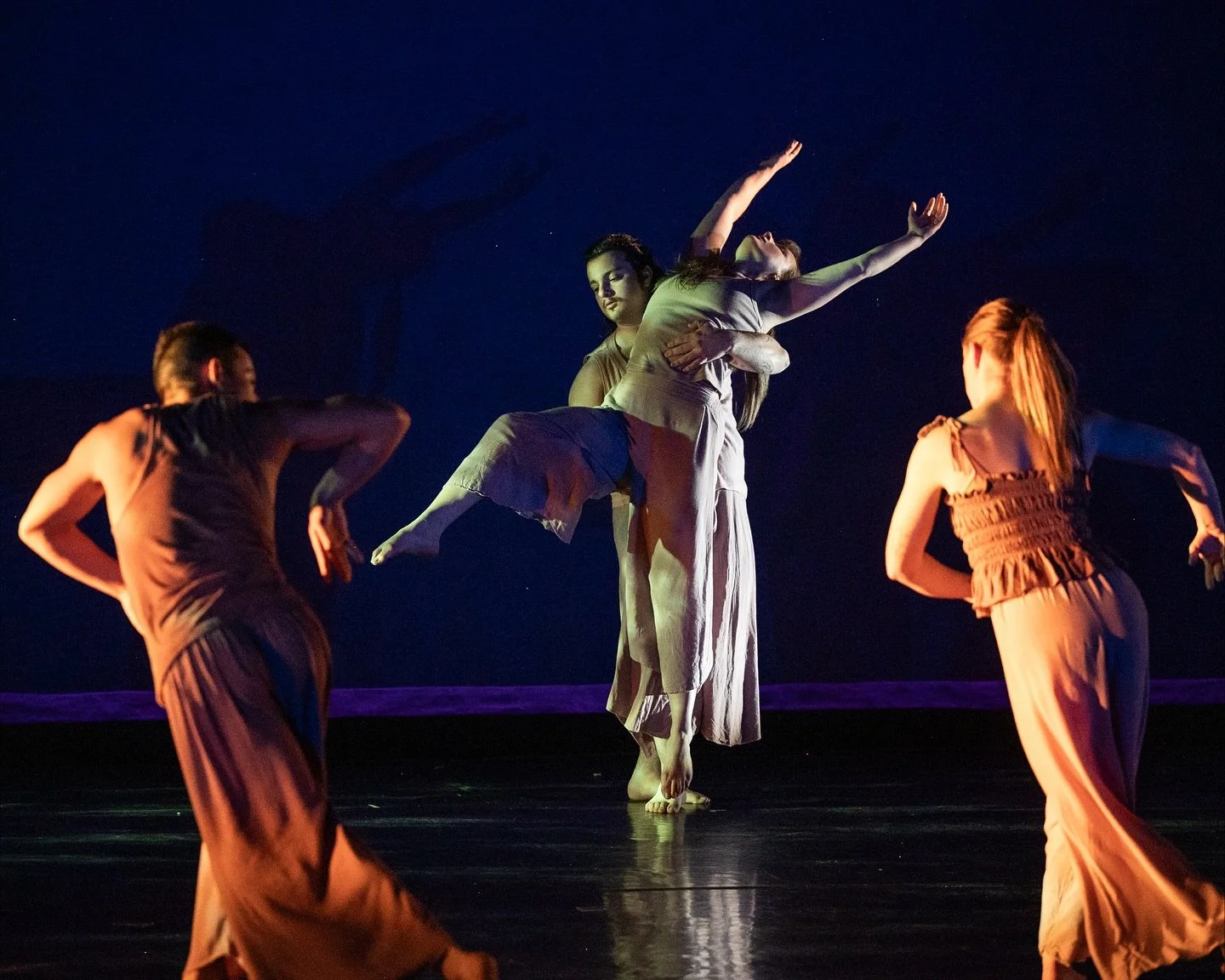
The final piece of the night, Dawn Karlovsky’s Seeing You, Seeing Me, was originally performed in 2023. It returns to the stage to continue spreading its message about the importance of human connection. The piece started with the ensemble on stage, swaying to the music like blades of grass swaying in the wind. This moment was interrupted multiple times by duets of dancers rolling on the floor, causing the rest of the dancers to shift positions. This ended when dancers Josiah Gundersen and Zoe DeYoung reached out to each other and connected their heads side by side. A pas de deux ensues between the two. It was soft and gentle as each movement and lift was done with the utmost delicacy. Zoe then left Josaih for the rest of the ensemble as they re-entered the stage. Hayley Barker joins Josiah in the next Pas de deux, which is opposite to the previous one, being more energetic and aggressive. Josiah could not seem to jive with Hayley, and it was not until Sam Schenkein lifted Hayley off the ground that Josiah was able to regroup with the other dancers, and Hayley finally slowed down. Sam and Hayley continued to dance together, with Sam being able to meet Hayley in the middle. She slowed down for him, and he sped up for her. After this brief duet, Sam, Josiah, and Tayler Kinner dance a pas de trios while the rest of the cast performed floor work in front of them. The three dancers danced constantly in a circular fashion, whether it was through their relationship with each other or in the physical steps themselves (barrel jumps, turns, rolls on the floor). They joined the rest of the dancers on the floor, chanting and humming in unison until the music became more aggressive and they followed suit. During the climax of the piece, the dancers jumped, contorted, and tossed themselves in group dances until the music slowly died out and they gathered sitting on the floor together in the center of the stage, except for dancer Zoe DeYoung, who faced away from them towards the spotlight, lighting them from stage left. She then turned around as the rest of the dancers stared at her in bewilderment, and as she crawled to them and extended her arms as if to embrace them, the lights went out, and the piece ended. Seeing You, Seeing Me’s message was a clear yet powerful one, showing how human connection is integral to what it means to be human. How the dancers interacted with each other showcased how certain connections can help one feel heard and loved, Josiah and Zoe, how others can be destructive, but with the right person can be healing, Hayley from Josiah to Sam, and overall make you feel like a whole person, Josiah, Taylor, and Sam. This piece was perfect as the closer for the night; it took all the complex messages derived from each of the pieces and wrapped them up into one final thought: that human connection, no matter how nice or scary it may seem, is integral to understanding not only the world around you but also to understanding your own relationship to that world.
In the end, Staged was a champion of emotional tone and connection before technical feats (although there were plenty of technically mastered moments from the dancers), and therefore created an unforgettable night celebrating collaboration, creativity, and innovation.
Photos by Lumosco