
HQ Review: WashU MFA Dance Concert
Kapwa. Tapestry. Shared identity. Woven memory. These concepts thread themselves through the embodied research of these Washington University MFA candidates: Christopher J. Salango and Lorraine Stippec. Their respective works “Kapwa: Jukebox Rebolusyon!” and “Trauma’s Tapestry,” unravel dense thematic material with physical maturity, unveiling how dance can contribute to our cognitive understanding of humans in ways that other forms of research cannot.
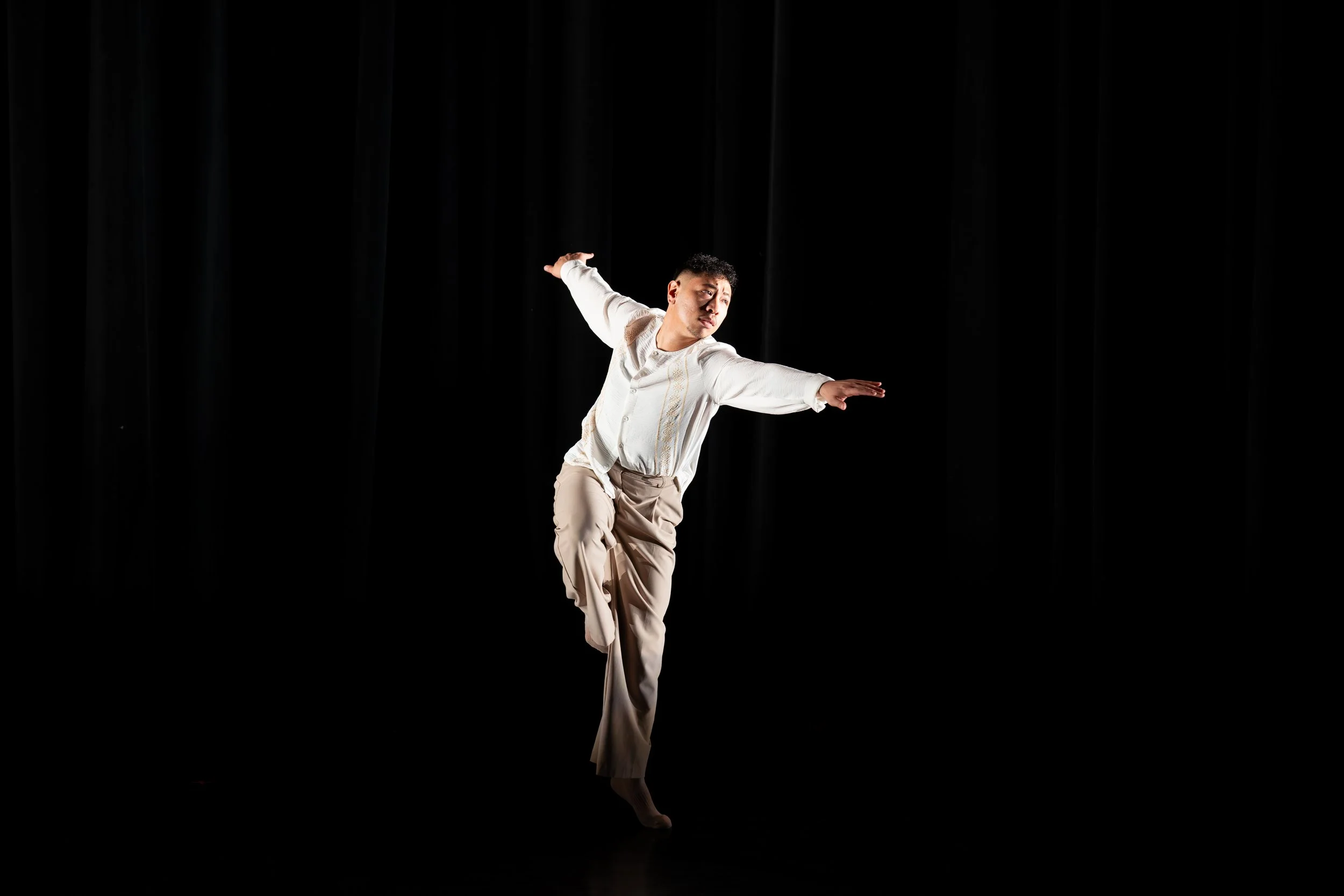
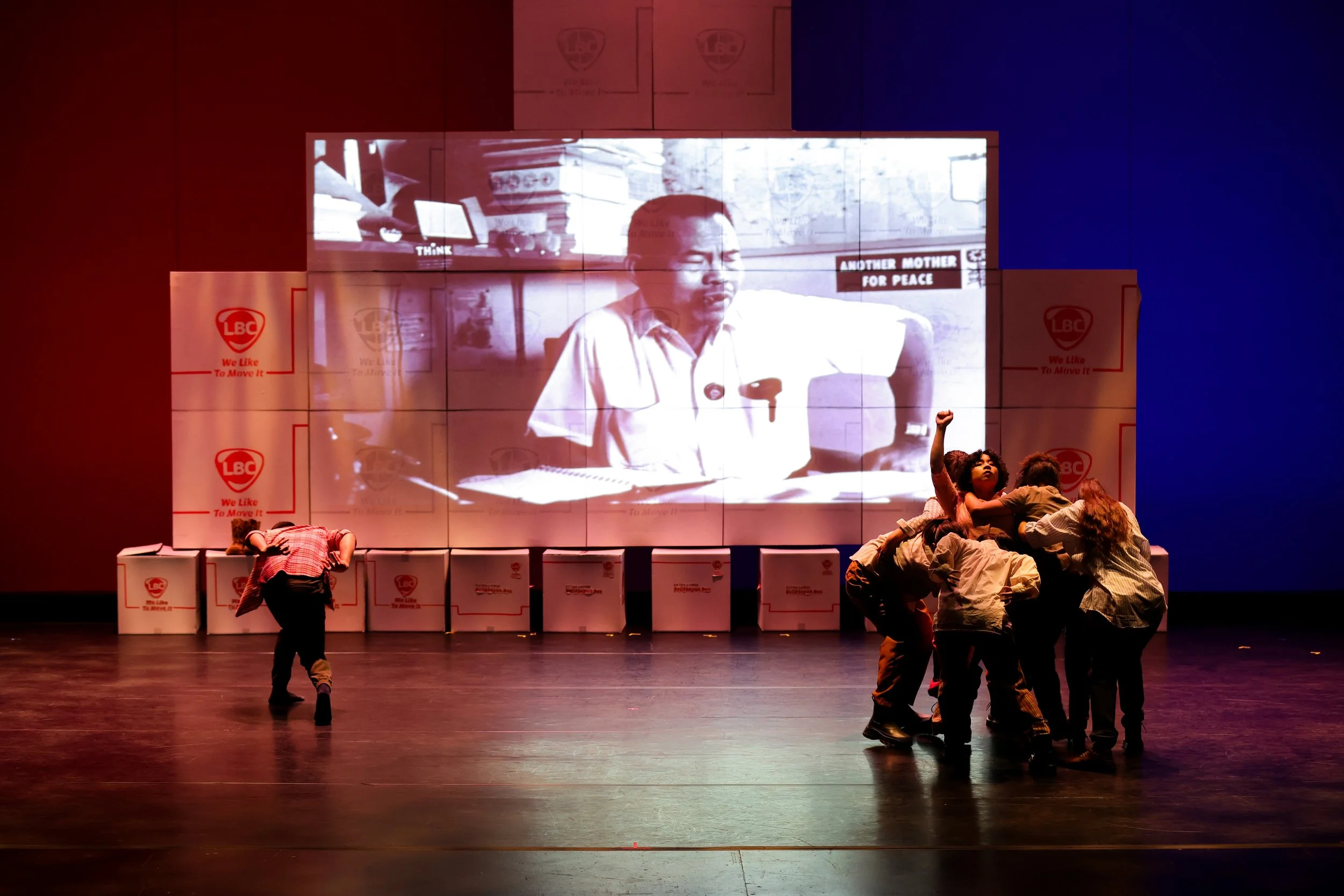
Christopher J. Salango starts this dialogue with his work “Kapwa: Jukebox Rebolusyon!” Kapwa, a Filipino concept that emphasizes “the recognition of a shared self with others,” serves as a basis for Salango’s work that explicates upon issues of identity, migration, and labor within the Filipino diaspora. Salango begins his work alone onstage, filled with an achingly calm presence. Back towards the audience, elbows jutting out behind him, he glides upstage with commanding subtlety. The gentle musings of “Maalaala Mo Kaya,” sung by Ryan Cayabyab, accompany Salango as he swirls through space in a state of prayer or blessing of the stage before him. He raises his arms in a stately manner to beckon the curtain to rise that covers the rest of the stage. Behind it, a tableau unfolds.
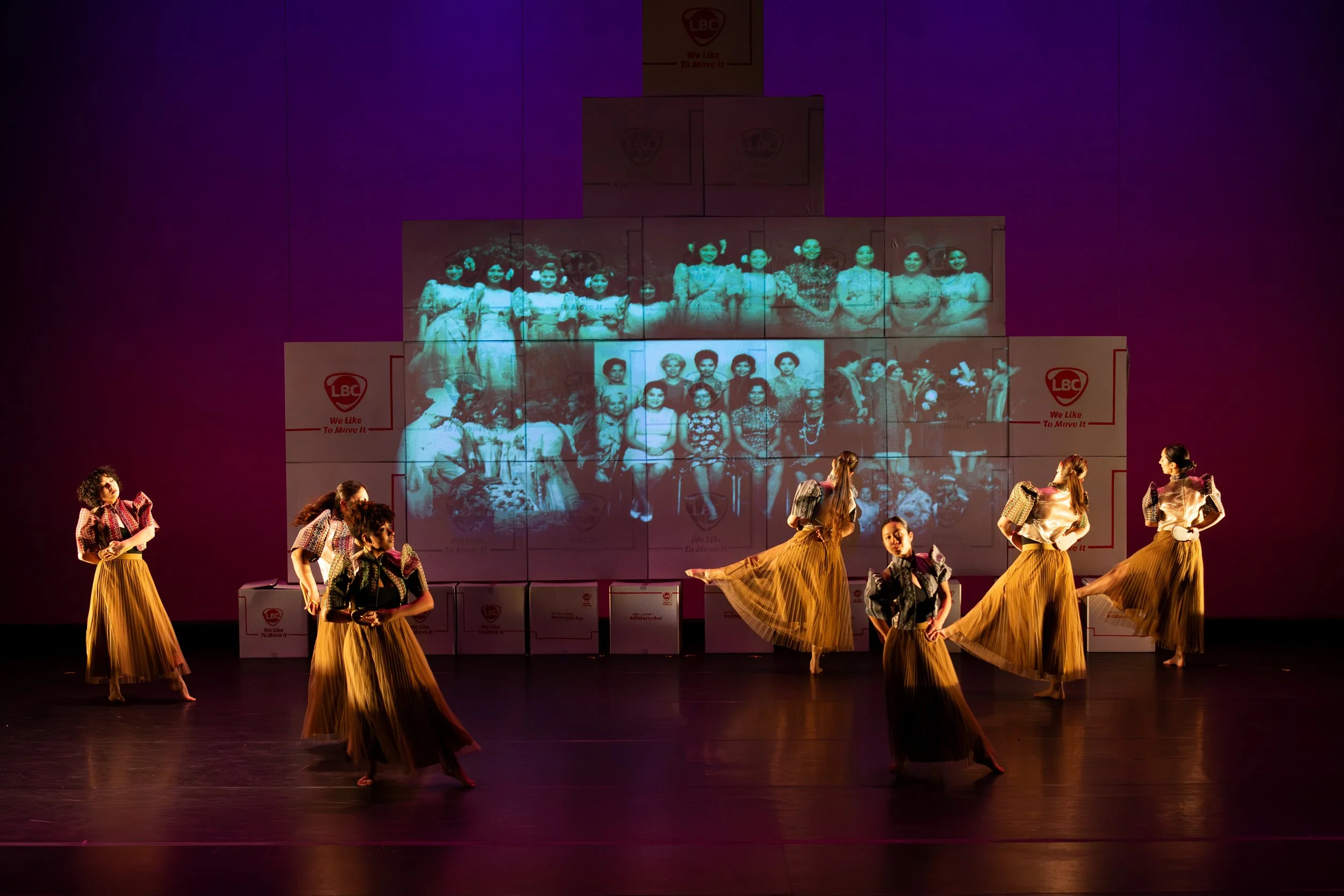
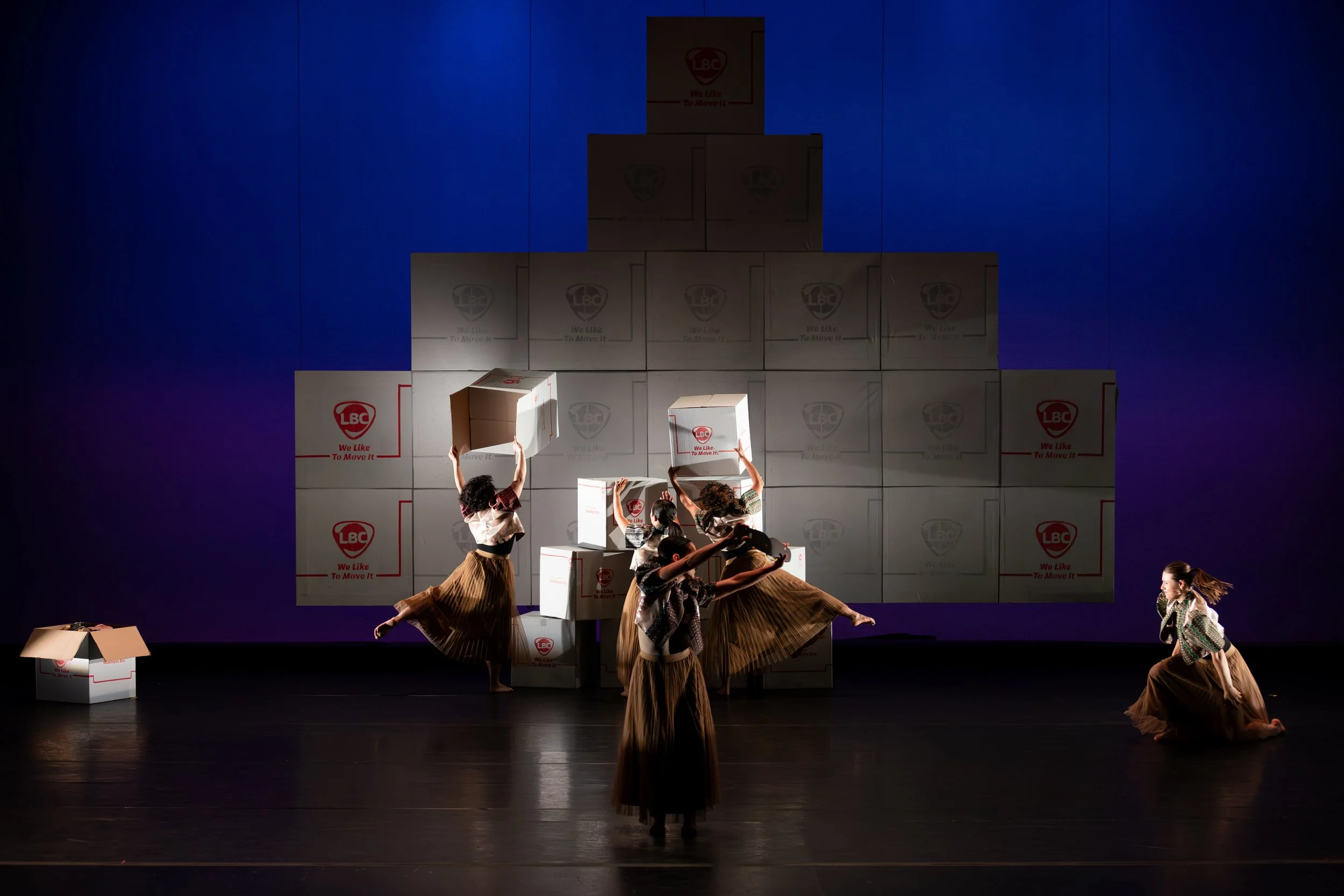
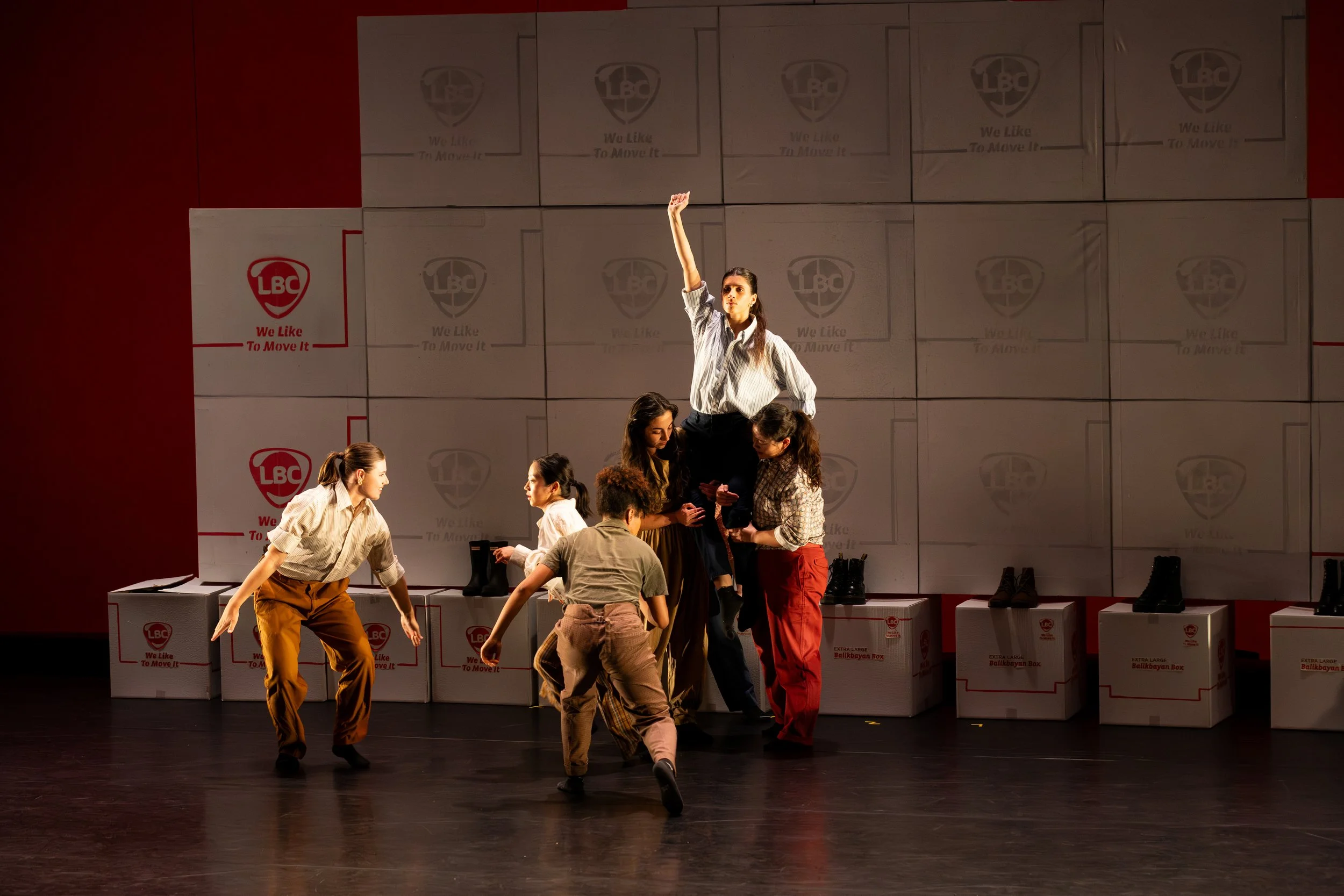
Seven women are clumped together in emblematic community. A pyramid of boxes covers the back wall. With this tableau, Salango is beginning to explicate upon “the enduring ties that connect [Filipino] diaspora to home,” as he remarks in the program. The boxes, each marked with the letters “LBC,” are a literal representation of balikbayan boxes. A type of box that diaspora Filipinos use to send gifts back home to their loved ones in the Philippines, LBC Express being one of the most common shipping services to do this with. The women engage each other through dance with a sense of ease, until one box spills open, revealing a pile of sandals, also referred to as tsinellas in Tagalog. However, the women onstage don’t put the tsinellas on their feet. Instead, they imbue these sandals with new meaning by wearing them like gloves on their hands as they clap and create musical rhythms with this seemingly quotidian footwear. Through combining movement with these objects, Salango creates an environment in which tsinellas and balikbayan boxes carry multiple meanings. These items are not merely objects. Rather, they reflect the multifaceted nature of the Filipino diasporic body that endures across generations.
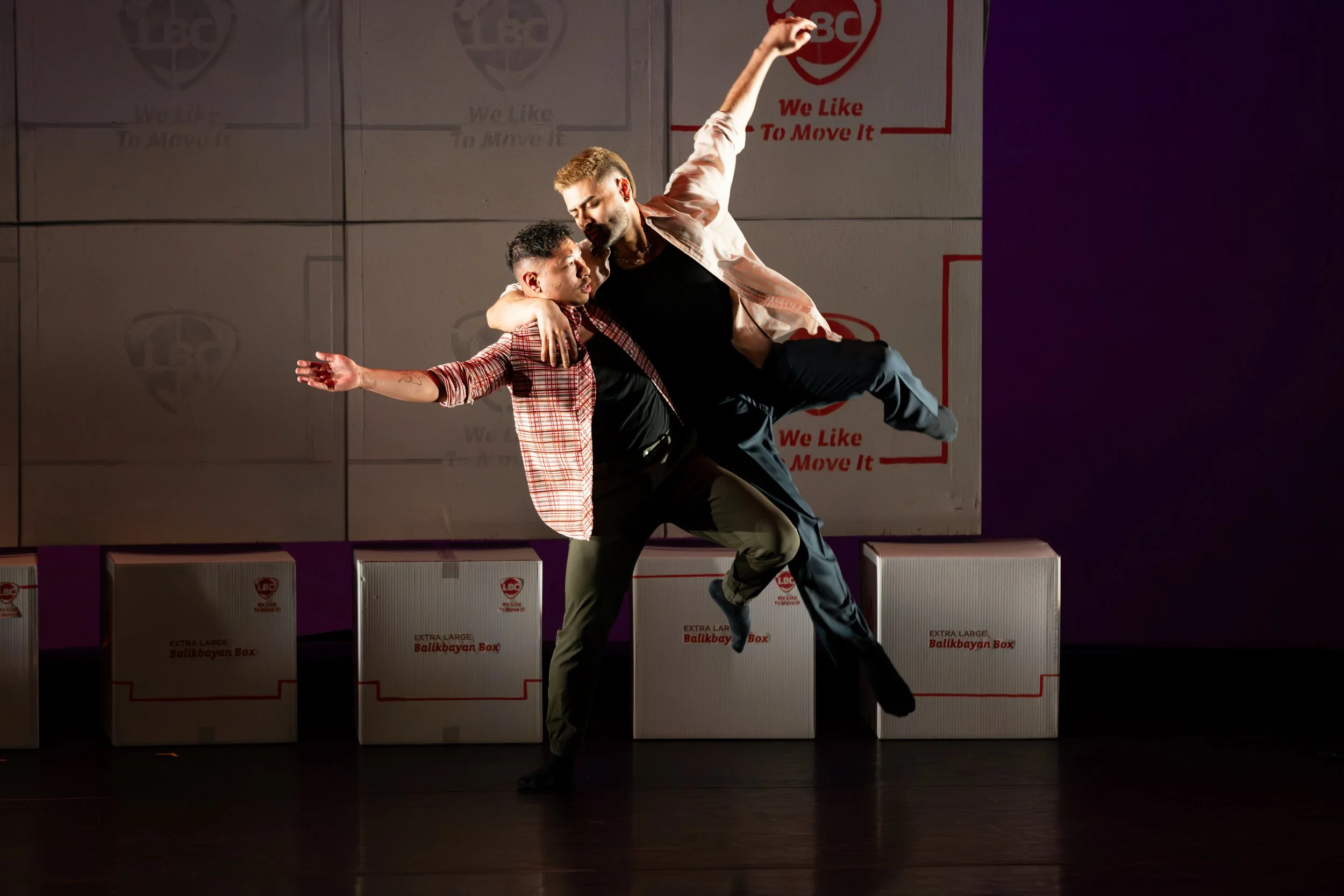
Salango’s work carries on as he enters the stage once more, spiraling through space to the empowering words of Filipino-American union organizer, Larry Itliong. Salango navigates movement with no sharp edges, careening through space with a strong poise whilst still being soft towards the air around him. Itliong’s words add layered richness to Salango’s movement as they remark upon the importance of Filipino-Americans to be politically involved. Sergio Camacho then joins Salango on stage to execute a smooth sailing duet, often moving through material in unison as they convey with utmost fluidity, the physical solidarity between two men. This sense of support and solidarity crystallizes in the final snapshot of their duet as Camacho perches upon Salango’s back, fist raised in an unassuming manner.
Each episode of Salango’s work is filled with a richness of material, clearly developed alongside inquisitive processes of research that have created a density of context in which to experience the work. This density stands as a unifying force for the complex and intersectional bodies that inhabit the stage. As the work culminates towards its closure, the concept of Kapwa returns with full force. All nine dancers cover the stage in a swath of celebration as they clap and bound across the stage in communion with each other. The phrase “No nos moverán” (we shall not be moved) repeats itself through the music in a defiant and politically charged stance of solidarity. With rooted feet and fists raised to the sky, these nine diverse bodies stake claim to the space they exist in. Despite powers that may wish otherwise, they proclaim that this is their home, here, right beneath their feet. And even though home itself is a kind of diaspora, they will continue to proclaim: “No nos moverán. Unidos en el mundo. No nos moverán.”
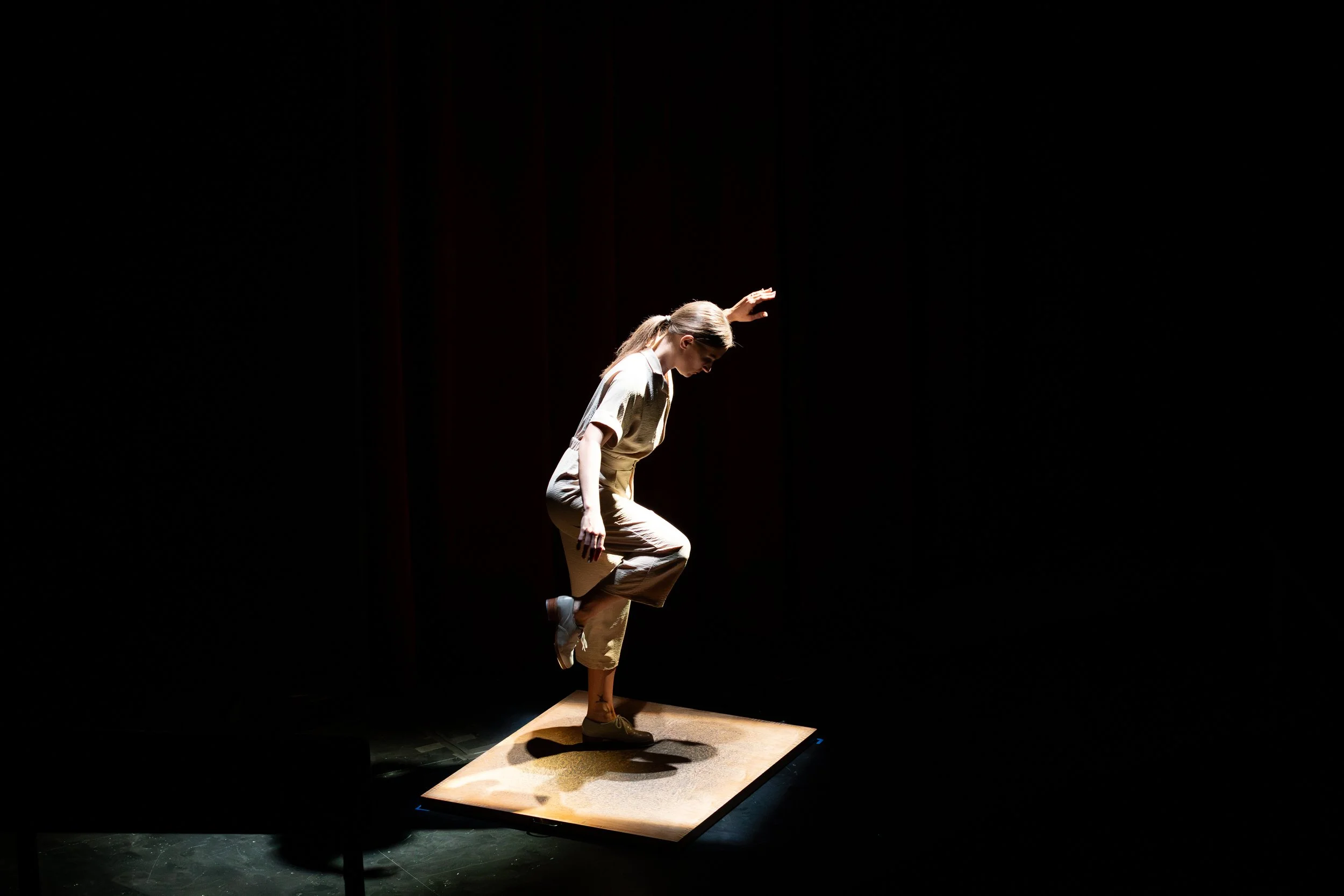
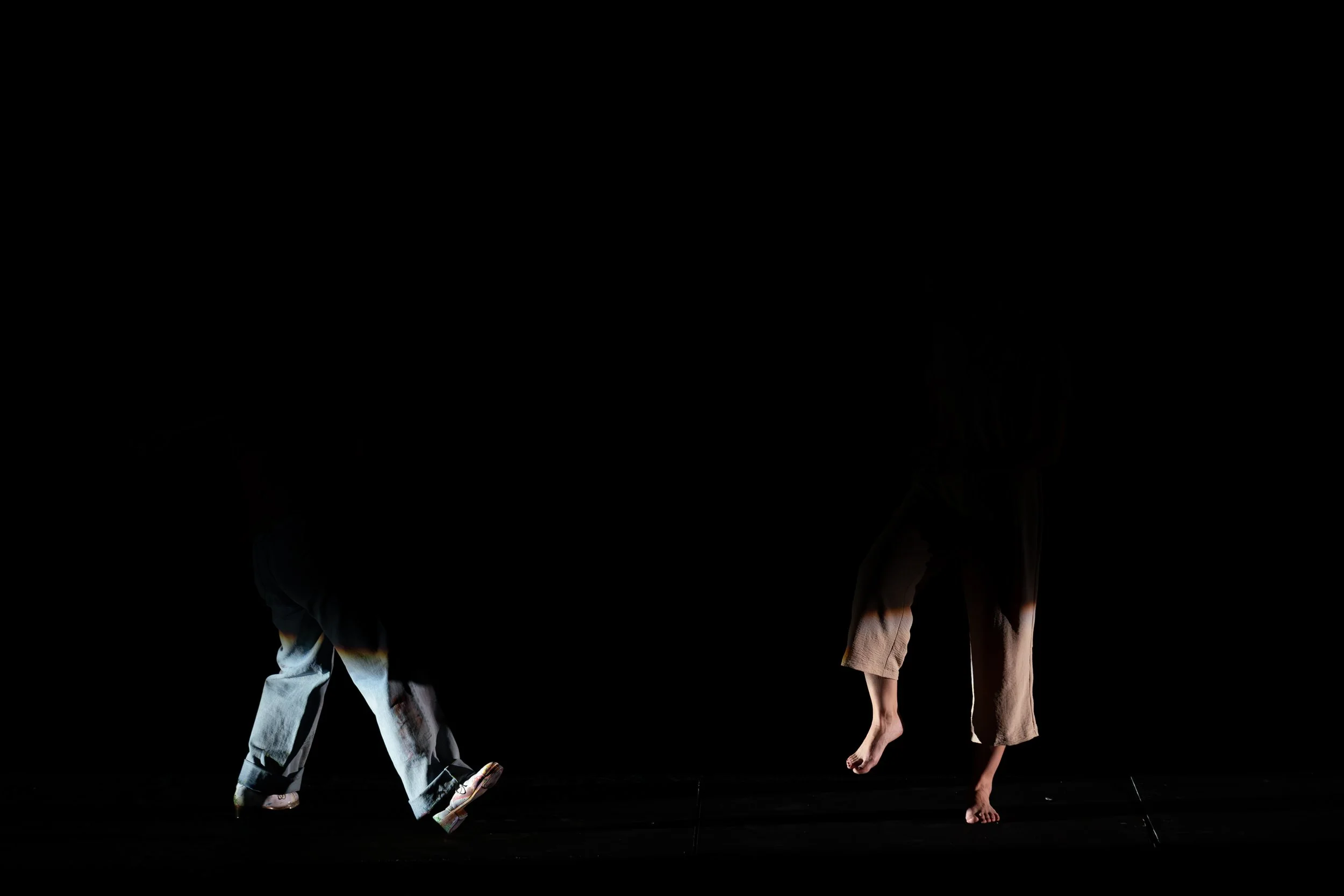
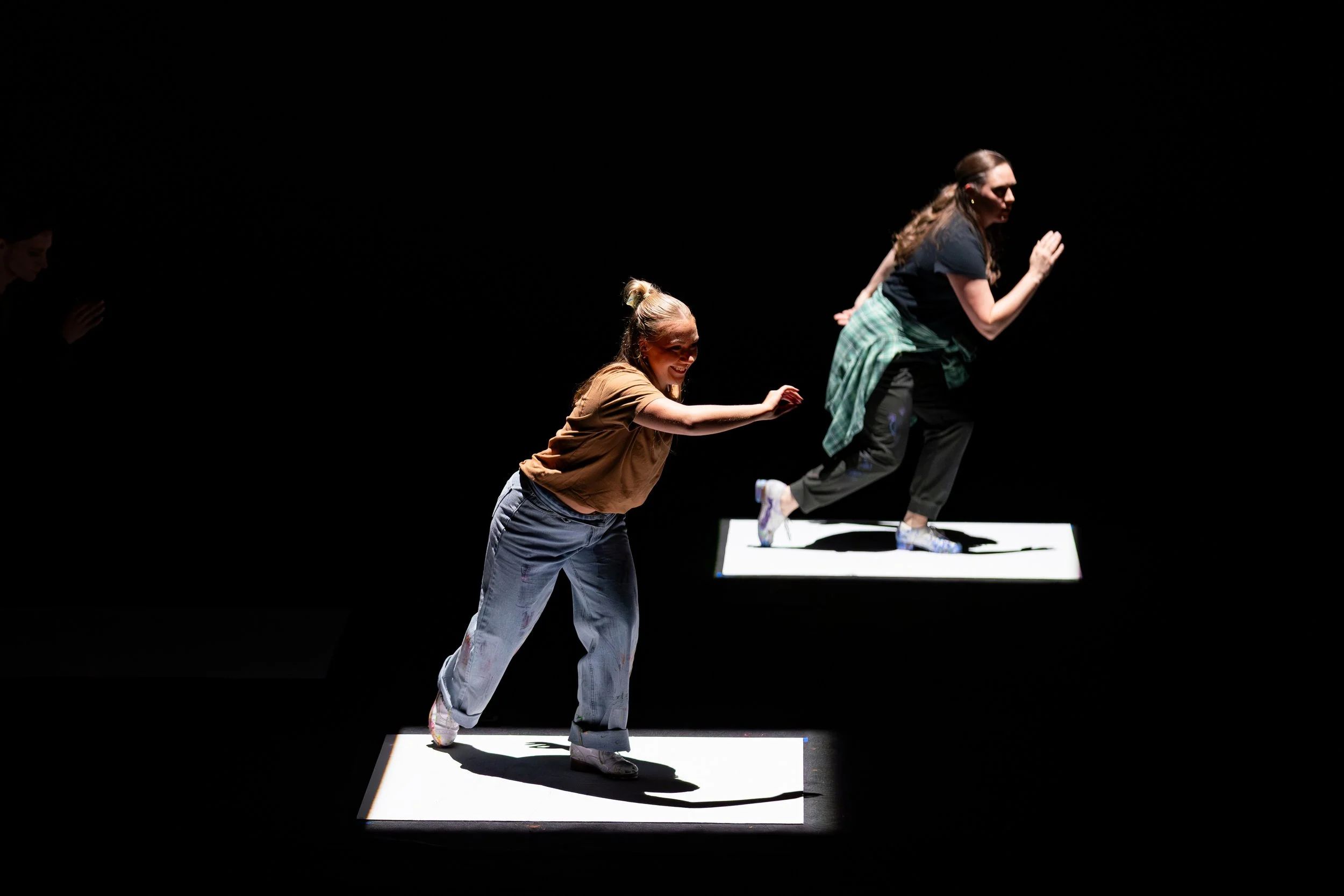
Sight, sound, rhythm, color. A convergence of many senses abounds in Lorraine Stippec’s work, “Trauma’s Tapestry.” This work unfolds itself quietly at first, then slowly escalates into an orchestral explosion of the senses. The grating sound of a heart monitor going flat introduces us to the world Stippec has crafted, an environment that aims to demonstrate how trauma can exist in the body in ways that exceed linguistic understanding. Stippec stands solitary, lit by a single spotlight in the downstage right corner. Trepidatiously, her hand slowly reaches towards her heart, as if to make sure the aliveness of her body is still here. Her feet begin to awaken as the tap shoes on them tickle the ground with quiet curiosity. The pulse of a beating heart echoes through the theatre. The meditation of piano strings begins to thread themselves through this pulsing soundscape, while her tap shoes gently integrate themselves into the conversation. A quick twitch of the toe, a sudden halt as the foot drags across the floor, an electric energy surges through her feet as she passes through various rhythms that are imbued with a contemplative composure. This beginning solo sets the tone for Stippec’s remarkable ability to thread multiple layers of emotion through the execution of contrasting percussive sensibilities. Her sense of musicality doesn’t just sit alongside the music, but fits itself inside the music itself so that each time her shoes strike the floor, a harmony of rhythmic emotionality occurs. As her percussive soliloquy comes to a close, she ventures out of the spotlight and into the darkness that surrounds her.
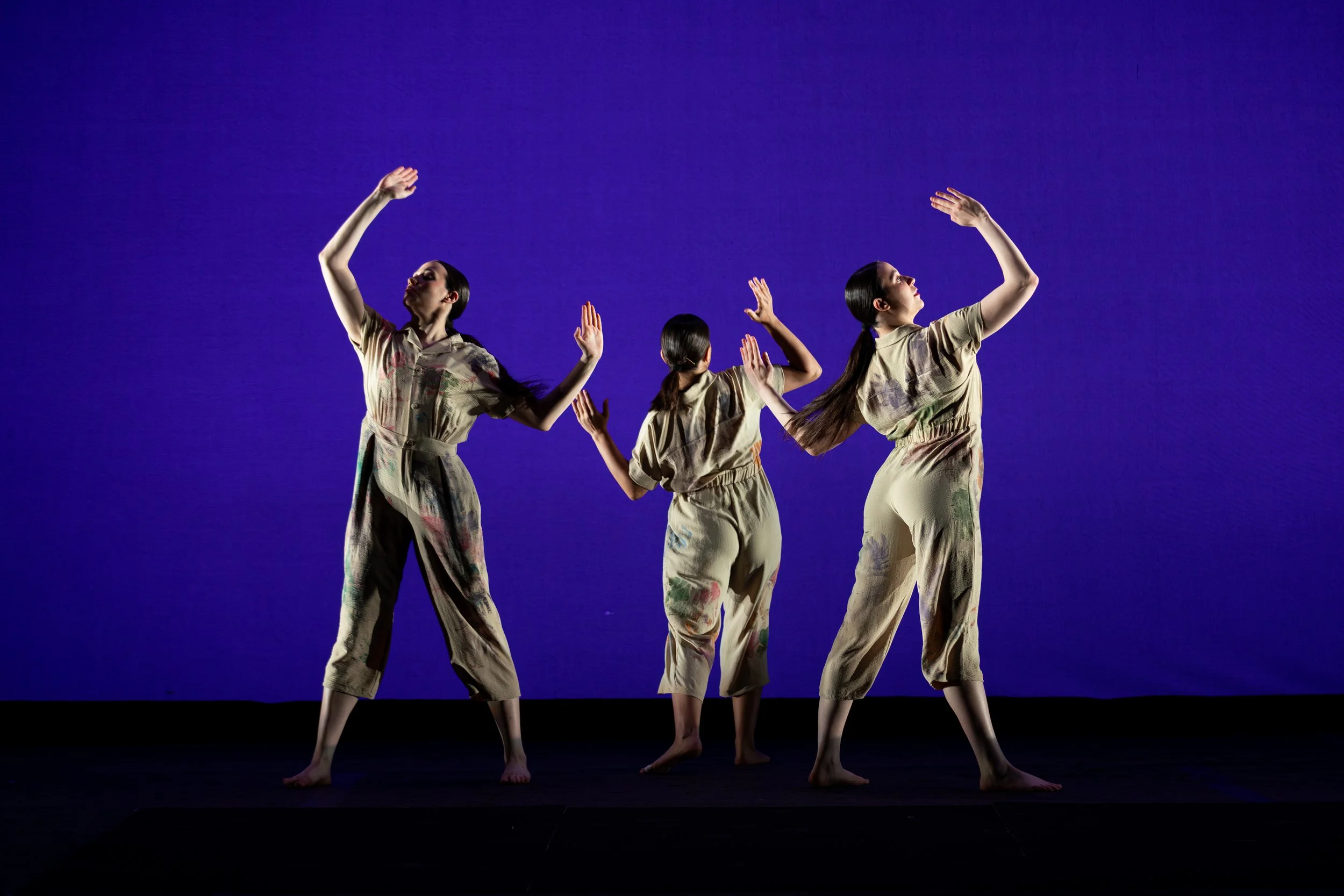
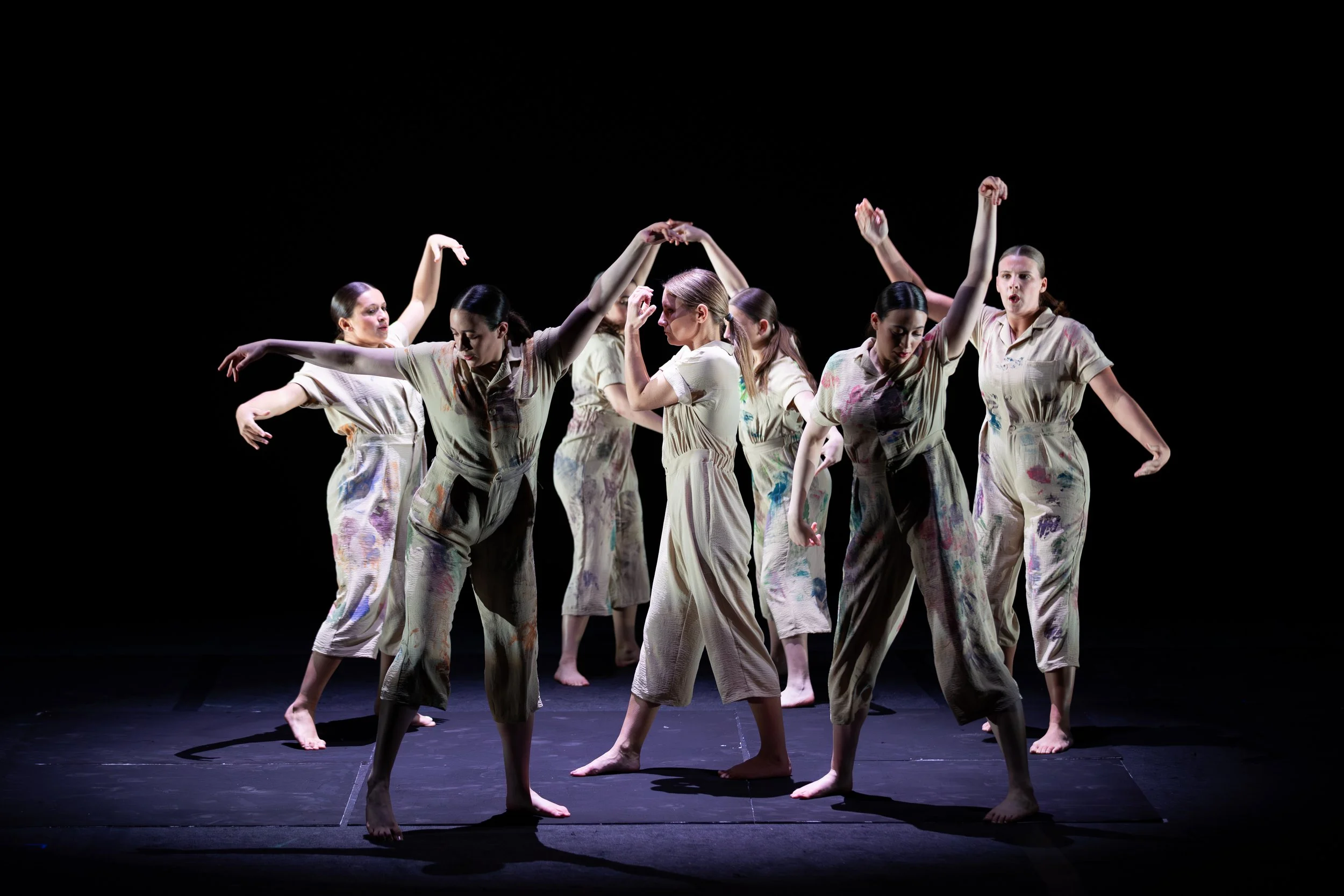
The next scene finds three dancers inhabiting the stage, their purple hued silhouettes creating a distinct atmospheric shift. In contrast to Stippec, these dancers are bare footed and indulge themselves in a more contemporary lyrical style of movement. The shifts in music create a subtle mellow drama to their full-bodied reaching as they plunge into deep lunges and reach with flexed feet behind them. As the dance progresses, four more dancers engulf the stage in similar movement, weaving in and out of each other’s bodies, and unwinding the tension that Stippec had previously introduced.
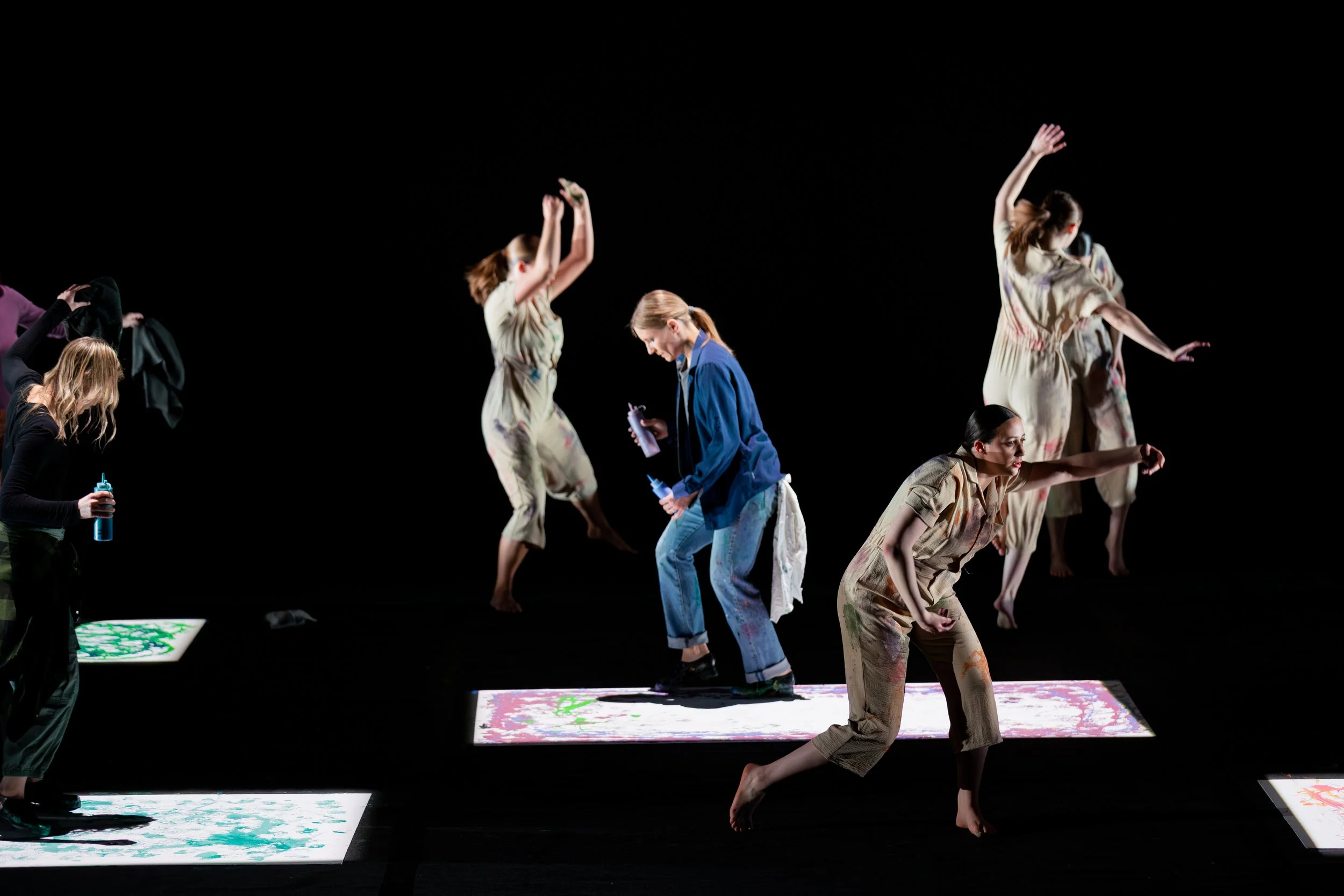
The final episode of this work is one of exceptional rhythmic dexterity among the entire cast of 12 dancers. Stippec and four other tap dancers execute an endless rumination of tap progressions and undulations of rhythm. At times they are in unison, but much of the time they are executing complementary rhythms that create a sea of percussiveness that engulfs the stage. Meanwhile, the other seven contemporary dancers are interspersed amongst the tappers on stage as they execute movements that breathe with an entirely separate sensibility from the tappers. All the while, the unending pulse of a heart beat echoes throughout the theatre. Whilst all this occurs, an element of spontaneous visual art is added to the mix as the tappers pick up bottles of brightly colored liquid which they splatter onto their tap boards below them. With all these various elements compounding upon each other at once, it is an experience that could be overwhelming, but Stippec’s ability to orchestrate just the right amount of stimulation allows the experience to be simultaneously cacophonous and soothing.
This final symphony of sound in Stippec’s work exemplifies how deeply complex her bodily experience is. Despite being a victim of gun violence herself, and persisting through the traumatic impact it has had on Stippec’s existence, her bodily persistence through the form of rhythm is not beholden to this singular event. And so, a simple cramp roll or a chug is no longer just a sound, but a symbiotic reaction to the deep weight that rhythm has endured throughout an entire life. As the program notes, the first rhythm we ever know is the heartbeat. Stippec uses the simplicity of that undercurrent to unleash a frenzy of rhythm that unveils the dynamism of existing in a body undergirded by trauma, but not defined by its aftermath.
Ultimately, this show exemplifies how dance is a vital form of research that can communicate ideas that are unattainable through linguistic study. Whether it be the complexity of trauma’s hold on the body, or the effects of diaspora within a community, these are subjects that should not be merely discussed through politics or traditional scientific inquiry. Rather, dance provides an outlet for these topics to take on new life, an embodied life. A vision of flourishing that emphasizes the body as a vessel of knowledge, enveloping each one of us into a landscape of corporeal understanding.
Photos by Carly Vanderheyden