
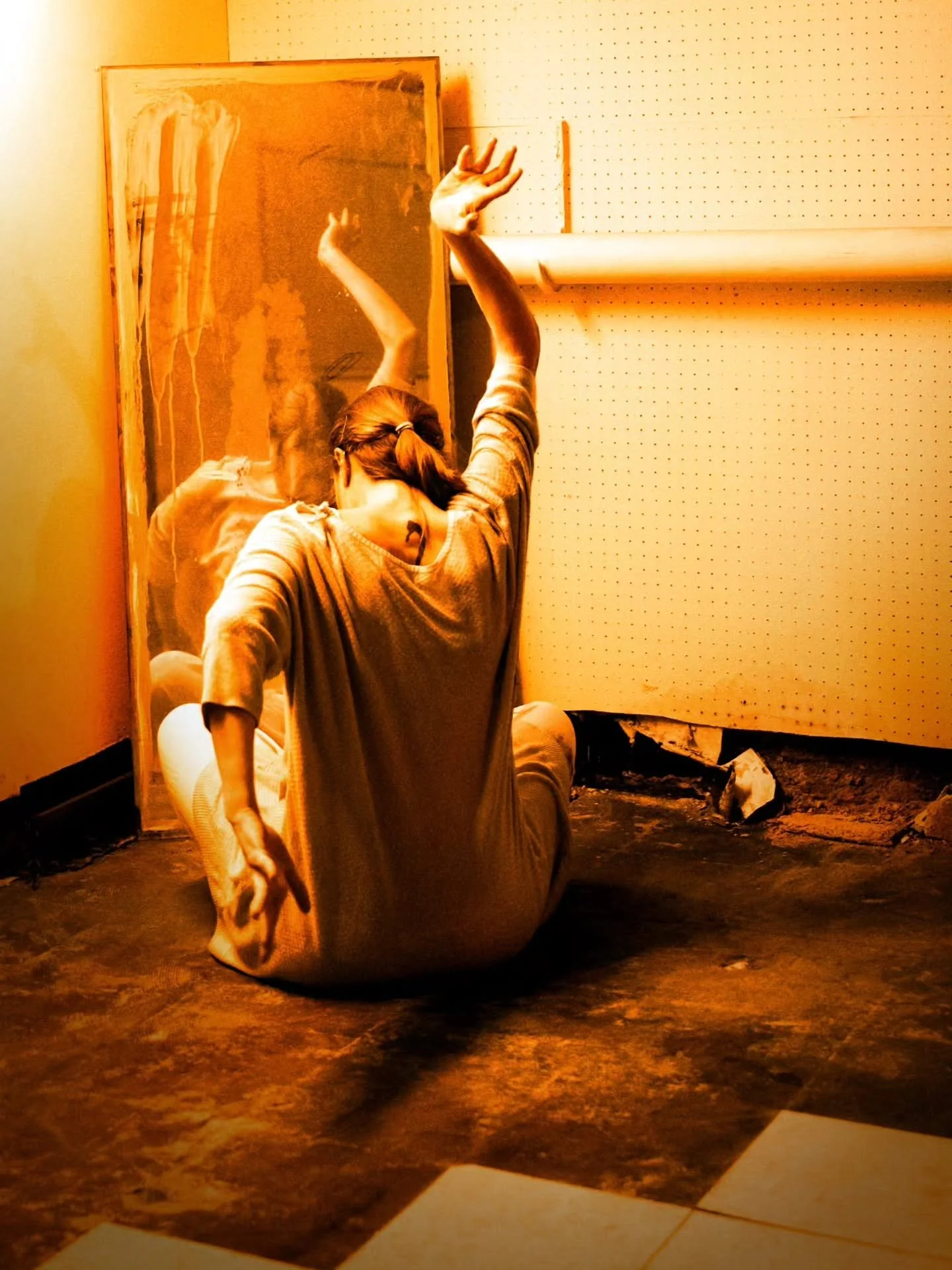
I am sitting on a stool in an old building on Cherokee Street with a yellow wrist band cinched tight to me. The room is large with light wood floors, a welcome table placed next to the door, and chairs sit in a shallow U shape to create a stage area. Behind some of the chairs and next to me is a staircase smothered in black at the bottom. I am here to see Leverage Dance Theatre’s show Beautiful Nightmares which was the fright and delight that any mild mannered and scared of their own shadow human can enjoy. Opening the show Artistic Director Diana Barrios introduces us to the rules of the evening and how to engage with the site specific works taking place. She even addresses some of the audience’s yellow wrist bands and how they show the performers we don’t want to be scared.
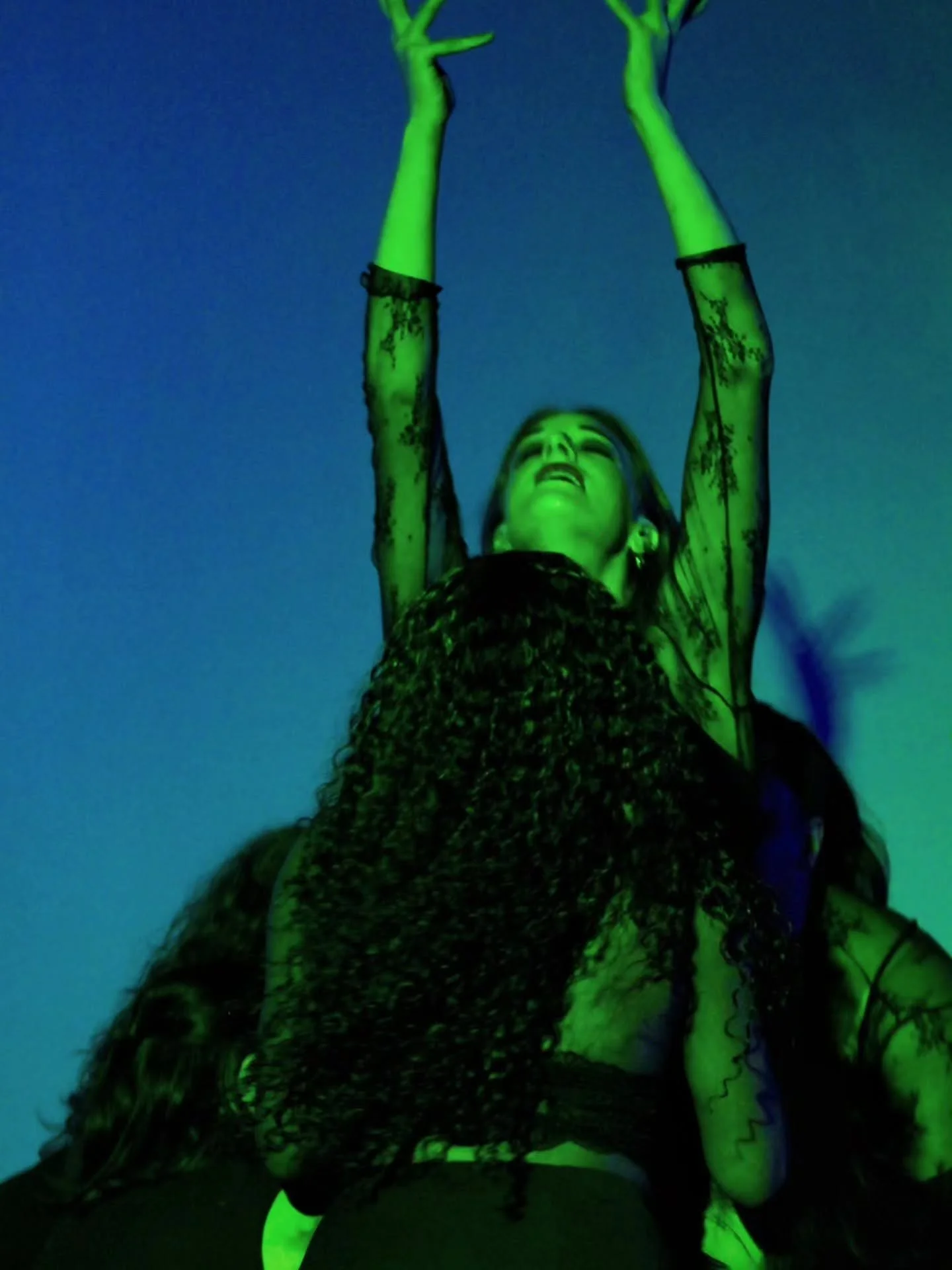
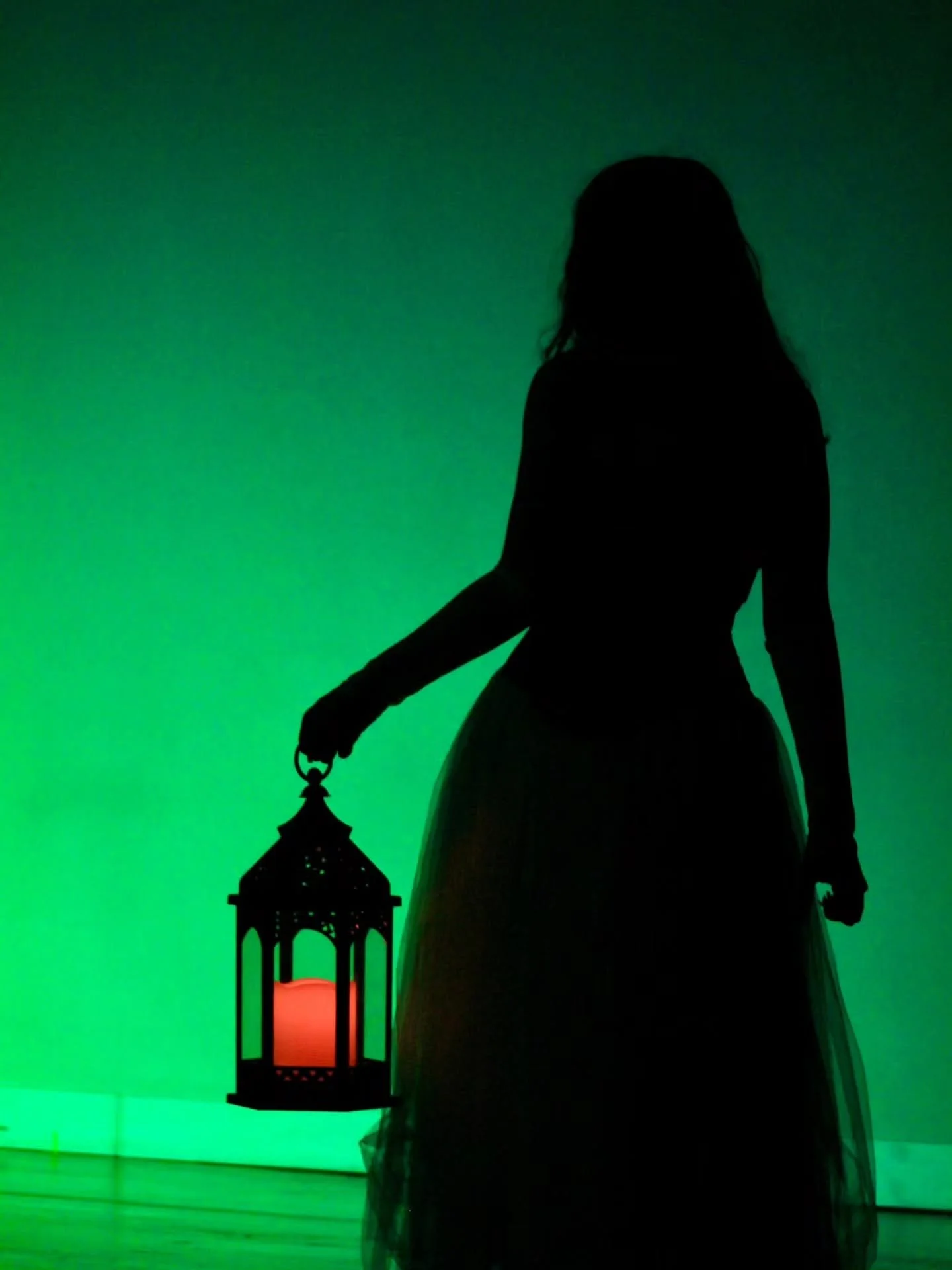
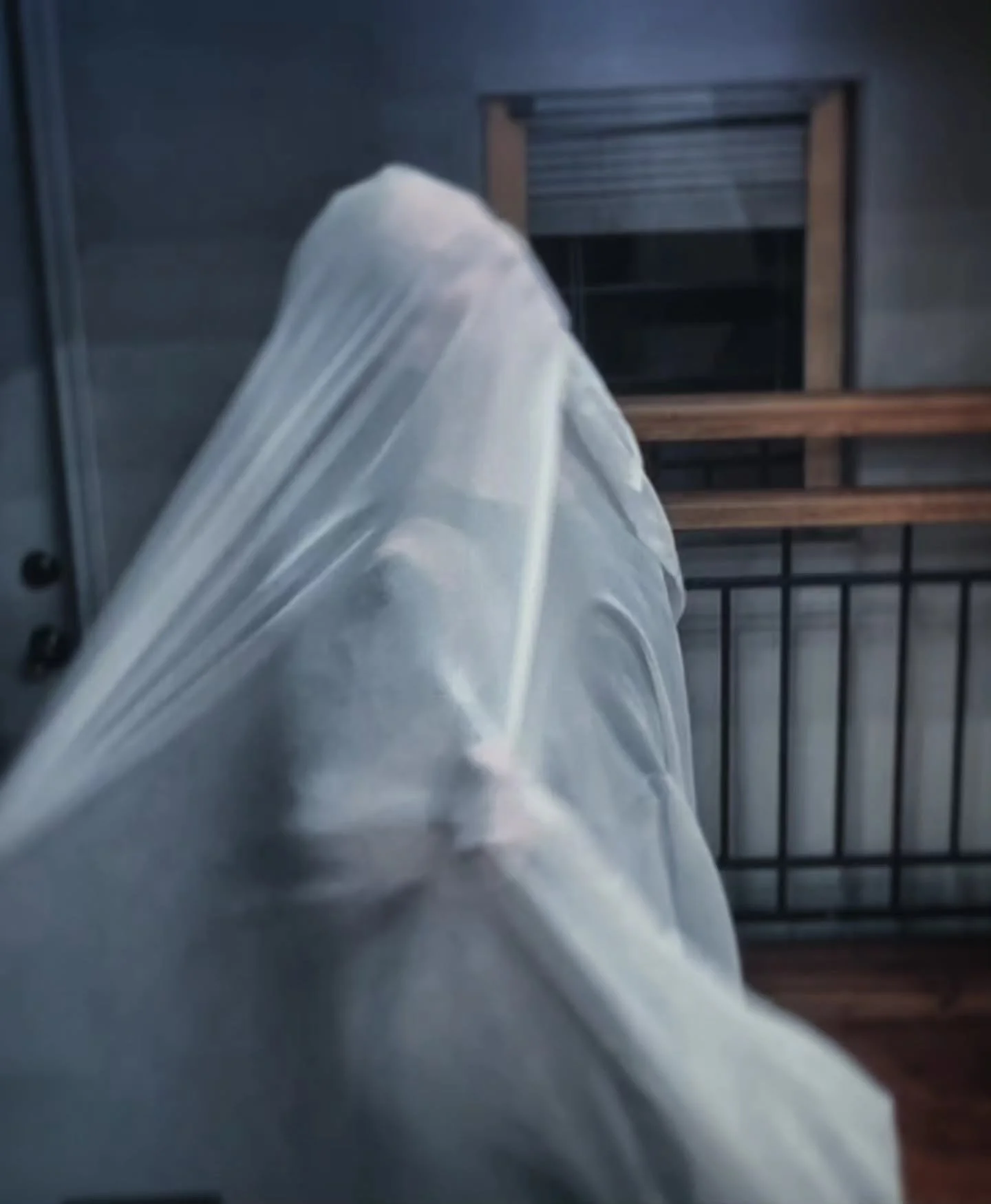
Beginning the show is Alisa Cooper’s work “Coven”. Enshrouded in black and holding a lantern, a lone dancer enters the dark space and tentatively looks around. She reaches out and summons several dancers on stage who enter with their own lanterns. As their shadows dance along the wall, they sway and toggle between unison phrase work and solo work that threads in and out of each other. Accompanying the movement, the dancers scream and cry out silently– their faces twisted in pain and hysteria. This work has a sort of ritualistic magnetism which creates the foundation for the show’s overarching storyline of coming together and resisting a fabled “Lady in White”. As “Coven” comes to an end, each dancer grabs their lantern and scurries downstairs leaving dancer Nicole Halama to perform a descending solo until she lies on the ground. Another key feature of the performance is Isobel Ramsey’s work as a dancer and vocalist. She appears and covers Halama with a white piece of fabric while singing of the Lady in White coming to take your sorrows away. Writhing under the fabric, Halama crawls to the staircase and slips down the stairs until she lies at the base. Singing entreatingly, Ramsey summons the audience out of their chairs and to the staircase.
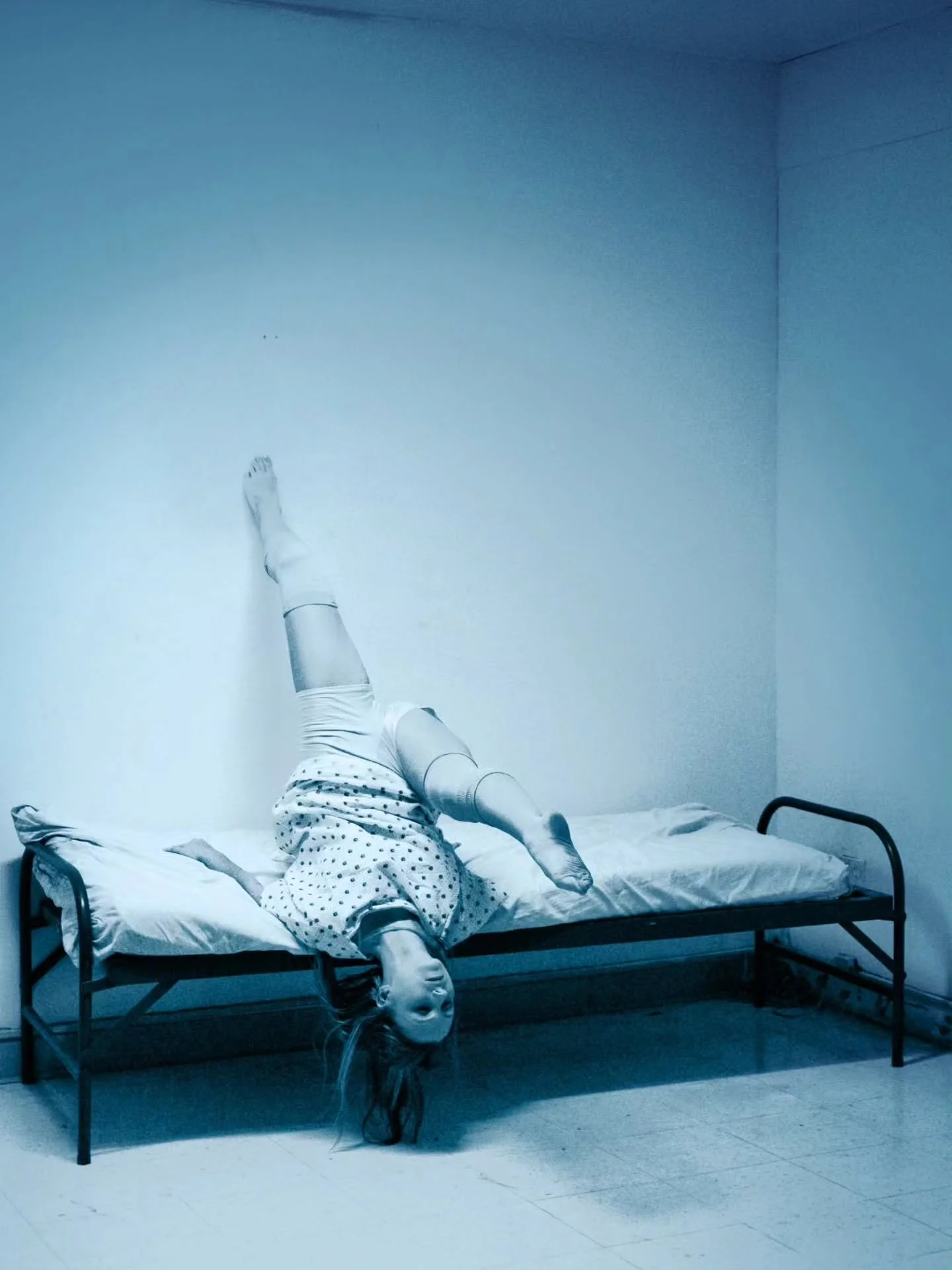
Now sitting on the stairs, we watch Halama twitch as if reanimating. Halama’s self choreographed solo, “Taken” is set to thudding electronic music which compliments her contractions and presses against the tangled fabric around her. Entranced, we watch her fight against the fabric which throughout the show acts as an item that captures and entangles dancers with the Lady in White. Halama claws her way to standing on the stairs, pulls against support beams, gasps under the fabric, and stretches until the fabric finally tumbles off of her. Heavily, she crawls up the stairs and reaches through the railings before tumbling back down. As she stumbles desperately around the landing, two hands reach out of the curtain obscuring the base of the stairs and encircle Halama’s waist, snatching her into the unknown. Slowly, a small hand peaks through the curtain and waves us down.
Walking down the stairs and through a dimly lit hallway plastered with missing poster signs of a small child, we arrive in a sparsely lit basement and see four dancers standing behind four metal support beams waiting for us to settle to begin Paige Van Nest’s work “Intercession”. Halama now walks through the space holding the swath of white fabric which the dancers attempt to grasp and pull from her. As the dancers move about the space, Halama’s now one white eye comes into view. The complex staging of “Intercession” has dancers threading through each other and working in a manner that leaves me feeling as if I am passing through the last hopeful moment of this journey. As the work comes to an end the white fabric is draped over dancer Alisa Cooper and she is dragged flailing from the space by Halama through a door in the back of the space. Halama reenters and sharply points through the door which we dutifully walk through.
Reaching the end of the hallway, we meet dancers Kyla Kikkawa and Taylor Lee who sit on stools each surrounded by five other stools of varying heights. There is an impressive physicality to “Structural Possibilities” that requires a keen kinesthetic awareness as the duet swing their legs, invert, and promenade on the stools. Regardless of the movement’s strength, the dancers are tentative and nervous, desperate to leave the space and out the door on their left. They glance at each other before beginning to finagle their stools into stepping stones towards the door. Together, they move stools with their feet and hands disassembling and reassembling a path until Lee disappears through the door and leaves Kikkawa alone. Stalking into the room, Halama– the full embodiment of the Lady in White complete with two white eyes– drapes her white fabric over Kikkawwa who struggles under it. Ramsey comes out singing, allowing for Kikkawa to deftly climb off the stools and out the door. Angered by this, the Lady in White smacks the stools to the ground and points us through the dark door.
Approaching the hallway we hear discordant strings playing and walk past Lee who now sits angrily playing a cello. The next room we enter is more of a vestibule: it is an open space with two hallways on either side. Dancers sit in folding chairs with black eye make-up smeared across their face ready to begin Barrios’s “Erasure, Compliance, Disintegration”. Twinkly music clicks on in the background and the dancers start twitching, draping backwards on their chairs, and slumping forward. This work acts as a connection and set up for the final section of the show. Throughout this piece, the Lady in White captures the dancers with her white fabric and draws them to her. The dancers resist, but they are incapable of escaping. The piece ends with three lone dancers walking around the space bumping into the walls and clasping at each other slack jawed and caught by the Lady.
The next section is a collection of solos created and performed by the company in various rooms in the vestibule’s hallways. Earlier, vocalist Ramsey sang of coming to the Lady in White to have your problems taken from you. Ramsey is back and this time sings entreating us to “see all the secrets we no longer keep” and the issues which caused the dancers to be taken by the Lady.
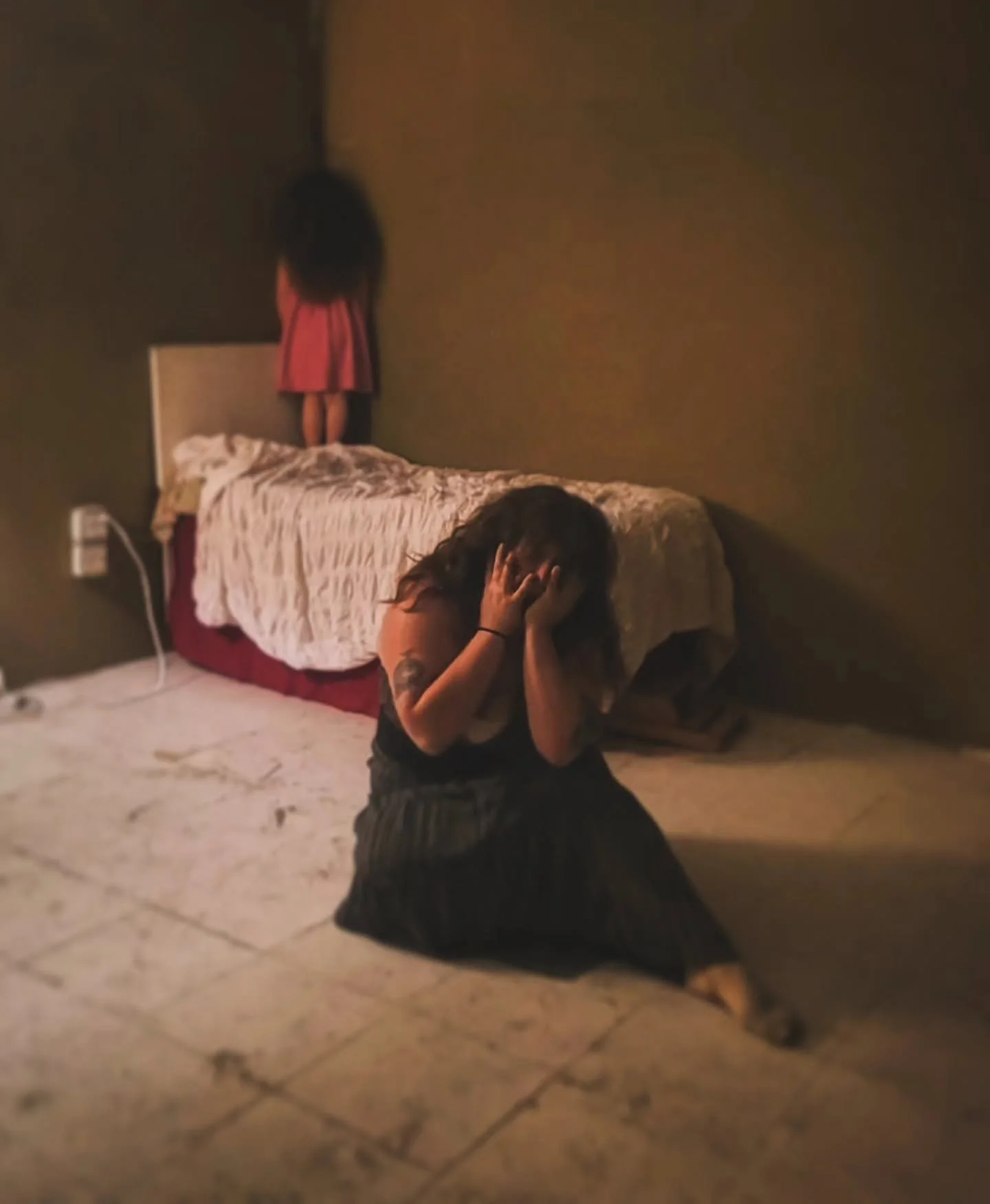
All of these rooms feature various fears or circumstances we might face as humans. In Ramsey’s room “Heartbreak” she sings of soured love and betrayal while Lee’s solo “Tethered”-- where she is tied between two wires and dances en pointe before a pile of ballet clothing and shoes– describes a deep love and commitment to an entity that can mangle you. Kikkawa’s “Unsubstantiated” explores anger when systems of power disregard victims of abuse and Eileen Campbell’s “Mama” highlights the concerns of motherhood and inherent worry. Campbell’s piece features a mother whose child is missing which tied in the missing child posters of previous hallways. The last two rooms feature Dekylah Epps’s “Manic” and Vivian Simpson’s “Liminal”. Wearing fabric like a second skin, Epps’ uncovers uncomfortable mania which contrasts Simpson’s Liminal which utilized fabric dripping from the ceiling to create distrust and unease.
Exiting the last room, we are directed by dancers in white, gauzy cloaks back into the open area where “Intercession” was held. In the middle of the room between the support beams are a collection of stools. Anxiously, the group sits down and looks around the space– we are alone. “Reckoning”– originally set by Keli Brook Hermes and restaged by Nicole Halama– begins with the dancers walking into the space carrying their lanterns singing: “May your sorrows vanish from sight; offer them up to the Lady in White… we’ll wait for you ‘til the day you die”. Circling us around us like prey, the dancers reach to us before threading through the middle and moving us to the edges of the room. In the center of the room, Halama claps conducting the dancers and they begin screeching, thrashing, and calling out as they repeat movement phrases from “Coven” before falling to the ground. Ramsey begins singing “We have been waiting for you everyday, it's the day that you die” which calls the dancers to standing. Pointing to the audience, they stalk towards us until they are within a breath’s distance. They hover and the lights go out.
When the lights come up and I see the friendly faces of the cast, I am shocked the show is already over. The movement of the show and the ability to move about the space created a seamless experience I hope to repeat next year. I am appreciative of LDT’s ability to create space for those who want to engage in the eerie, but from afar and I look forward to seeing another Beautiful Nightmare next season.