
Spotlight On: Space Station Dance Residency’s 7th Season
Space Station Dance: Who are we? Where did we come from? Why are we here? Where are we going?
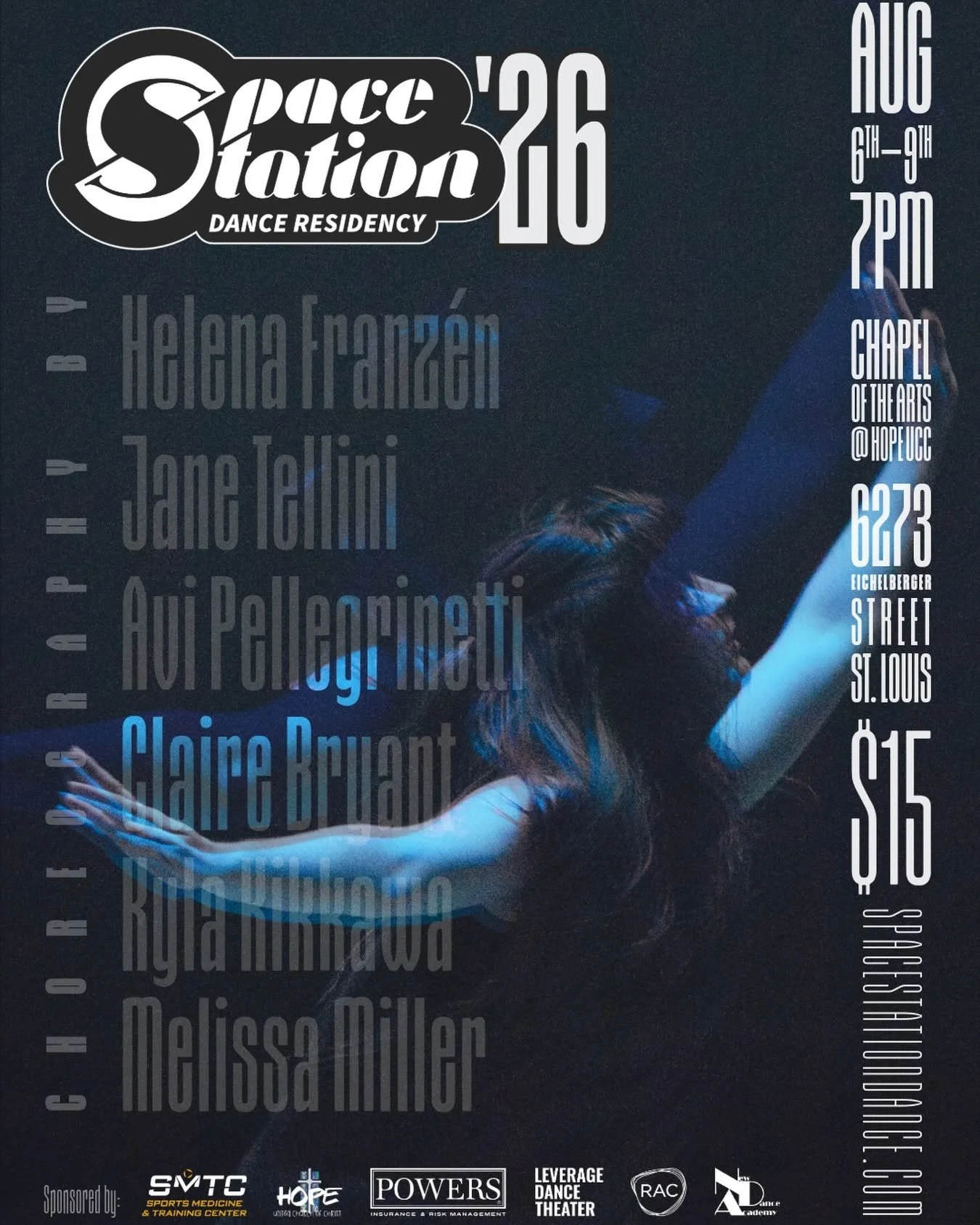
Space Station Dance is a choreographic incubator for St. Louis artists dedicated to experimental concert dance. We are in our 7th season and have just hired our largest ever group of participants for our upcoming summer residency, which you should add to your calendars. August 6-9 at 7 pm at Chapel of the Arts @ Hope UCC. As I reflect on our steady growth, I wish to share our mission and ideals with the St. Louis dance community, as we continue to push boundaries and raise the bar.
My name is Jacob Henss, and I am the Artistic Director of Space Station Dance. As a dance educator, I teach and fuel a desire for innovation in our craft. I see this same mindset in many other artists, especially my colleagues, friends, and peers in St. Louis. This desire, I feel, I recognize, and I believe we need more of in the world. A desire to strive, to explore the world and ourselves more deeply by using dance as our expressive medium. I often think of choreographers as creative explorers, with each new work or reworking of existing material an attempt to discover something new or remind us of things we may have forgotten. I always viewed performers as adventurers offering their sweat, energy, time, and scores within their bodies in a space for all to see. The whole journey of experimental dance is one of vulnerability and curiosity.
Space Station began as a vanity project of creating a space for my own choreography to be presented during Covid. In the seven years of its existence, it has evolved into a valuable outlet for St. Louis artists, and I believe that our existence is vital.
Space Station is expanding the opportunities for freelance dance artists through our unconventional structure and the artistic freedom built into our daily practices.
To elaborate on that last sentence, we have converted a chapel space at Chapel of the Arts @ Hope UCC to be a black box theater in the round. I curate our shows sometimes barely knowing what the final products will be, so the creators and artists can truly have artistic choices up until show time, and we make it a point to hire most, if not all, dancers who attend our auditions. It is a low-pressure and low-stakes environment, which in turn releases the artists from the pressure that they have to produce “substantial things” and more into a state of excitement and exploration. We are just trying things out with a performance as the laboratory. This same environment puts audience goers in the show, and the electricity from art-making happening in real time is invigorating.
We are truly dancer-forward. For our upcoming residency, we implemented an audition process of hiring dancers first and then curating our choreographic applications to utilize all these performers. In support of our dancer-forward model, we try to hire everyone who auditions for our summer residency, and this year we are hiring 28 performers and 6 choreographers, one of these choreographers being our first international guest, Helena Franzén. And all are paid. In turn, this challenges our choreographers to adapt and grow. They must negotiate their concepts to fit more performers than they may have planned.
I would like to put emphasis on “grow” in the context of art and dance. Rarely is the final product of a concert dance work 100% of the initial idea we wanted to begin with. Perhaps the original concept was for a solo, but then we must adapt to the flux of dancers and community members that have come to be a part of our thing, and then we are posed with questions and problem-solving moments; can this concept be a group work but retain a kernel of the original inspiration? All of this thinking and planning before we even enter the rehearsal room.
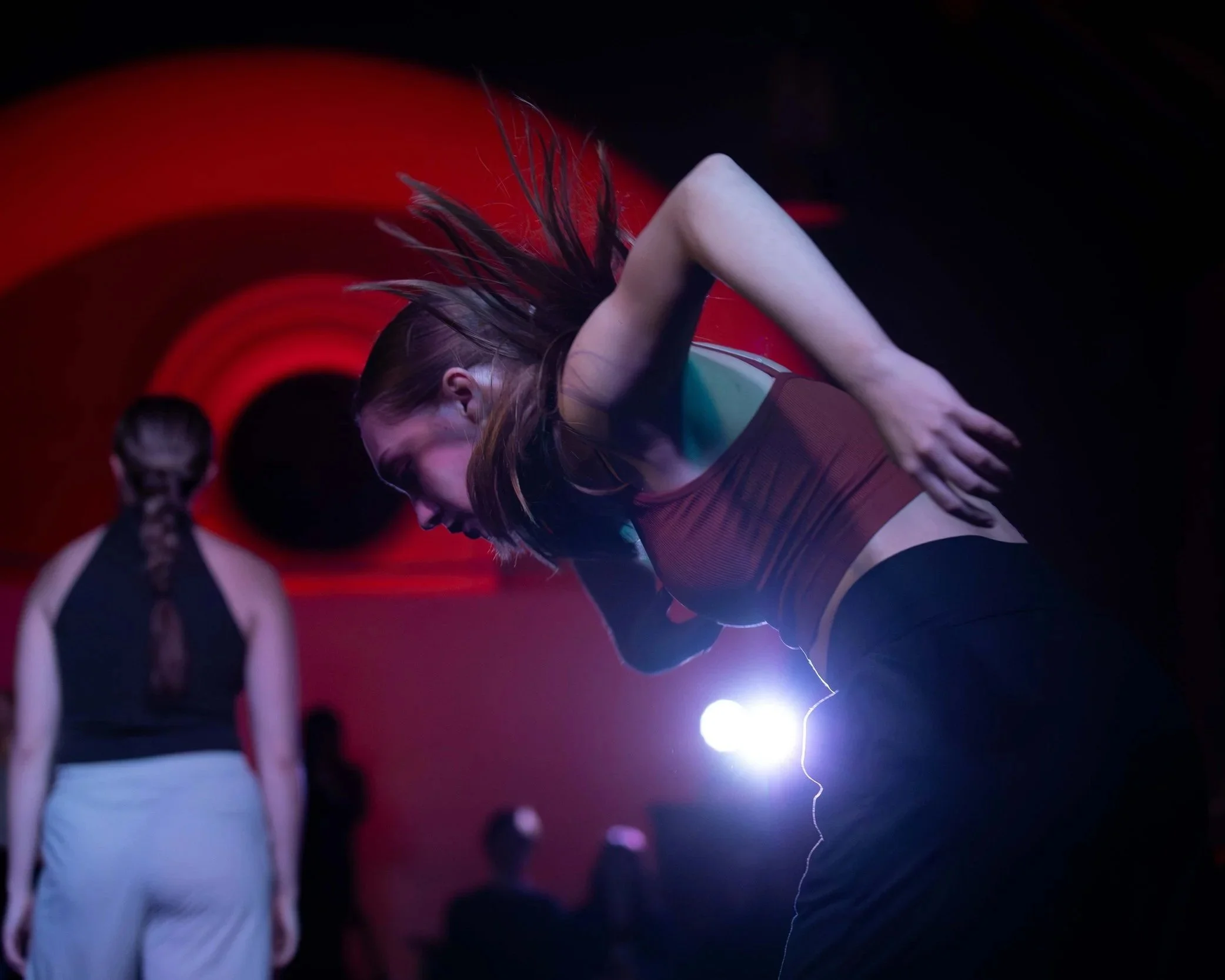
I repeat myself from before, but I find this process of constant shifting to be exciting. It is grounded in our organizational structure, in that we allow and bring to the forefront this agreeable instability, which is necessary for art and dance to keep adapting and changing to respond. I find it completely relatable to our current political and societal point in history, where I wake up unknowing of what I will read and see that day to some extent, and I am internally asked to negotiate and find myself within this sometimes unwanted shifting. I hypothesize that our audiences feel similarly when they attend our shows. They are never fully sure if they will be happy, angry, melancholic, or rubbed the wrong way in our performance spaces, but they negotiate and find themselves within our work, even if it just confirms dislikes or biases, or maybe the absurdity at times is just humorous and a change of day-to-day mundanity. That is what dance and art should do, and more of this is always needed. To some degree art trains its viewers to negotiate the world, and is a shared experience with the real people around them. It is a connection to a long history of humanity.
Space Station promotes experimental dance, but we actually support experimentalism in all its forms, not merely as an aesthetic but as a mode of thinking and creating to keep pushing the self and share this with the society around us while our artists’ individual voices are present and centered.
To aid artists in having their artistic voice seen and heard, Space Station offers them opportunities to produce their own shows, which is another side of our organization, different from our summer residency. They may curate performances as they see fit (with support and mentoring from us) and walk away with 100% of the ticket sales and sometimes even receive an additional stipend from Space Station. This is an unusual model but a very successful one, resulting in several amazing, beautiful, and innovative evenings of dance so far this season. I am committed to this model and have no plans for Space Station to form a standing company. I want us to remain a free entity in the St. Louis community where students, freelancers, and company dancers converge and mingle. By taking some of the pressure off of the creators by offering basic financial support and other resources, the creators can focus on the art and the world. This makes self-production achievable for up-and-coming artists as well as seasoned dance creators, and I believe this sense of artistic belonging helps artists to plant roots in St. Louis and view it as less of a transitional city and more of a developing mecca for concert dance.
Space Station is very intentional with its choices. For example, we promote choreography in the round because this allows patrons to see all floor work, but also allows the viewer to be literally in the piece and thus be more invested in it. It also poses questions for choreographers to analyze, like what is frontal-facing choreography, why is it needed, and why must we always present ourselves from the direction of being displayed for viewership, when instead we could be inviting people into our creations and worlds? I challenge all dance creators to think of movement as the central component of the creation. Of course, we utilize lighting, sounds, props, and music as aids to our artistic expression, but when these elements solely become the mode of communication and the dance doesn’t carry it by itself, I often question why we make a dance then. I could go down a rabbit hole of artistic preferences and ideas, but that might be another writing.
Regardless, Space Station is here to coach, train, help, pay, create, inspire, and more for the St. Louis dance community. Let us be what you need us to be for your artistic expression, dance career, and more, and we are always ecstatic to see what you do.
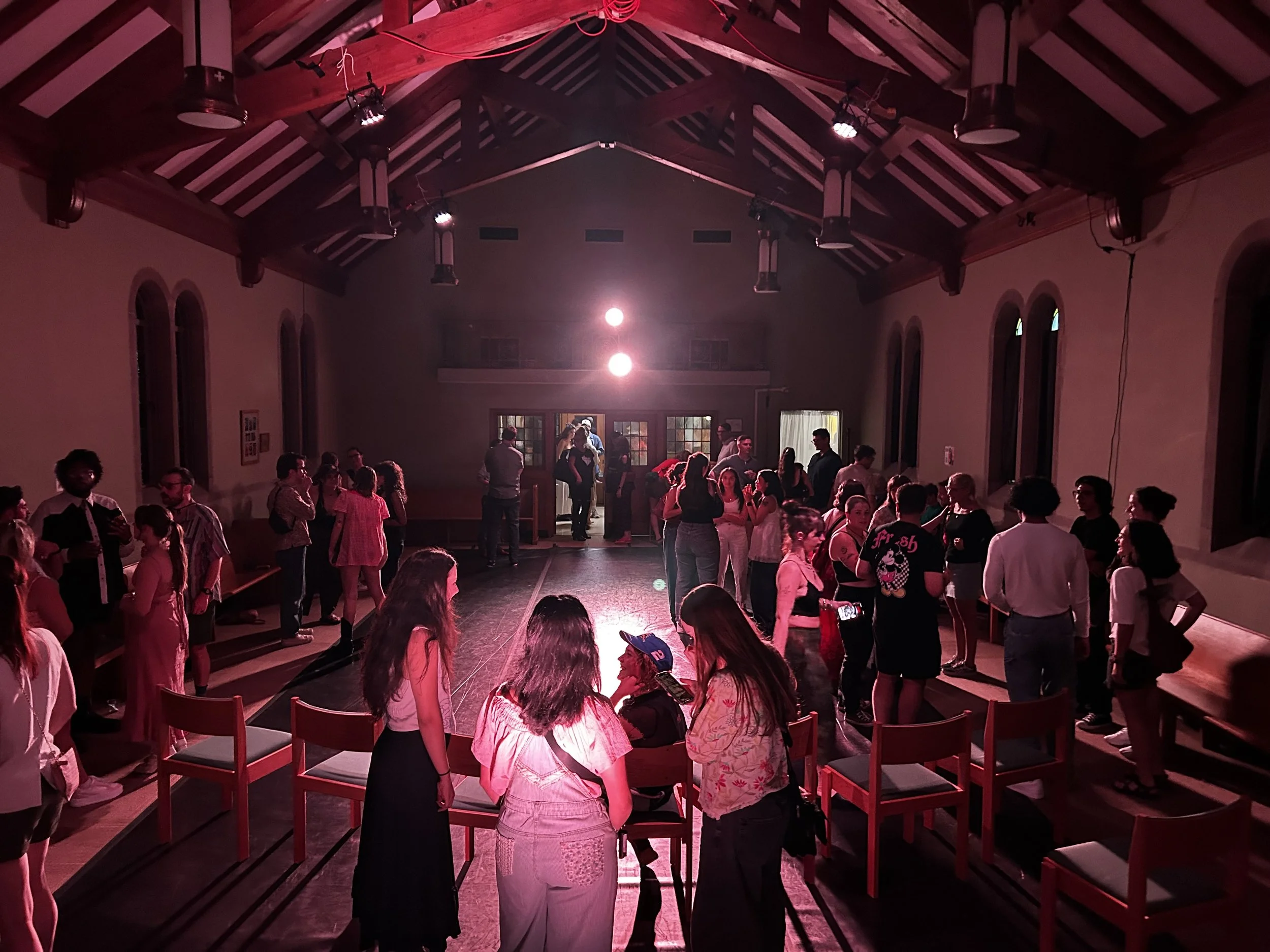
Please join us for our upcoming residency, August 6th-9th, and please check out our website for our upcoming freelance performances.
Photos provided by Jacob Henss, Space Station Dance Residency