
HQ Review: Melissa Miller presents process-driven performance, The Walleye Project
I still have no idea how to describe experimental dance. This is not a genuine problem that I think requires addressing, but one would think that after a degree in dance, a variety of professional dance experiences and countless evenings spent in dim theaters viewing and reviewing dance, by now I would have come up with an adequate personal definition. It plagues me, in a way, not to know what to say when I meet a new person and they ask me, “What do you do?”
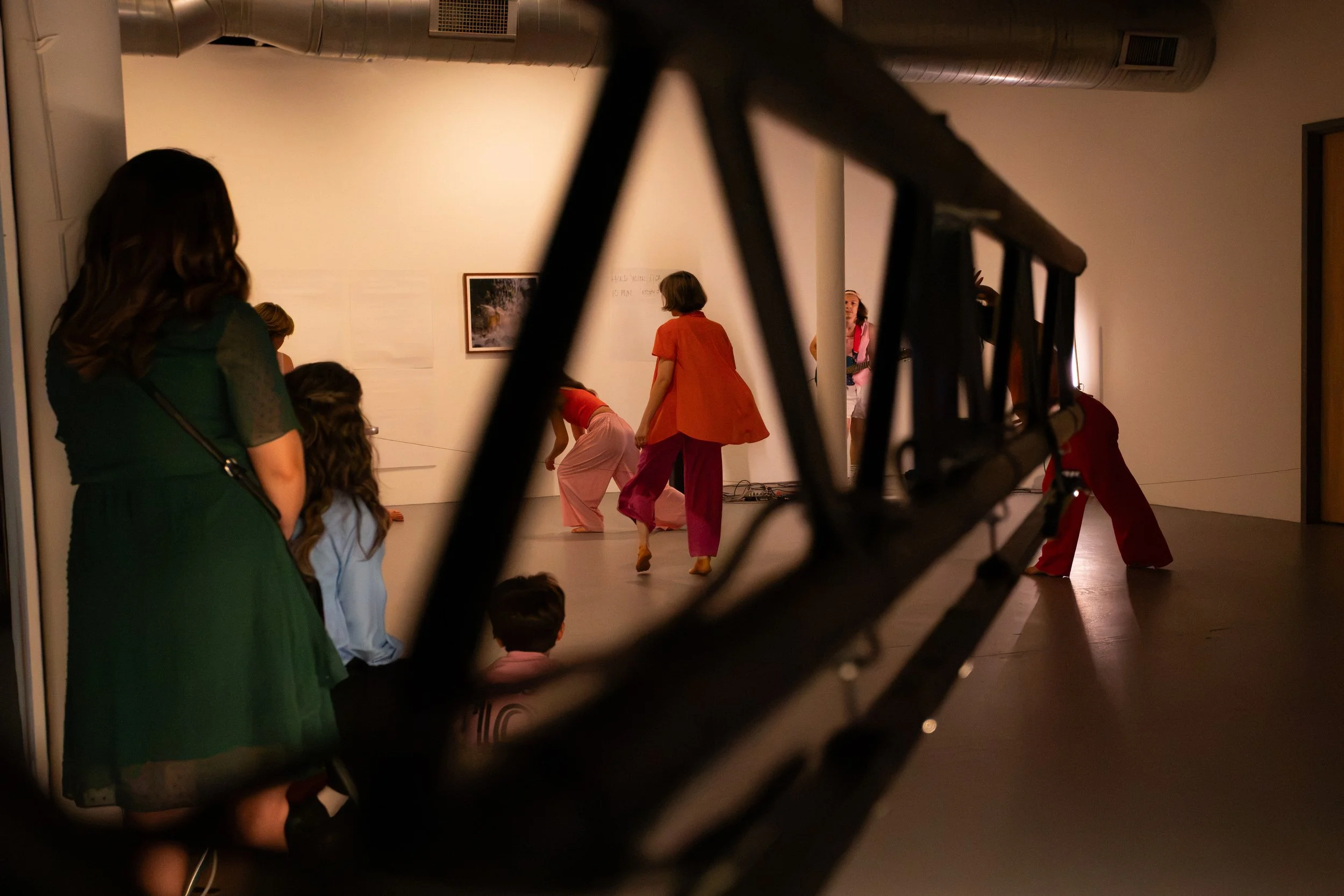
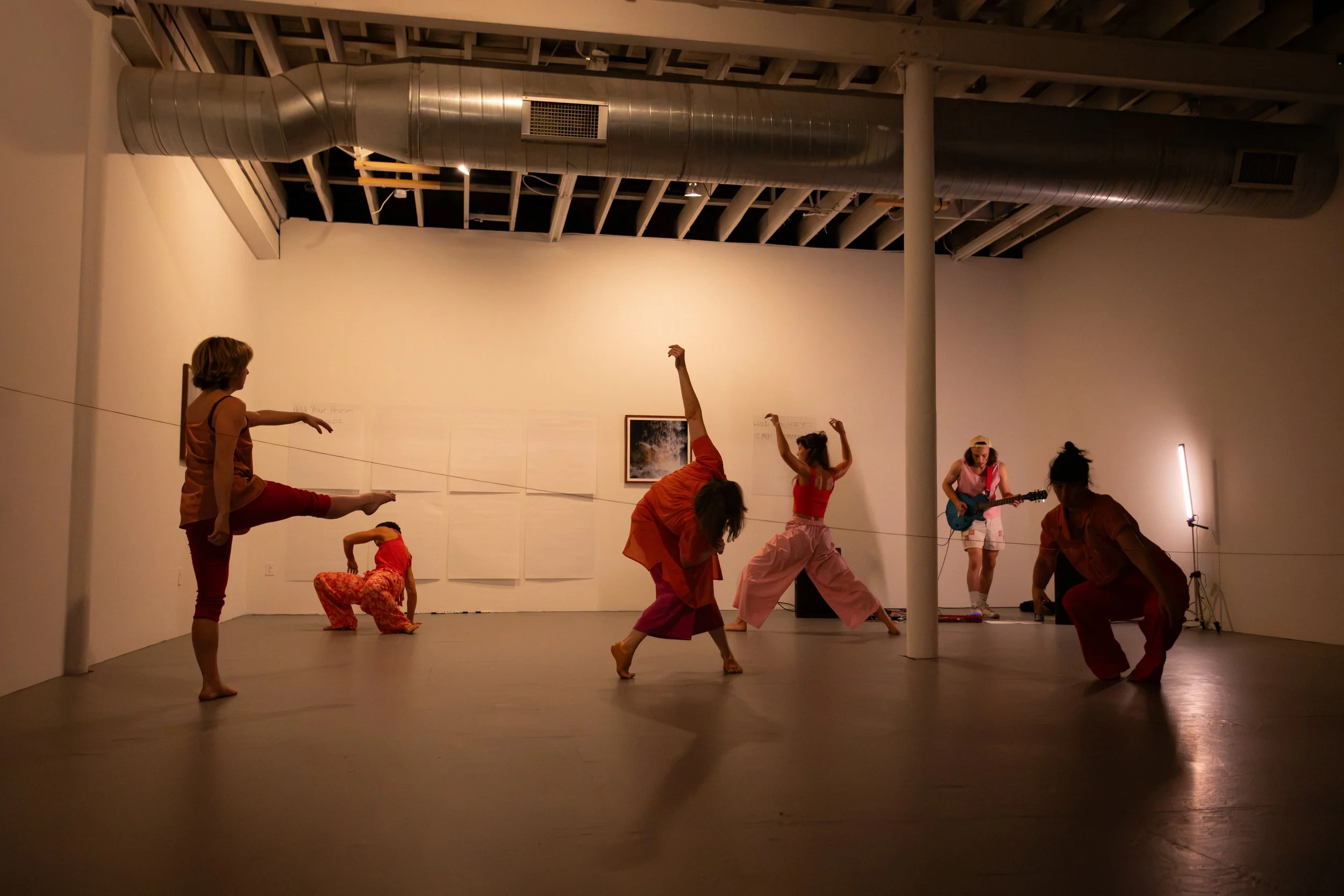
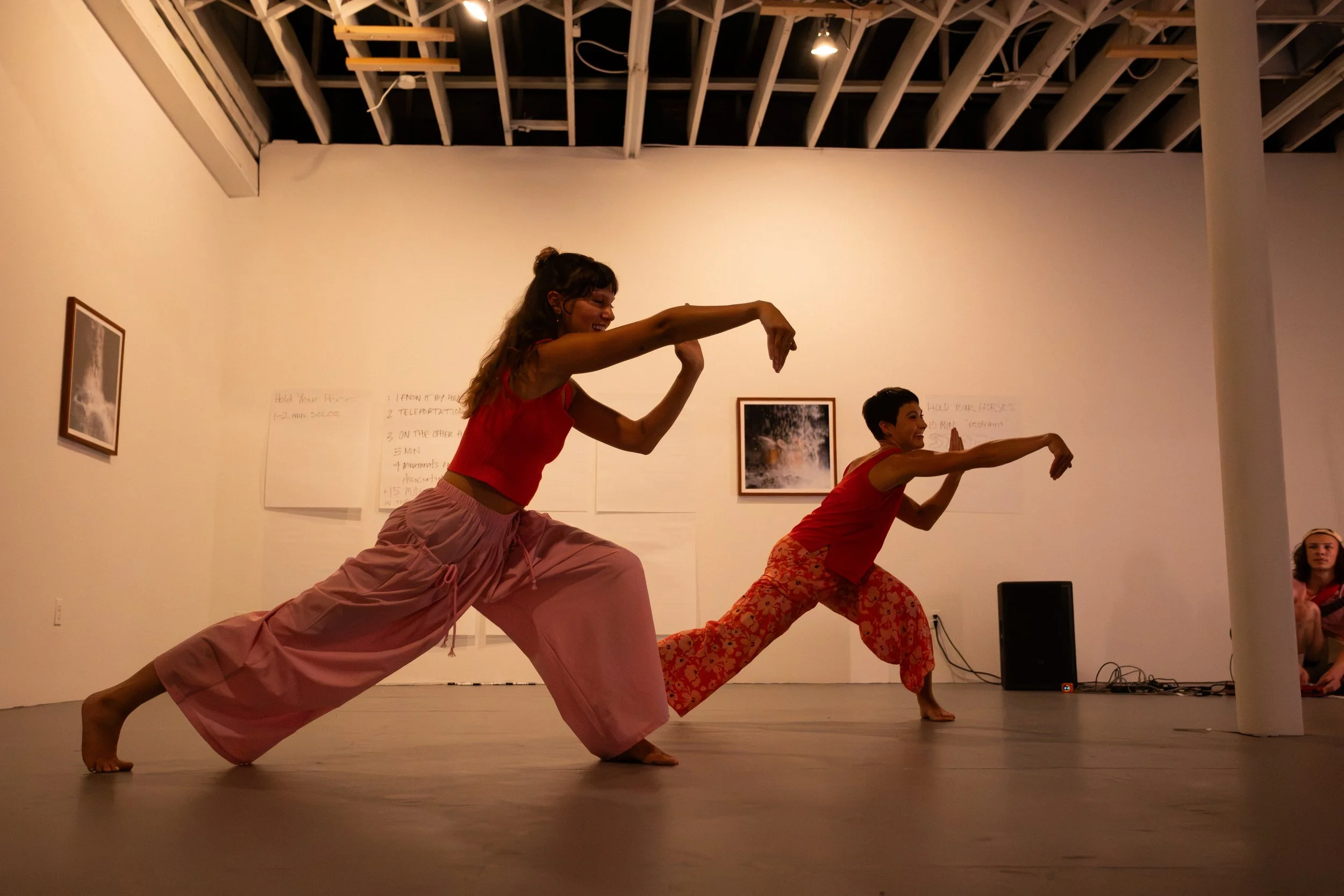
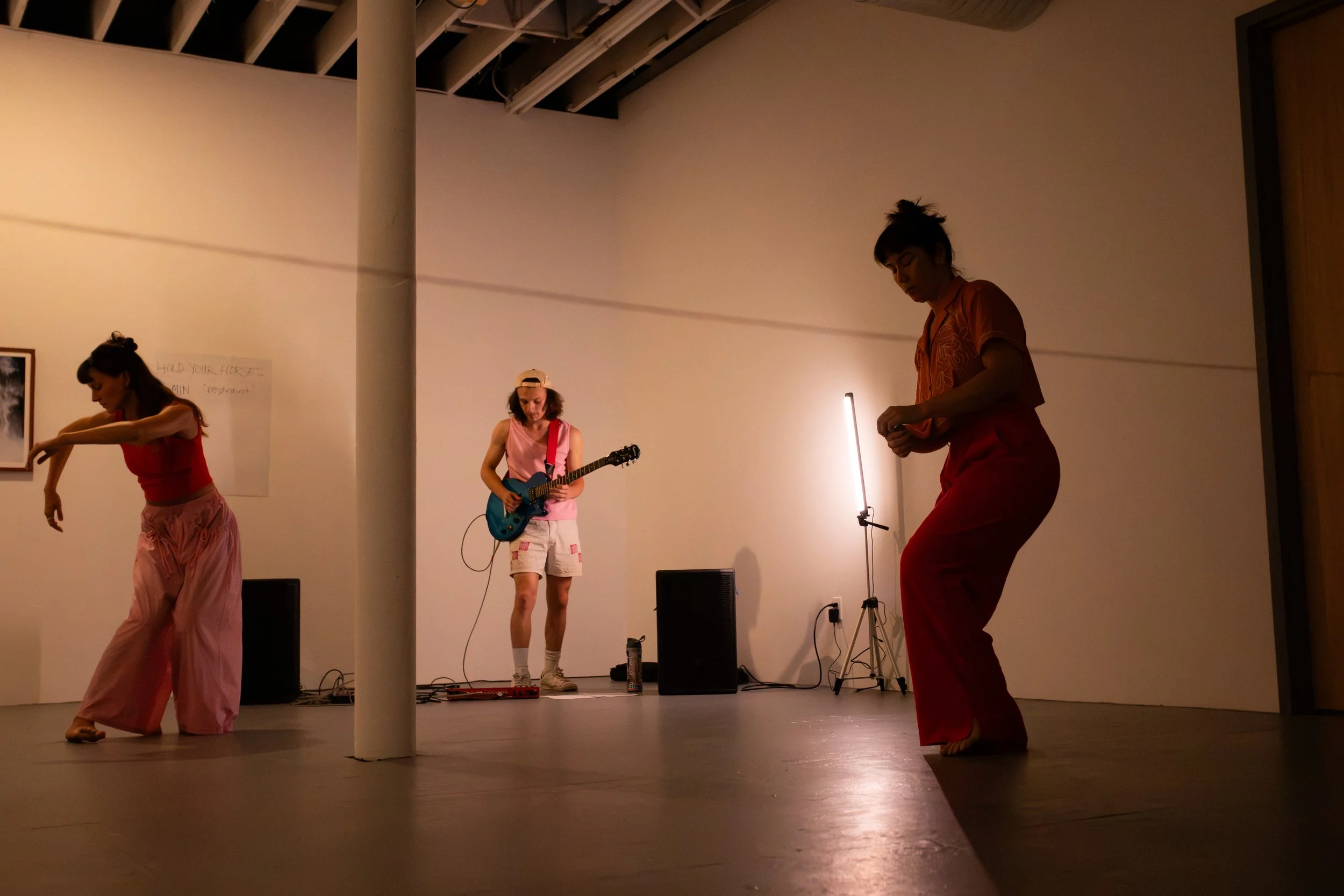
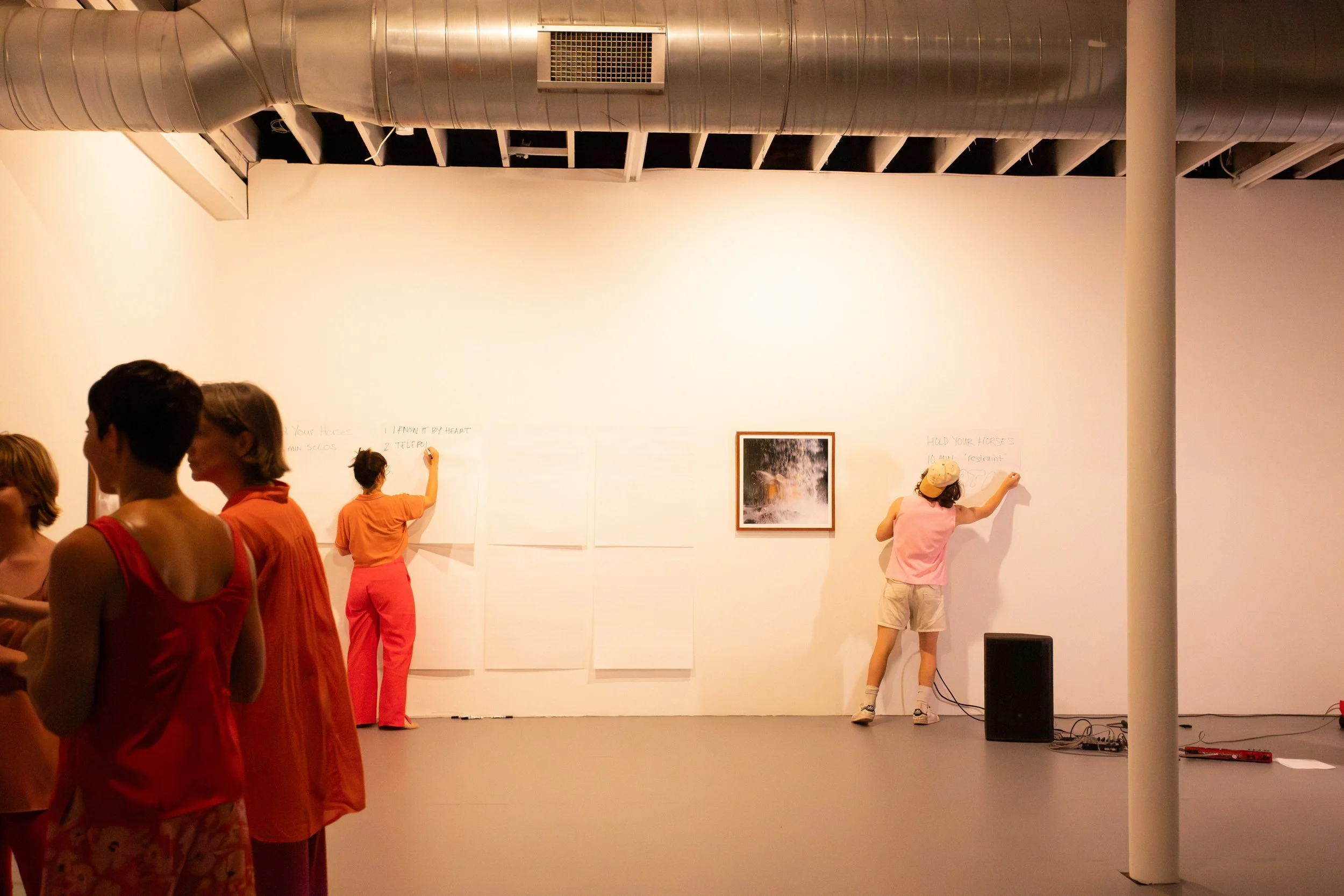
The Walleye Project brought me closer to my personal definition than I have ever been. This is not because it pursued any sort of clarity or language surrounding this elusive form—I figure that would be in direct contention with director Melissa Miller’s intention for the project. Yet, in a small corner of the Luminary Gallery, its pure white walls plastered with sprawling handwritten prompts on mega-large sticky notes and dancers offering their own quirky additions to the space, I found something sincere. This entirely process-driven performance felt like a rare and charming glimpse into the disorder that experimental artists call home. It felt similar to peeking through the curtains of someone’s living room, or eavesdropping, except that in this case the door was flung open and we were invited to add to the conversation.
The pursuit of accessibility in the arts is a noble task, and many fall short. I am not referring to the very important work being done to make dance accessible through methods like live audio descriptions and digital accommodations. I am instead referring to the works themselves, hiding behind a comfortable gauze of somewhat coherent movements and metaphors, allowing their ‘point’ to go safely and disappointingly uncommunicated. Other times, when dance works make it to the stage, they are polished, gleaming and perfectly flat. Missing is the process; the raw, gloryless effort, full of the meaty good stuff that got the work to what it is.
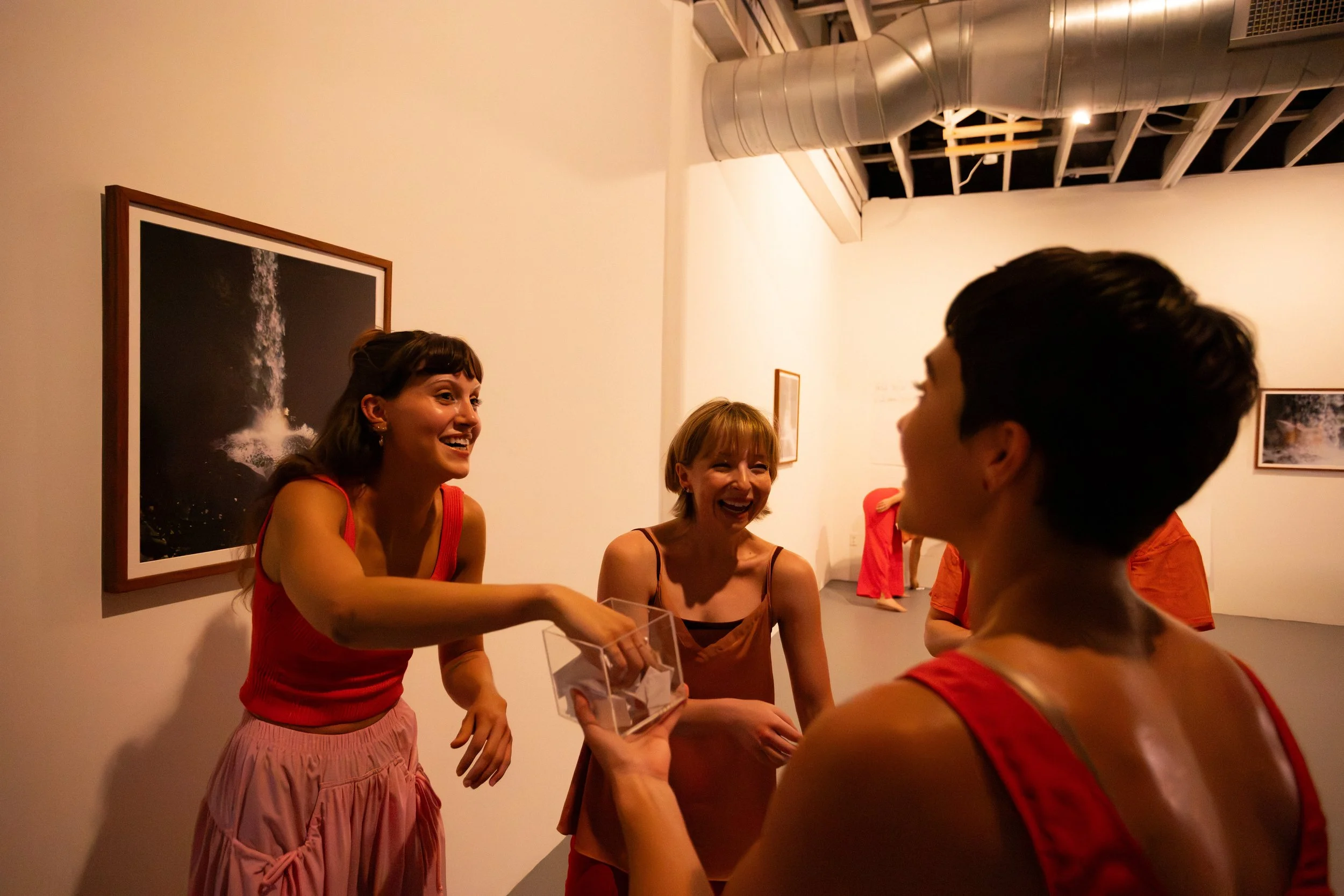
This “process” is what Miller is after with The Walleye Project. Miller designed the evening with the audience in mind, inviting them to contribute to the text prompts from which the dancers created, even requesting objects from their person. Somehow, a toy car, a plastic turtle and a fedora made it into the show. Miller inventively carved windows into the ever-elusive process of contemporary dance-making, which is typically kept behind closed doors until the work makes it to the stage.
“Performance is often the death of what we’ve done. The process, the point of all this, is to share the crazy magic alchemy I'm obsessed with. Instead we share what is alive or being born in the moment,” Miller said.
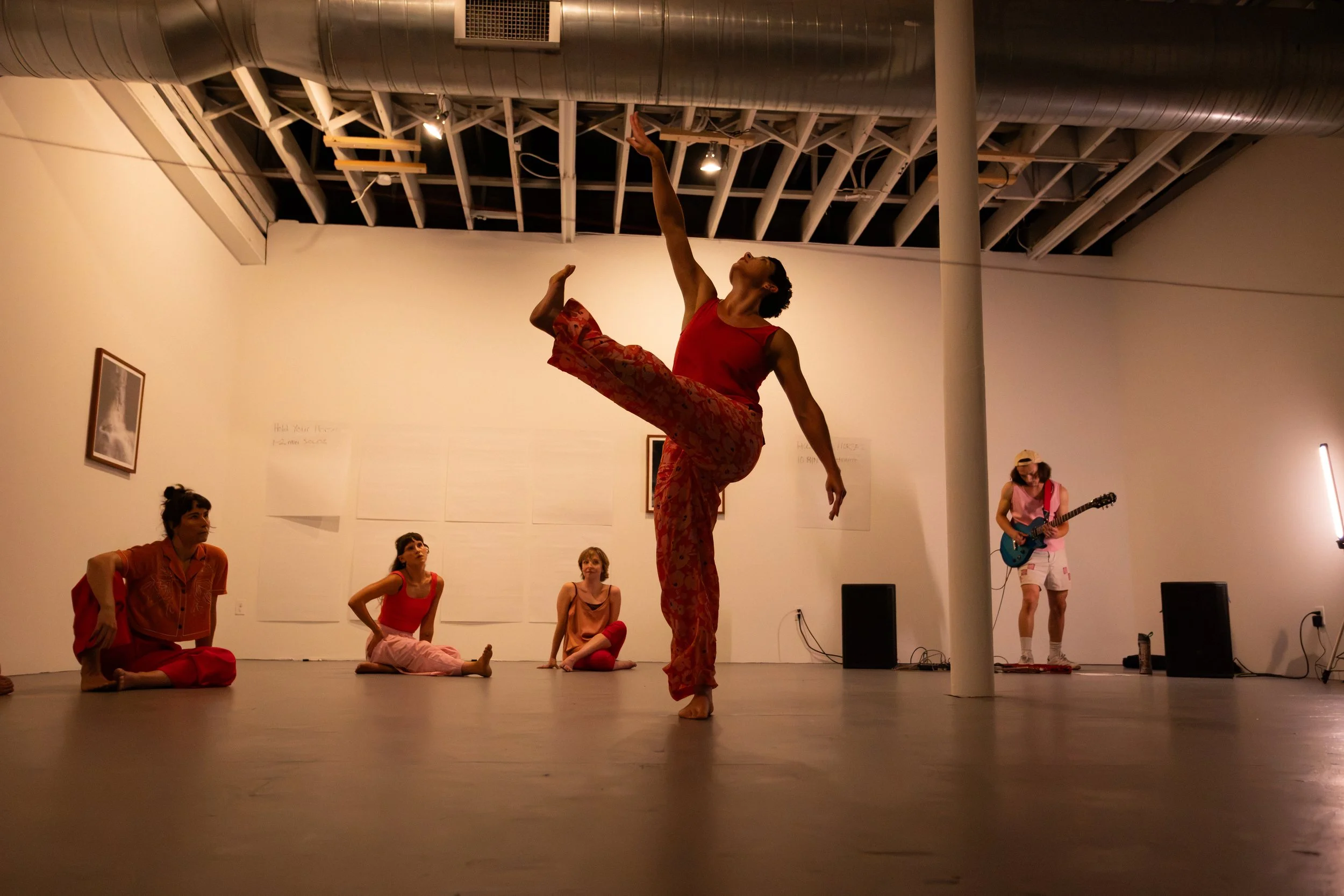
I had the opportunity to attend their final rehearsal the day before the show. To practice the conditions of the upcoming evening, collaborators Jane Tellini, Monica Zesch, Erin Morris, Ramona Johnson and Tayler Kinner practiced pulling written prompts from balled-up papers and responding with movement in the moment. With 10 minutes on the clock, the artists and accompanist Gabriel Vianello were sent off to create.
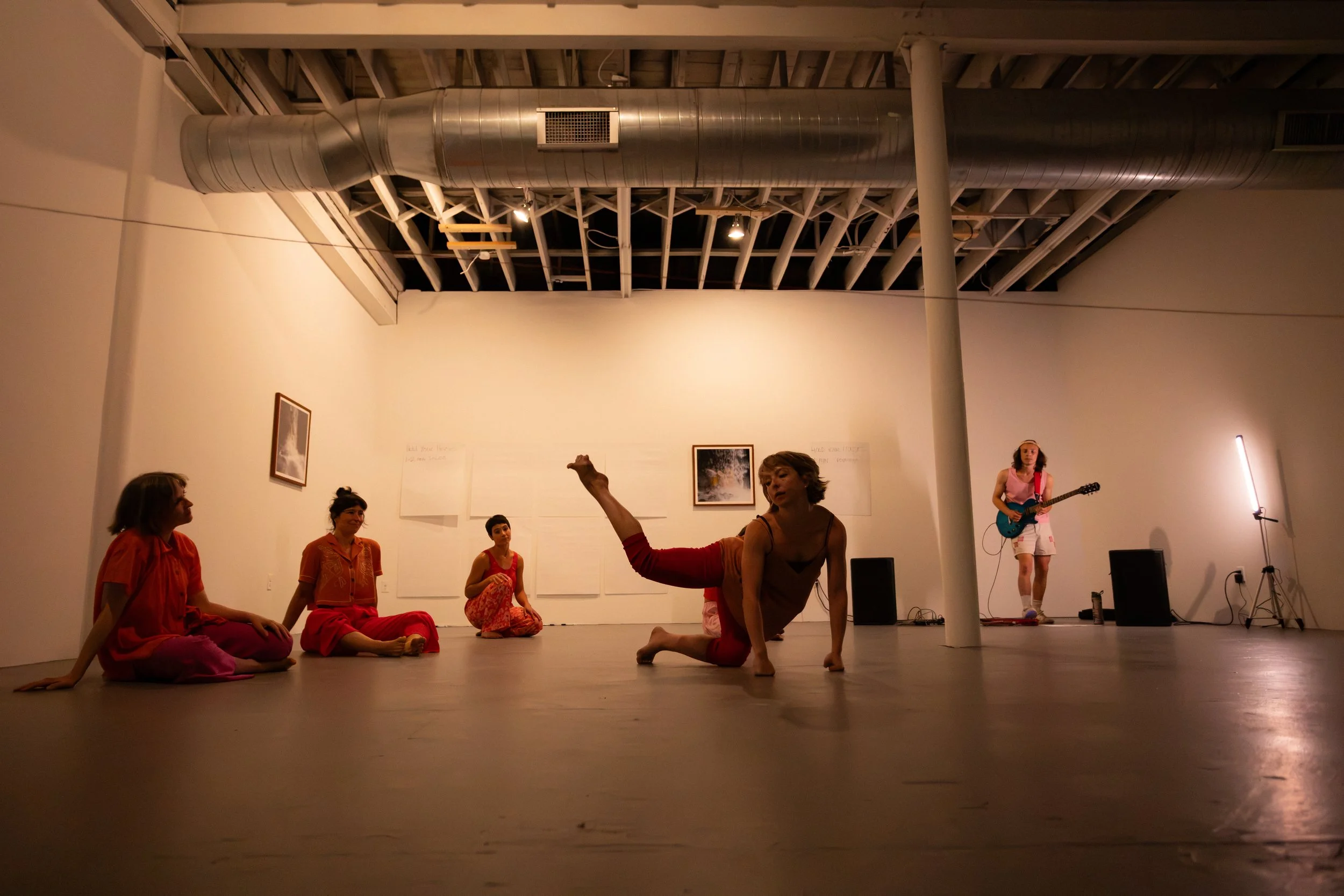
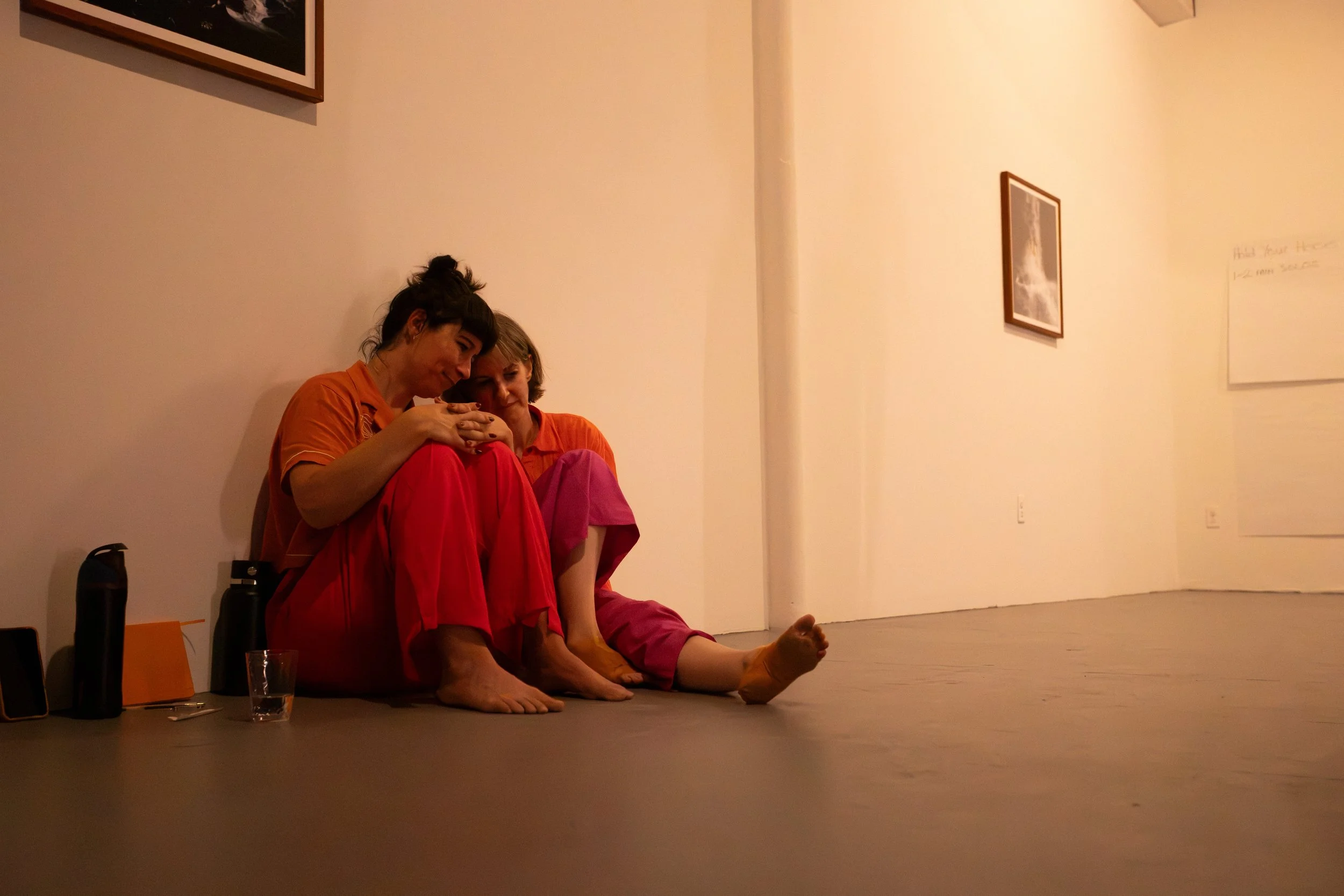
Distinct worlds emerged between the artists as the timer started, each with their own fascinatingly individual approach; some went chunk by chunk, while others broke from their process to think or wander around before trying again (and again, and again.) Moments of stagnation, wondering and toying were all made visible by this vulnerable task. Condensing the makers into one space with a time limit is an exhausting mental and physical challenge, and potentially full of emotion. I consider a bit of self-doubt to be inherent to honest movement generation—applying the gaze of an audience is nearly unthinkably sensitive, and I, for one, could not look away.
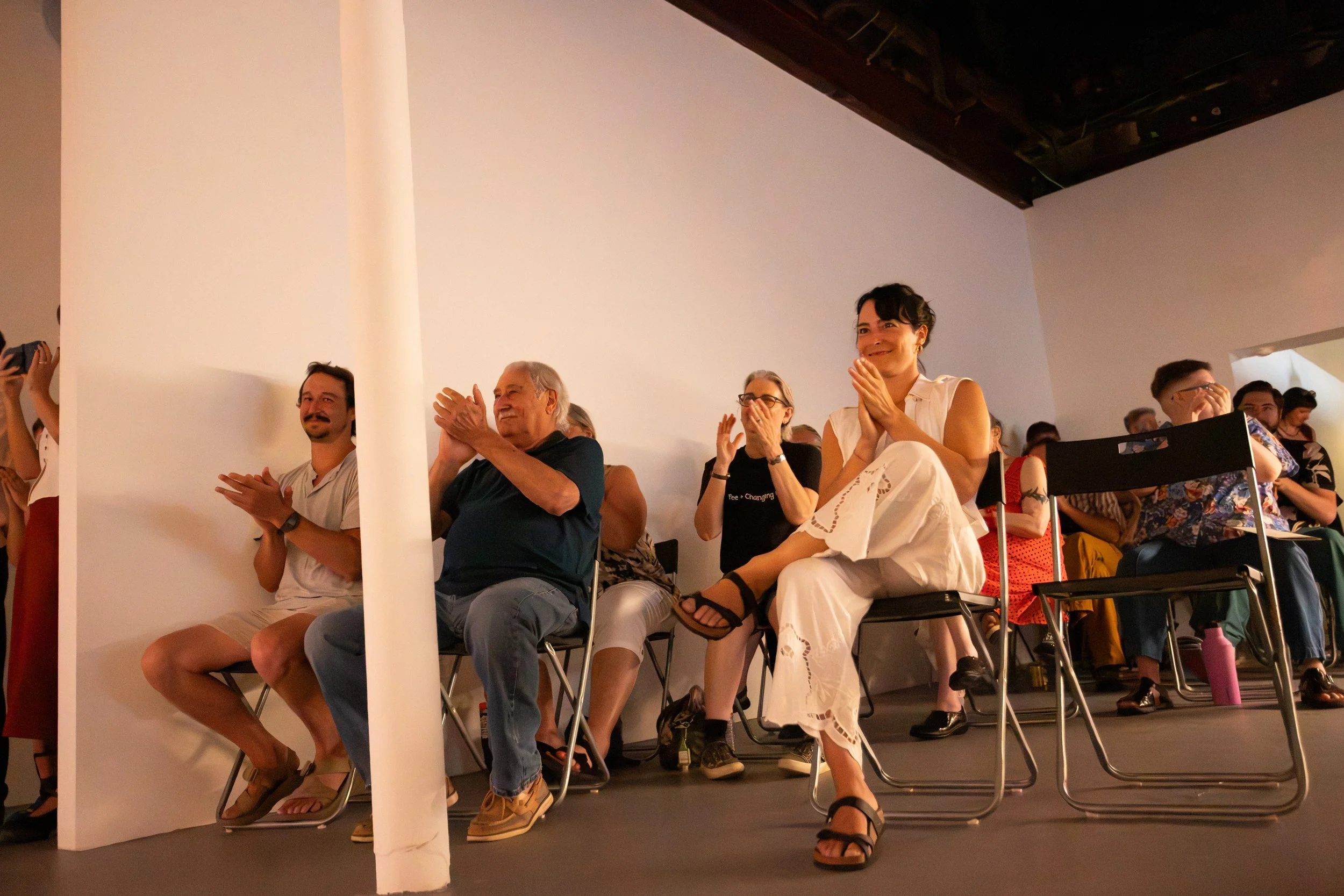
Watching them work the prompts into their bodies to produce movement was addictive, demanding such a genuine approach from them that the idea of performance felt distant. I wondered if it would be possible to protect this honesty in front of an unpredictable audience, bringing even less predictable prompts. When the audience did come— a large one, many of whom stayed until the end — there was certainly excitement, but the unrelenting nature of the tasks overcame.
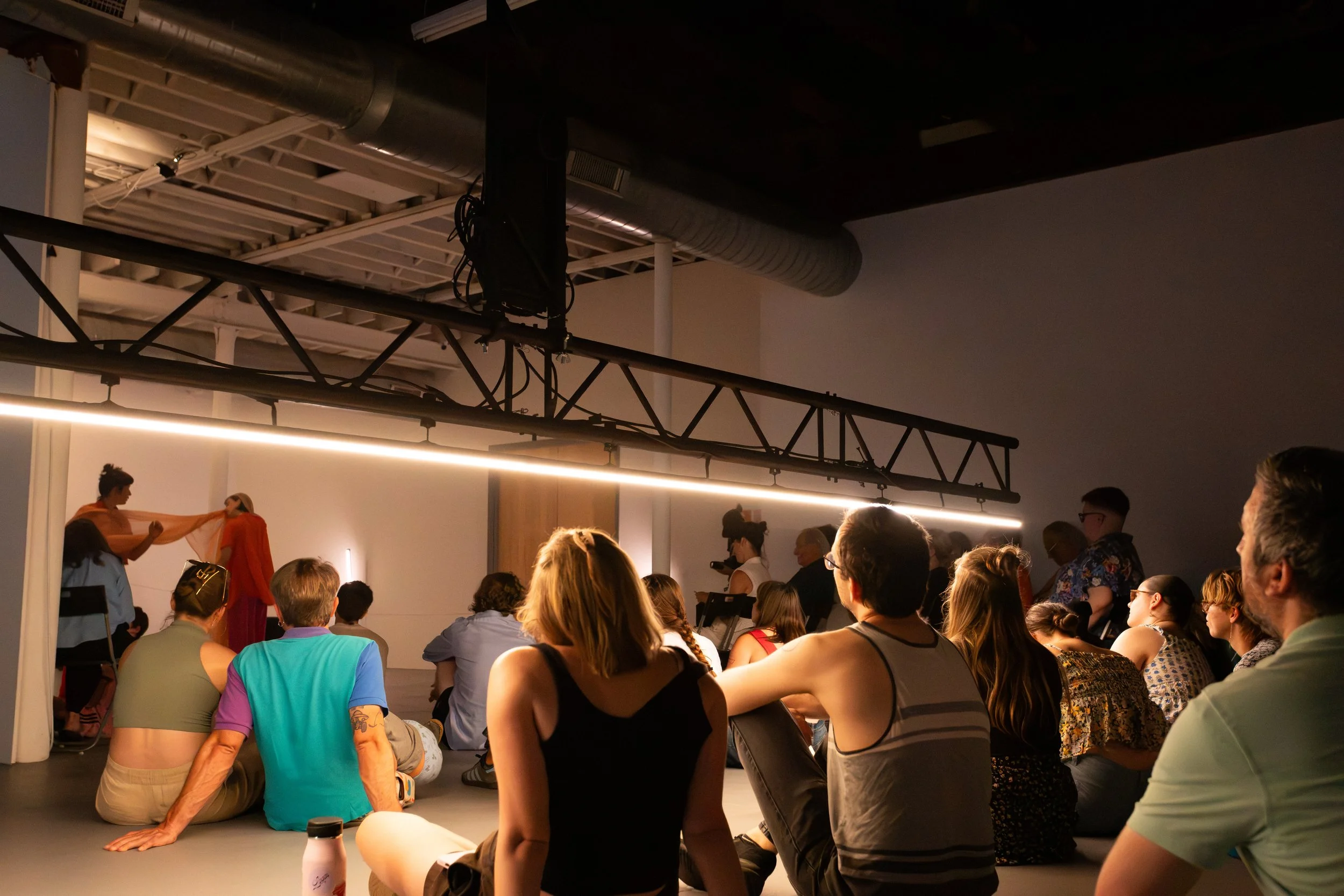
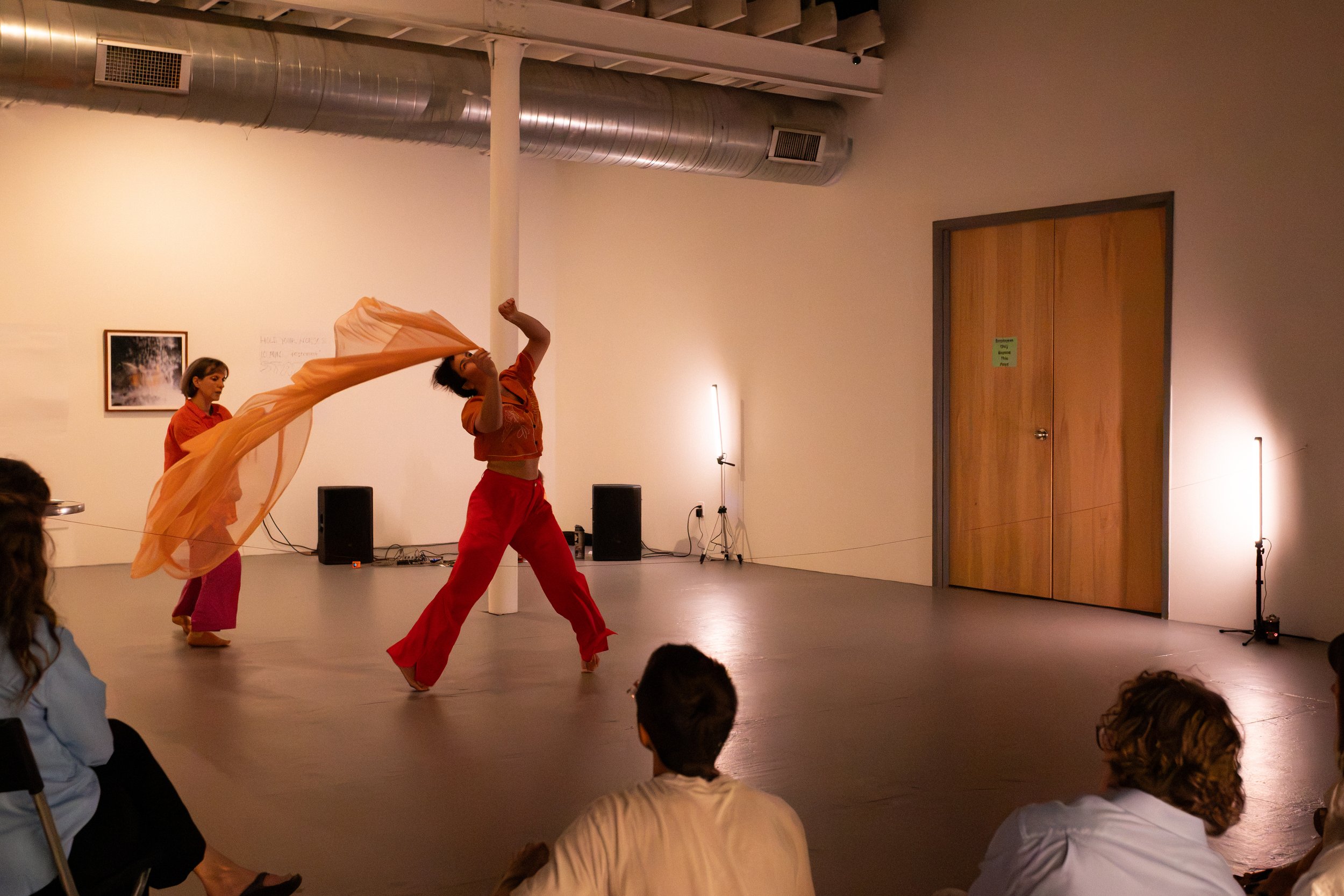
The point of The Walleye Project was to immerse audiences in real-time creation. It was part dance rehearsal, part interactive art installation, part performance. Beyond the dancing, the evening included an additional gallery space with a projection of their filmed rehearsal footage, a creative gallery that audiences could add to by pinning Polaroid pictures and action words to a clothesline to create their own choreography, and headphones to listen to music created by accompanist Vianello. Throughout the evening there were seven separate groupings working together to address different prompts like the expressive duet between Morris and Tellini navigating a long piece of fabric, or a solo by Monica Zesch created with six hilariously random objects. The evening culminated in a group work involving all of the artists, created by weaving solo works together. While the process appeared straightforward—and perhaps that was the intention—it required from each of them choreographic confidence, adaptability and stamina.
Miller played many roles. She was the “eye” on the wall, and generally stayed hands-off as the evening unfolded. During rehearsal she molded with an extremely light touch, offering the prompts but never suggesting changes to the work itself or the artist’s approach. In this way she protected the creative space fiercely, cultivating the space and curating the artists and their compositional methods, but allowing the creative alchemy to ensue however it would.
The Walleye Project, named after Miller’s grandmother in order to “conjure her spirit,” whom she described as curious and openminded, was exactly that. It was the inaugural project for Walleye, which hopes to become a performing arts collective dedicated to experimental work at the intersection of dance, theater and visual art. It was clearly grounded in immediacy, which feels increasingly important as our attention grows more distracted, but it also got to the root of something I feel I want to see more of: a willingness to reveal the uncertainty of experimentation, and an invitation for all to play.
Photos by Carly Vanderheyden