
HQ Review: Saint Louis Ballet presents GISELLE
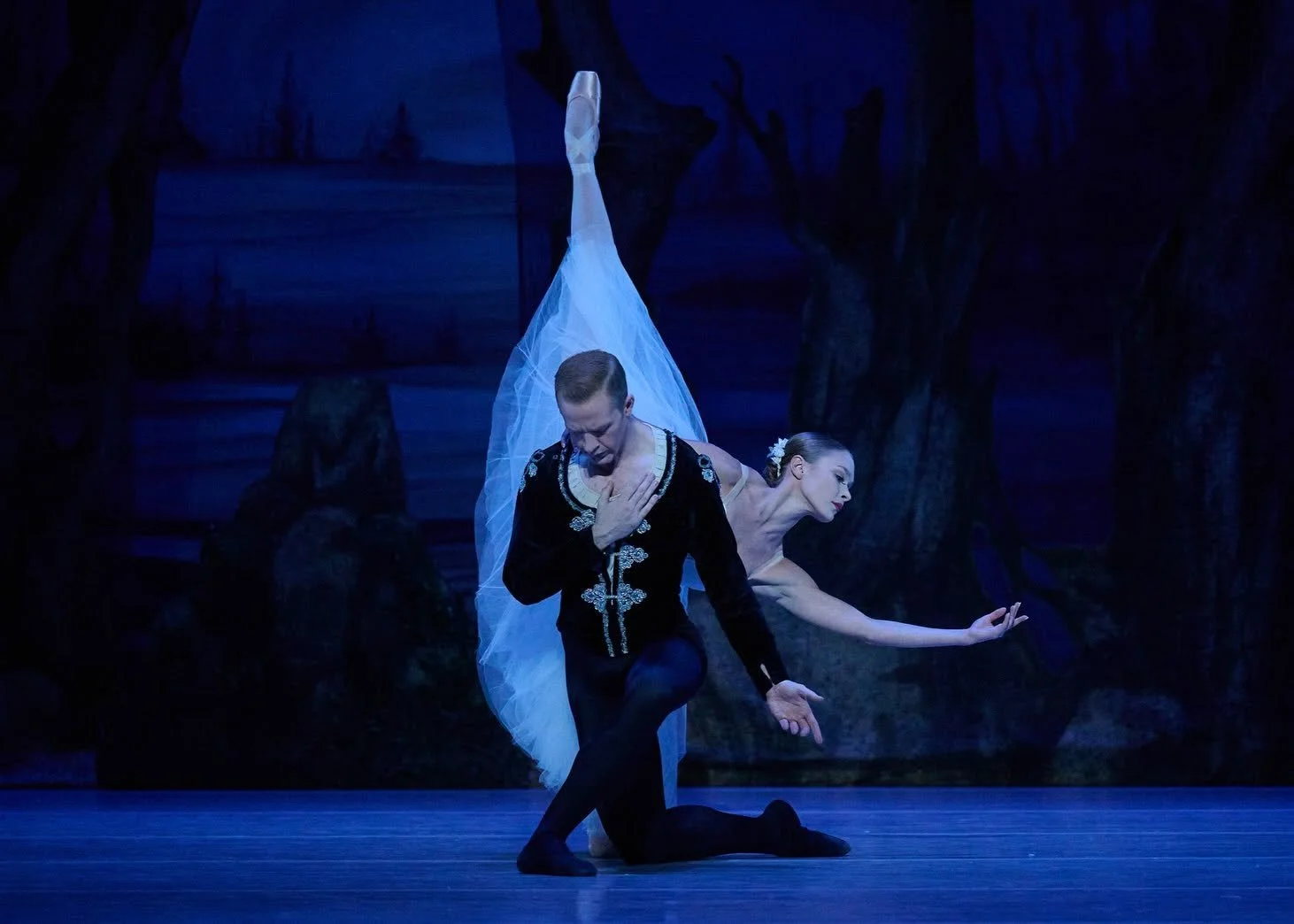
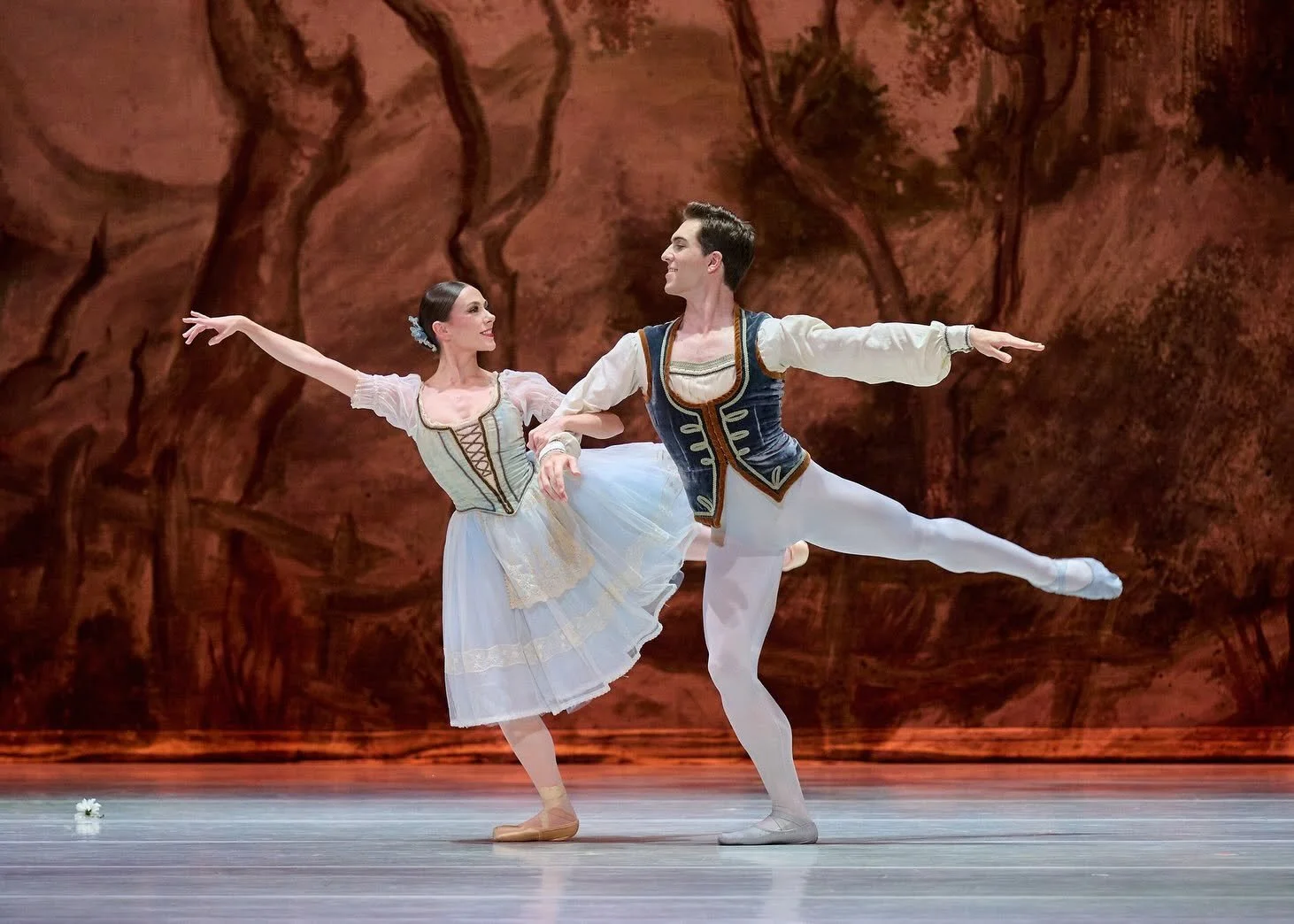
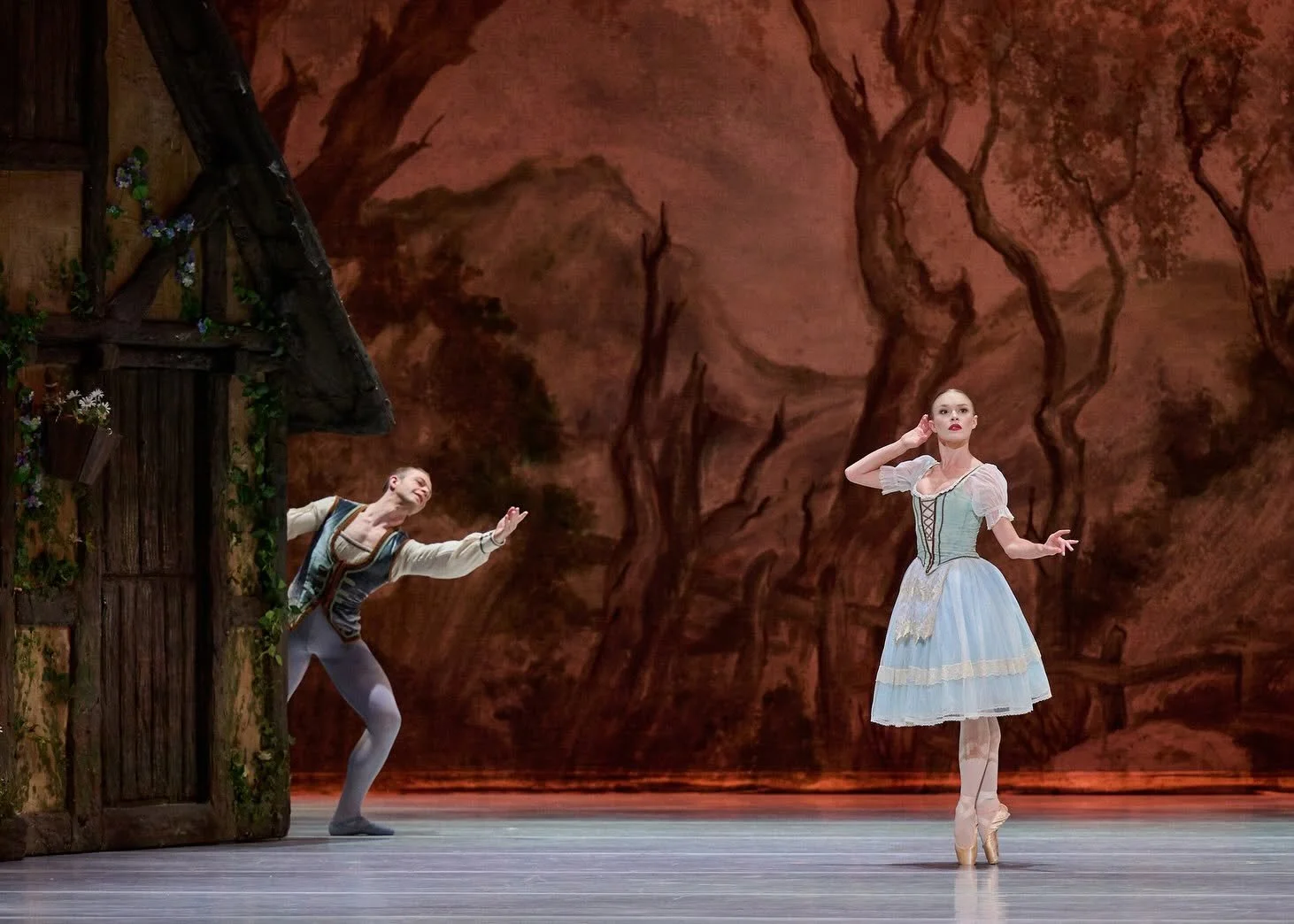
Described as a young woman who “has a weak heart,” the character Giselle, performed by Julia Heiss, is anything but weak. Emotionally dynamic and physically daring are perhaps more fitting terms to describe Heiss’ portrayal of this storied character. Restaging a ballet that first debuted in 1841, and has gone on to be performed in countless productions across the world is no small feat. And Saint Louis Ballet, directed by Gen Horiuchi, captures this narrative with honest nods towards previous source material, while evoking the drama of its storyline with clarity and some originality.
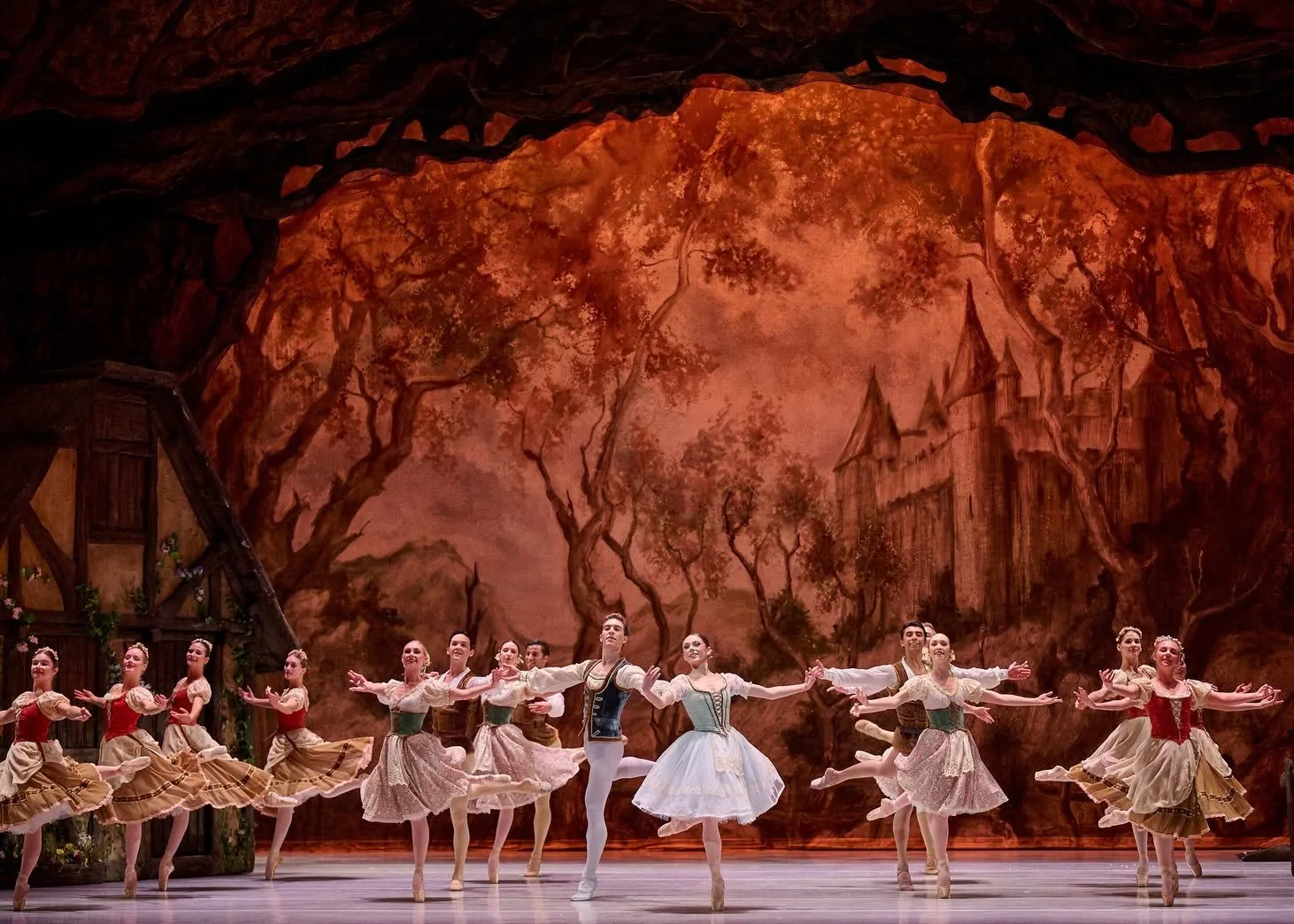
Act one opens upon a seemingly idyllic village scene. Giselle lives amongst a throng of common villagers, but quickly finds herself entranced with another villager, Albrecht, who little to her knowledge, is actually a nobleman who is already engaged. Michael Burke embodies the character of Albrecht with grounding consistency. Though his emotional range is less varied than Heiss’, it serves as a counterpoint against Giselle’s emotional depth and courage. Heiss carries the character of Giselle with not just physical prowess, but an ability to showcase how her character’s growth throughout the ballet is physically conveyed. This is most notable during the “mad scene” when Giselle realizes Albrecht’s true identity. Heiss frantically executes a series of chaîné turns while simultaneously undoing her hair and collapsing to the floor. Thenceforth, the architectural composure of Heiss’ body undergoes a definitive shift. Her energy gently unravels and her gaze becomes confounded with haze as she comes to terms with Albrecht’s deceit. As she continues to dance, Heiss allows her physicality to evolve as her drifty composure alludes to her future as a Wili. Even so, she maintains bits of her humanistic fervor, balancing these incongruencies with craft, before releasing into the ground to Giselle’s death. And although this moment has come to be known as the “mad scene,” Heiss portrays Giselle as a character in charge of her own emotion. Her subtlety as well as her conviction allows this character to be one not of victimhood, but of emotional command. It is also worth noting that when Giselle premiered in 1841, a woman could be subjected to forced bed rest and isolation when showing signs of “hysteria,” and it wasn’t until the 1980s that this term was no longer considered a psychological condition. Is our perception of Giselle altered when we consider that medical professionals of the 1840s used the term “hysteria” as a scapegoat to undermine the emotional complexities that women actually experienced?
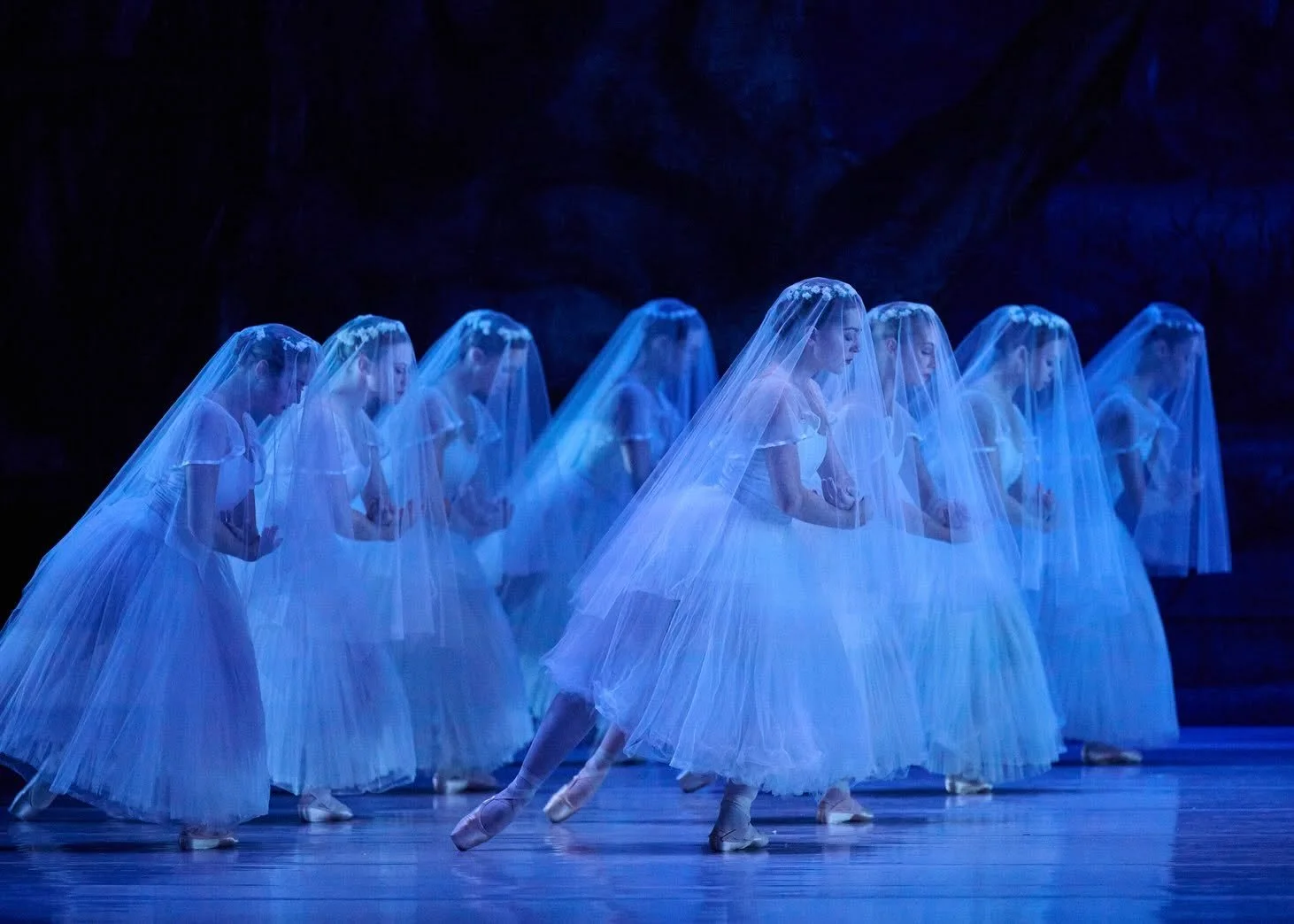
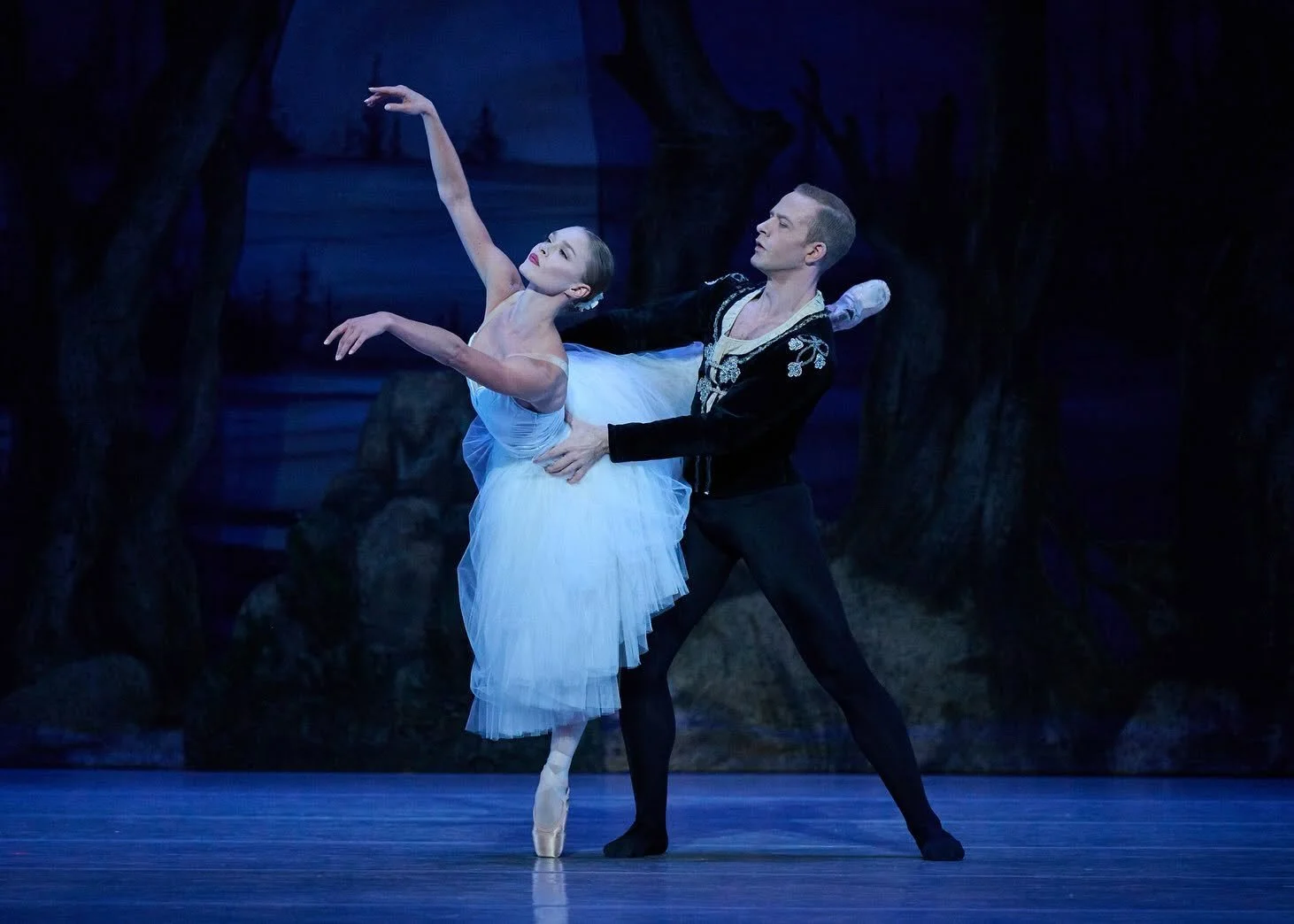
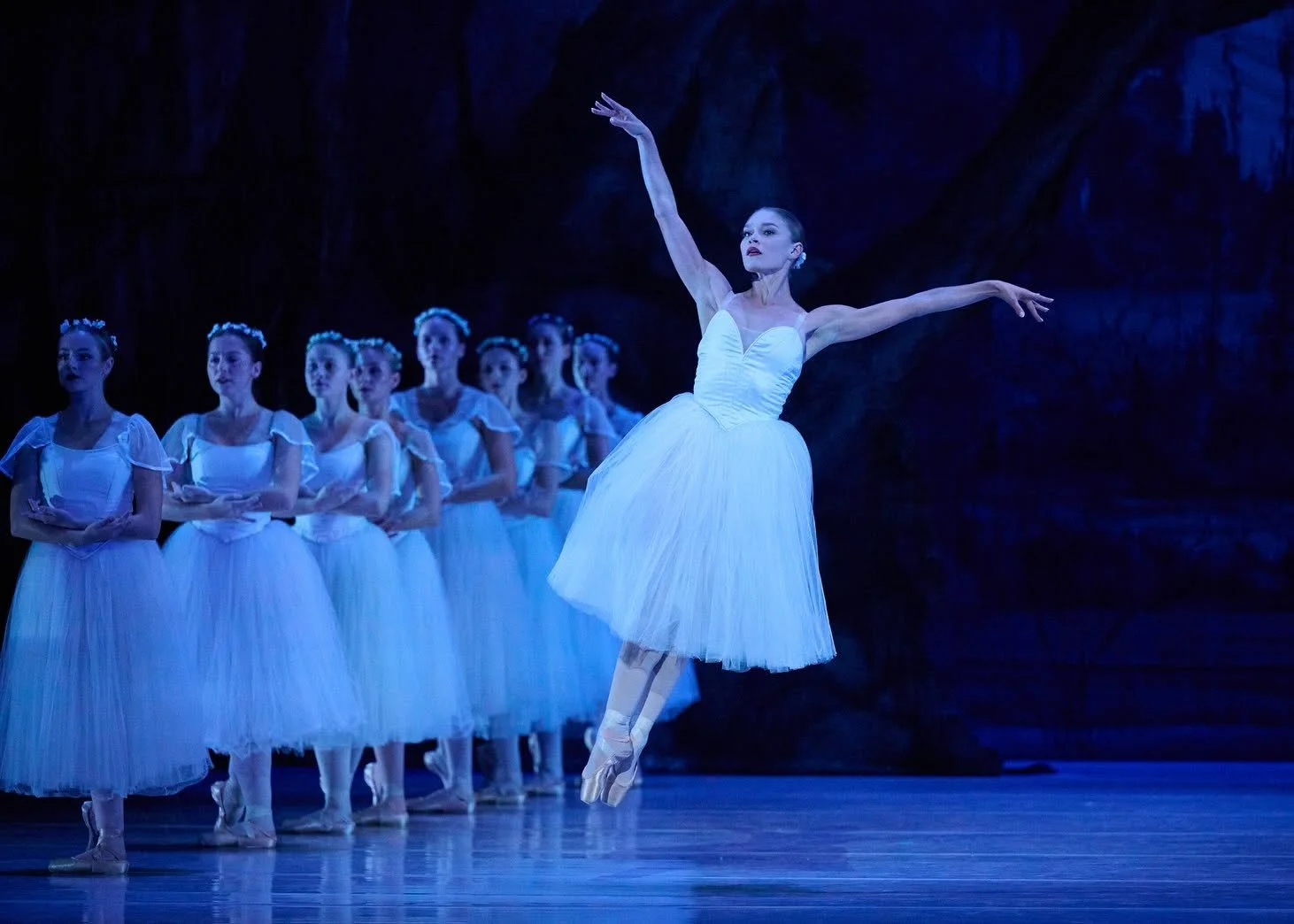
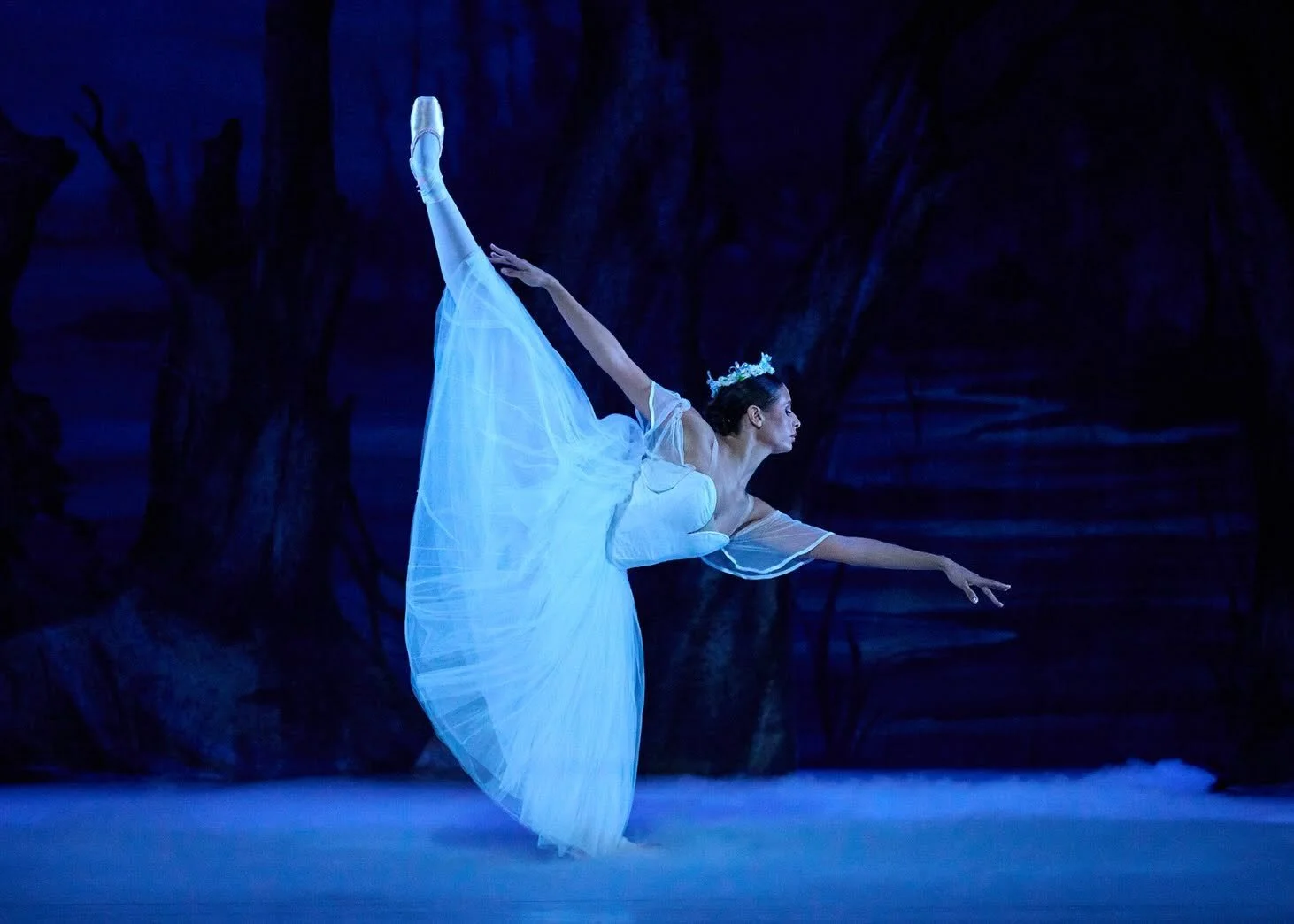
Nevertheless, the second act of Giselle is one of ethereal ecstasy. Giselle has passed away and joined a group of ghost-like women in the forest who share her grave fate. Myrtha, head of the Wilis, glides through space as her pointe shoes skitter across the stage. Performed with straight-laced stoicism, Roxy Rudin is a commanding presence. As are the rest of the Wilis who careen onto the stage with floating exactitude. How to make an ensemble both carefree and synchronistic is a challenge, but it’s clear Horiuchi has gone to great lengths to coral this ensemble into a singularity of spirit. Albrecht enters the forest to mourn Giselle, only to find Giselle before him, resilient and whole. As Giselle and Albrecht plead to Myrtha to let Albrecht survive, they embark on a series of evocative duets. During this pas de deux, Burke’s partnering skills shimmer with solidity as he seamlessly glides Heiss in and out of the floor, then into the sky above. Two years ago, I saw Burke and Heiss dance beautifully together in Christopher Wheeldon’s “After the Rain.” In Giselle, the maturity of their partnering is exceptionally evident as their strong energetic connection is a signifier for the level of trust they have developed over the years.
Horiuchi’s choreography for Giselle has clearly been in process and developed with much inspiration from previous productions. Having produced Giselle three years ago, Horiuchi states that he “wanted to preserve the tradition and history of this beloved ballet while developing my own interpretation further.” This idea of tradition is certainly central whenever choosing to produce something that is over 150 years old, and I revel at the possibilities that recreation can uncover. Though I am curious as to where the tradition ends and Horiuchi’s interpretation begins. Giselle is certainly a stylistic piece of dance history, and that should surely be honored. But what can it look like to contextualize a dance work with this much history attached to it for a contemporary audience?
In the end, Albrecht is able to escape the domain of the Wilis, and Giselle must remain a mere memory as the villagers collect themselves and wonder upon the essence of what this woman endured. The complexities of her love and the indefatigable spirit she possessed still ripples among the memories of this community. Albrecht certainly witnessed this, as he too would likely be dead if Giselle hadn’t continuously stood her ground against Myrtha so that Albrecht’s life might be spared. So what has she become even after death? A remembrance, a yearning, a woman and the strength she leaves behind. This final image: lights glisten upon Giselle reveling beneath a sea of sparkles. An evocation of spirit. Her spirit. One of grace and fortitude that brings this ballet meaningful relevance, even now in 2026.
Photos by Kelly Pratt