
HQ Review: “Take two…and call me in the morning” presented by Space Station
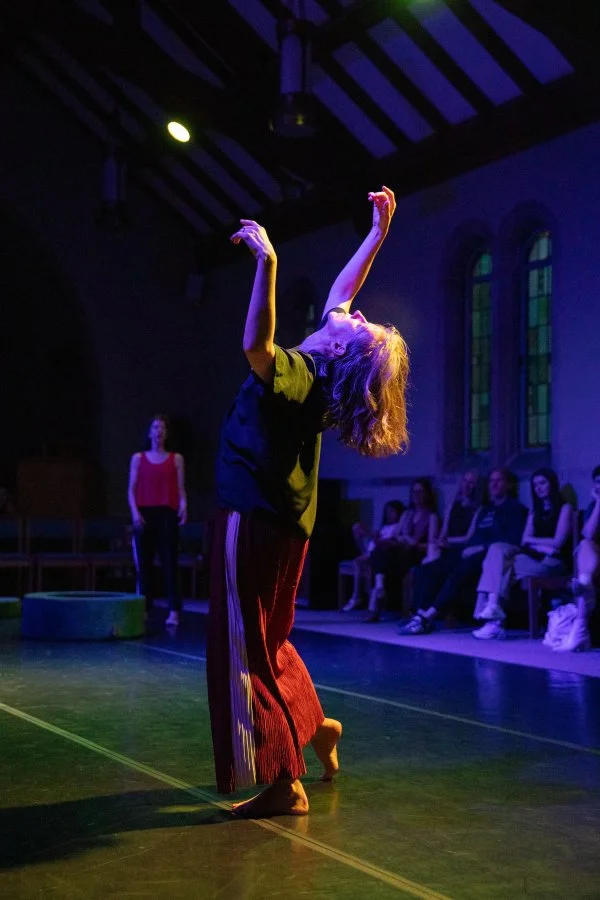
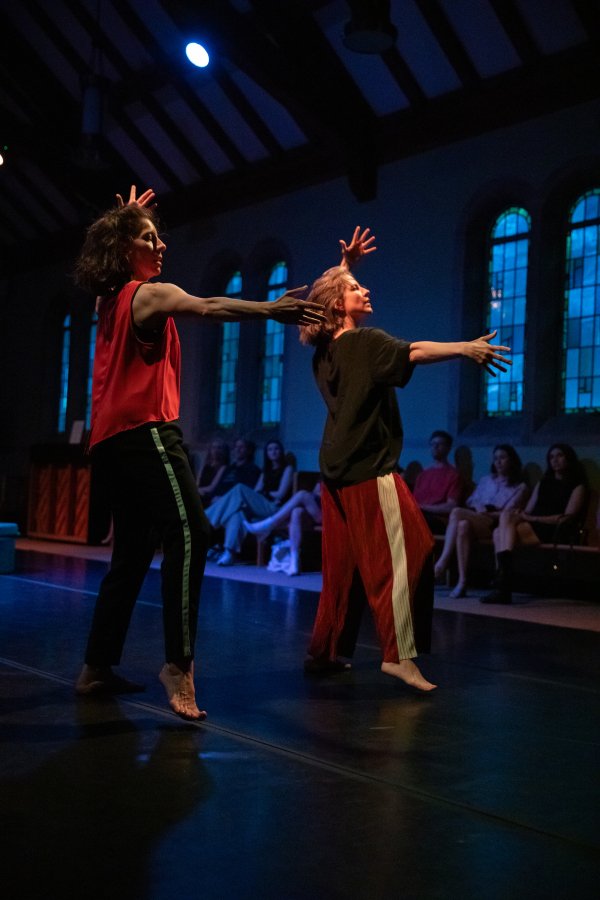
Space Station, via its host Chapel of the Arts at Hope United Church of Christ, has for years been a hub of experimental dance in St Louis, most recently serving as the host for a new work by Erin Morris and Ellie Harrison. Take two…and call me in the morning is an evening-length show illustrating, with humor and tenderness, the intertwined journey of two longtime friends and collaborators.
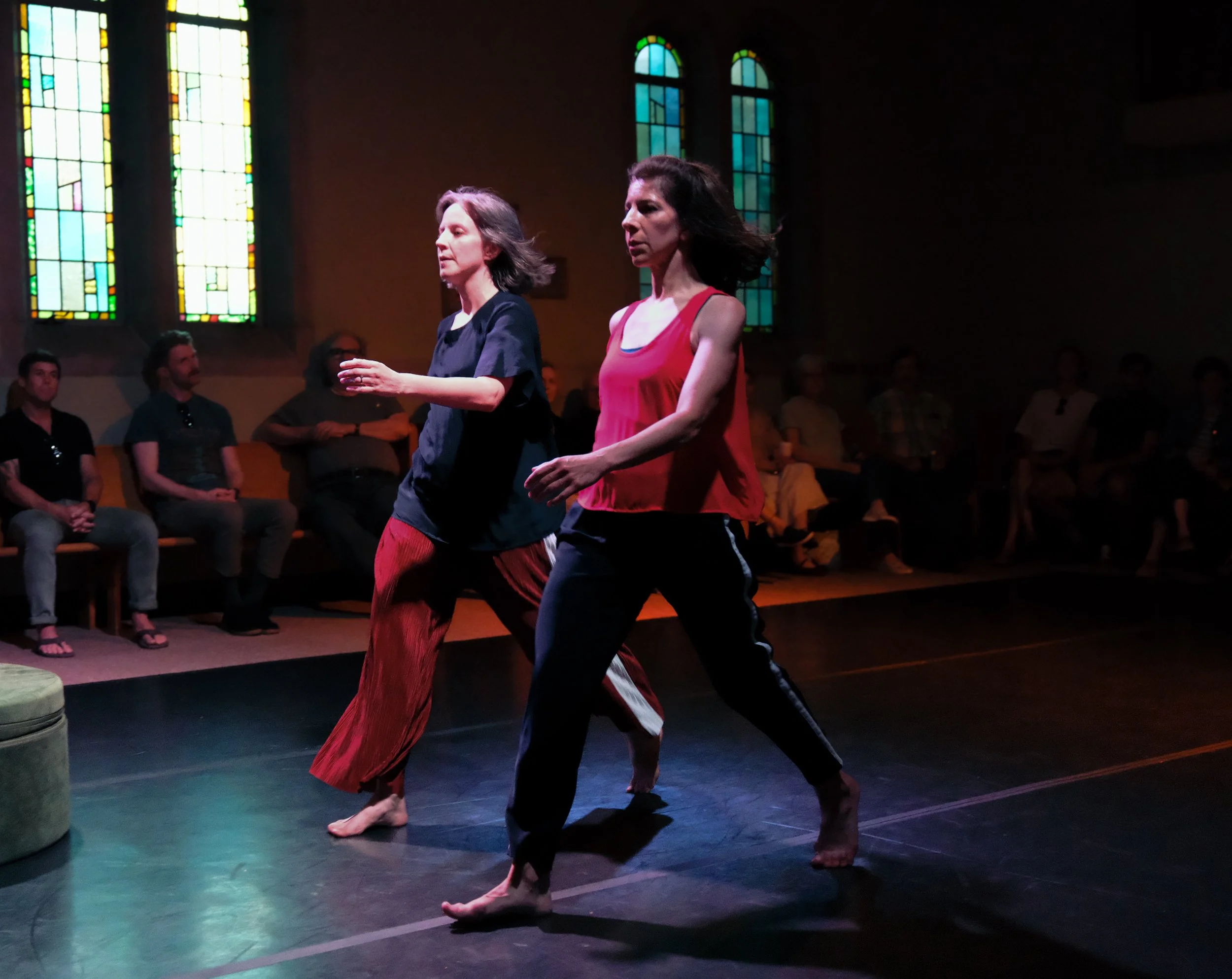
Erin and Ellie entered the room in silence, shoulder to shoulder, eyes straight ahead. Audience members lined each wall, most seated in long wooden pews. A determined march morphed into a kind of meandering forward-and-backward pace. Eventually, Ellie turned around and led them back to the exit. The doors slammed shut behind them, followed by a long, silent pause. The doors opened again, and the two marched together into the space, only to exit again even quicker than before. The doors swung open and they reappeared. Their third entrance was slower and more hesitant, their eyes scanning the room and the audience. Lying down flat on the ground next to each other, they represented mirror images of one another. A beat of stillness passed before one stood up and repositioned themselves on the floor in a new relationship to their supine partner. Re-positioning. Re-starting. Re-entering. Re-mirroring. Throughout the work, there is a stuttering hesitation: making a suggestion, reevaluating, and trying again. The presence of the other person on stage doesn’t seem to help alleviate any of the faltering or uncertainty; instead, they seem to serve as accompaniment and mirror. A witness.
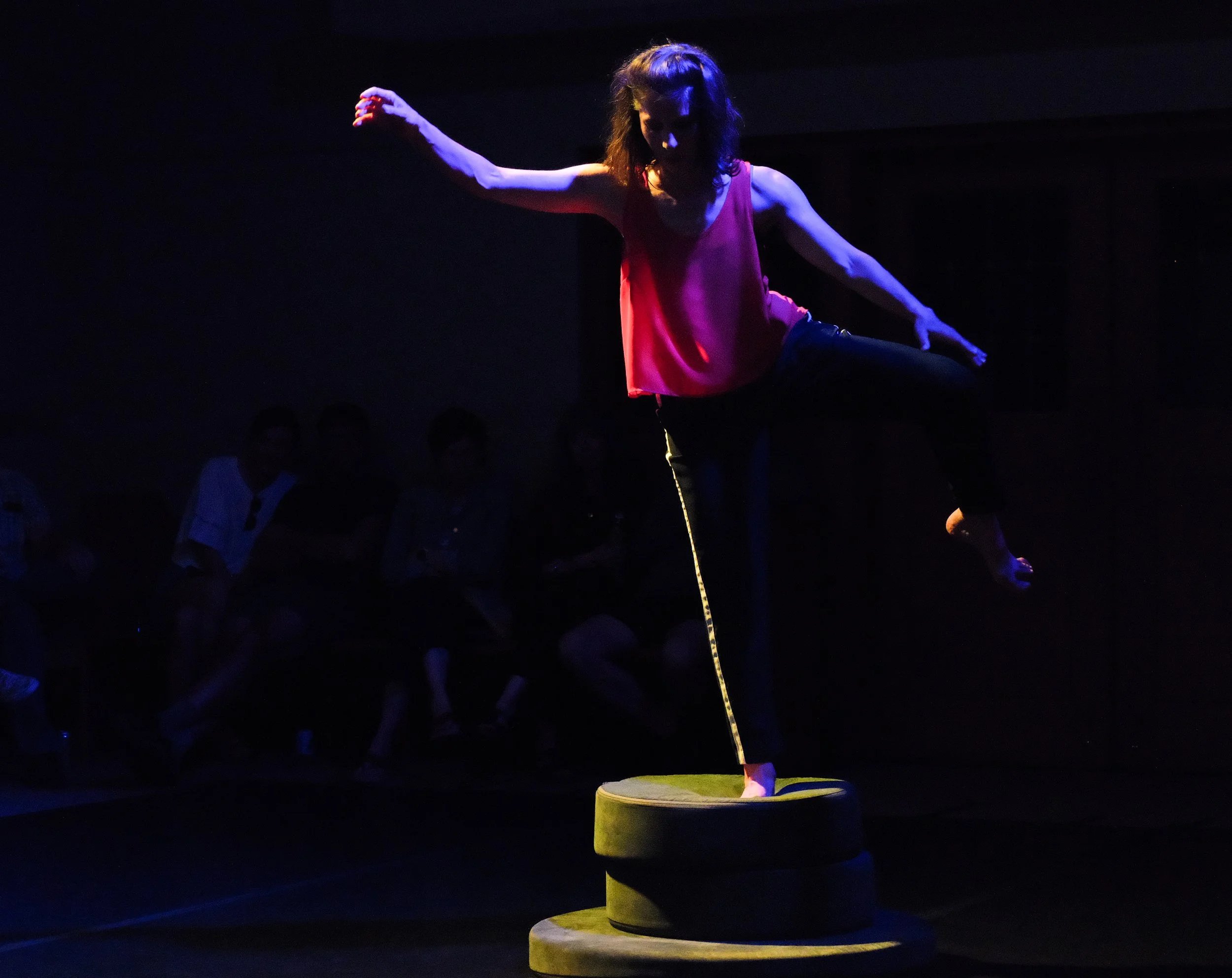
The piece held plenty of open space, pockmarked with long stretches of silence or with only the sounds of the dancers’ breath and grunts. Music, breath, and spoken words held the same weight in this composition. Erin and Ellie grasped at one another, whispering incoherently as they crawled together on the floor. Erin became the wind and Ellie the feather. Erin chased her around the room, blowing on various body parts, which sent Ellie careening across the floor. Playful and touching, the moment tips over into excess with Erin losing control of herself, inhaling in sharp gasps as Ellie stops the game: “Erin, are you ok?” “Just breathe.” “Rest; that was a lot.” Erin allows herself to be led to the plush bench and lays down flat on her back, arms and legs draping off the sides of the cushion. From this position she dives into a monologue about how she is, in fact, “ok” despite the constant and confusing doctor’s appointments required at “a certain age.” It is one of the first moments in which the work's stated concern with midlife emerges directly. Ellie assures her that she will do the next part alone so she can rest.
In addition to performing care for one another, the pair demonstrated an unusual level of consideration for their audience. Any direct interaction was non-confrontational and careful (an unusual approach in contemporary dance, when audience participation's major function seems to be to push audiences into a space of discomfort). This approach to the spectator/performer relationship is made most evident when Erin and Ellie broke away from each other and addressed every audience member individually. Speaking in low voices and without irony, they walked the entire length of the room, sharing what the person meant to them, thanking them for attending, or complimenting their outfit.
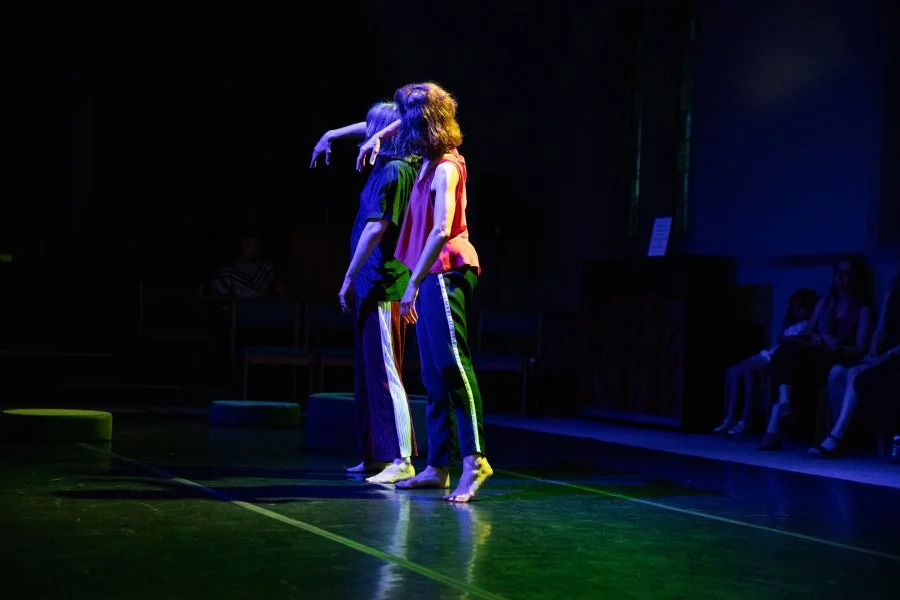
Take two was marked by repeated gestures of sincerity, care, and candor. Just as importantly, hesitation and exhaustion were not framed as obstacles to be conquered. Read through the lens of midlife, these moments feel less like failures of momentum than acknowledgements of limitation, uncertainty, and change. They were incorporated into the work itself. The movement quality was unapologetic, sometimes messy, and at others rigorous and exact. In control, but only barely.
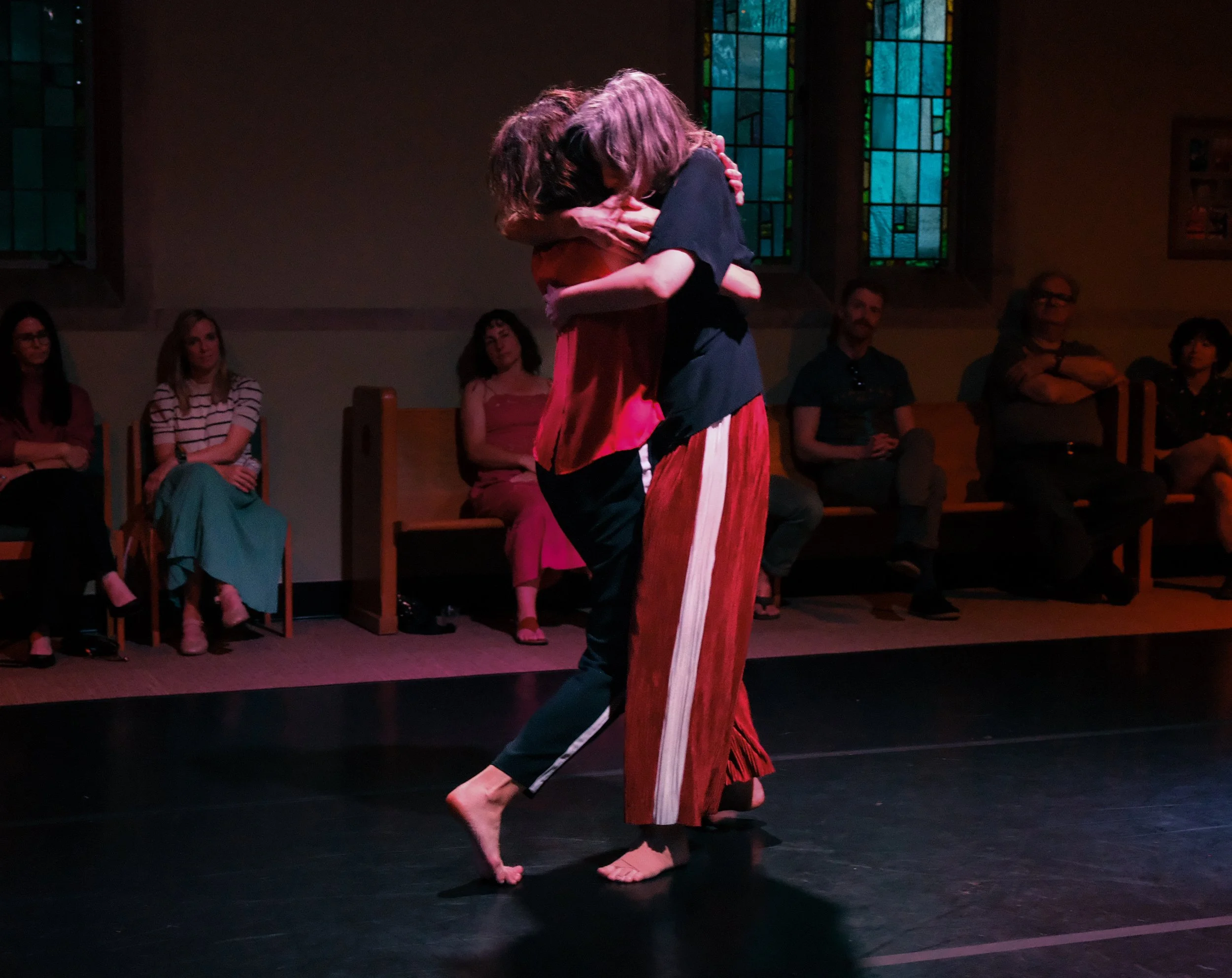
An especially memorable moment came toward the end of the piece: Ellie reached for Erin and embraced her in a tight hug as Erin melted to the floor, escaping through her closed arms like a puddle on the floor. The pattern is repeated many times to touching effect, with Ellie pursuing Erin around the room. The lights and music faded as the two finally found a mutual embrace, falling to the floor together.
Take two grapples forward by way of instinct, earnestness, and collaboration. In many ways, it is about two women witnessing each other, speaking, showing, and accompanying each other through uncertainty. The program notes mention that the work is an exploration of “the journey through midlife.” Midlife is often presented as a transformative but enigmatic time of life, rife with taboo and even shame. Take two…and call me in the morning, however, imagines midlife not primarily as a crisis to endure, but as a space for connection, vulnerability, and mutual recognition.
Photos by Jill Beyder and Liz Glastetter