
I open this review with a humble opinion: college capstone shows are the best thing a dance lover can stumble upon. They feature a smorgasbord of styles and ideas, different enough to keep you rubbernecking to your program between pieces, wondering: now what was THAT one about? Fresh and unpretentious, these artists are still finding who they are, but the work is all the more special for that. And for this reason, I had my ticket for Intus Motus before I knew the date. This concert features the work of Webster University seniors Keshaun Brooks, Megan Burton, Trilhas Firsching, and Ahren Sims, each showing the culmination of years of hard work and research. Each student presented three works: a solo which they performed, a duet or trio, and a group dance, for a collective twelve dances. Intus Motus contained multitudes, and this show truly displayed the breadth of skill and ingenuity these Webster dancers bring to the St. Louis dance space.
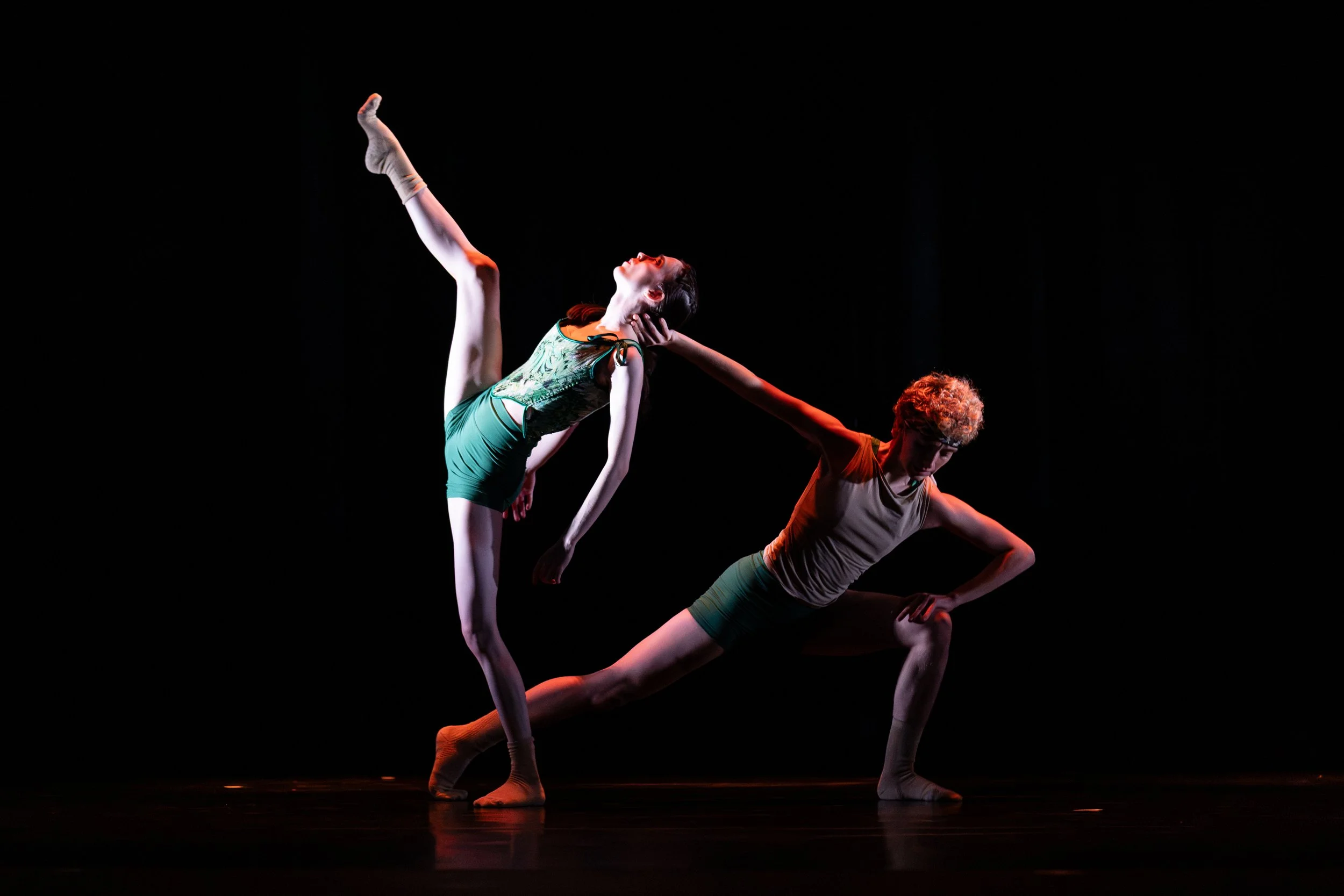
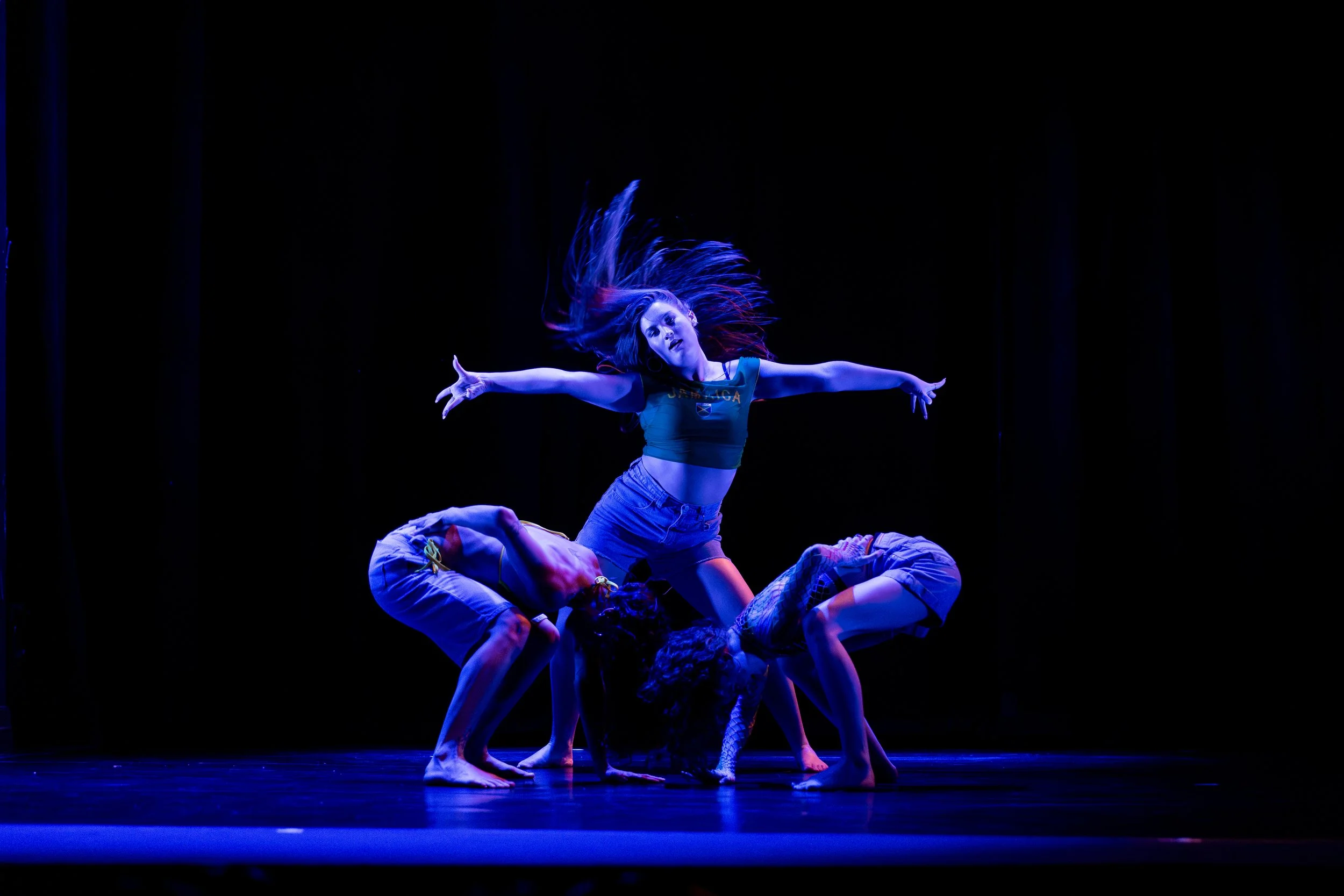
The concert opened with a duet by Keshaun Brooks, entitled Ya Me Voy. Alivia Fletcher stumbles into frame, lit in rich orange spotlights. Fletcher looks around, a little fearful, a little curious. As they exit, Sara Davis is dappled with green lights as she slowly walks across the stage. They continue their solo processions, vanishing from one wing to appear in another. Then, they meet. Sizing each other up. Horns buzz in the background as the two connect in a haunting duet, legs unfurling. Fletcher holds Davis, lifting her up and cradling her close even as she thrashes, both helping and hindering. Fletcher sets Davis down and holds out his hands in pleading reverence. Finally, Fletcher stands and walks away as Davis trails behind, reminiscent of Orpheus and Eurydice. The lights fade as they walk off stage. In my opinion, this work was Brooks’ strongest, and left the audience guessing about the relationship of the dancers. Next was Soul a di People, a rocking dancehall group piece. Six dancers strut in denim shorts and Jamaican colors, and these girls are ready to bring the house down. The music is a medley of club beats, and the choreography fuses elements of dancehall, heels, burlesque, and some pretty knockout hairography. This work made sure to give each dancer their moment to shine, and they all made the most of it. The dance fades out with a club scene as the group dances the night away. Brooks’ final work, Life on a plateau, features dramatic red lighting and a reaching hand. Limbs arcing through the space, he pleads, creating statuesque tableaus. Each work has a different journey, but all feature endless legs, graceful athleticism, and choreographic self-assuredness. The three pieces all come together to reflect the growth Brooks has gone through in the past four years, and Life on a plateau feels like the most distilled representation of that. The lights shift to a yellow glow, and Brooks returns to lay on the floor. He searches the stage, brow furrowed; he leaps, almost frozen in the time, before falling to earth. In the final breaths of the piece, Brooks extends his arm, a ghost of the beginning.
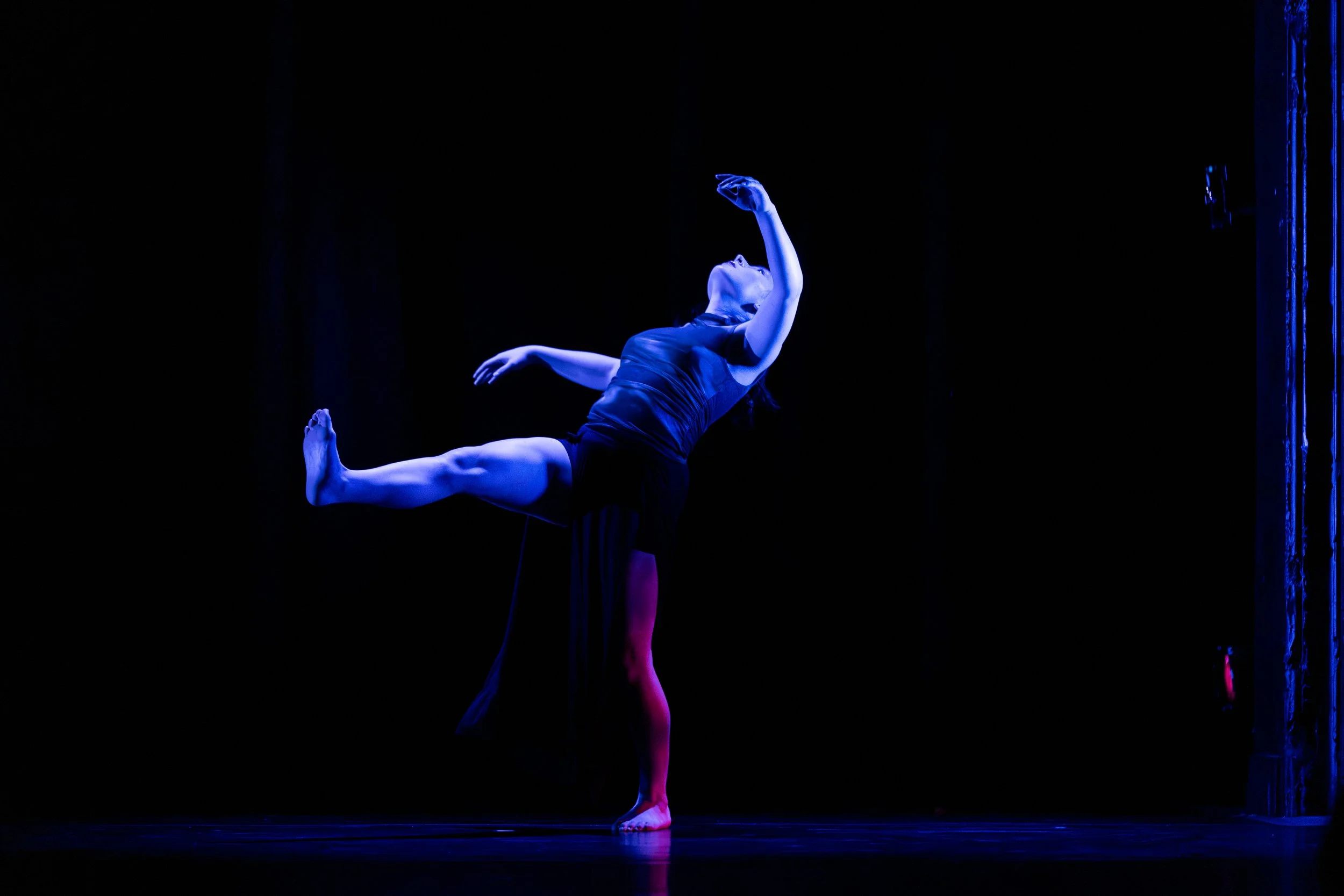
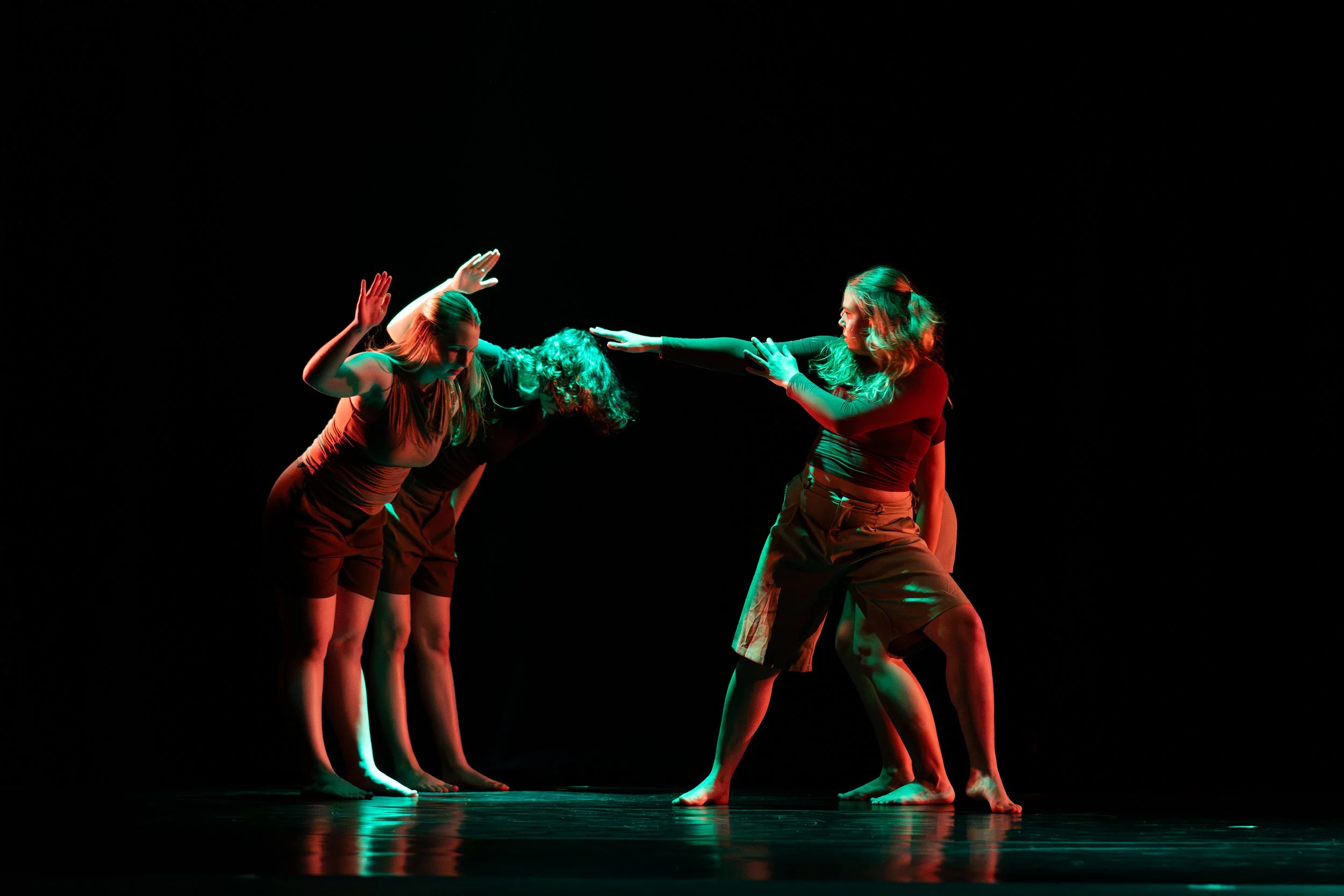
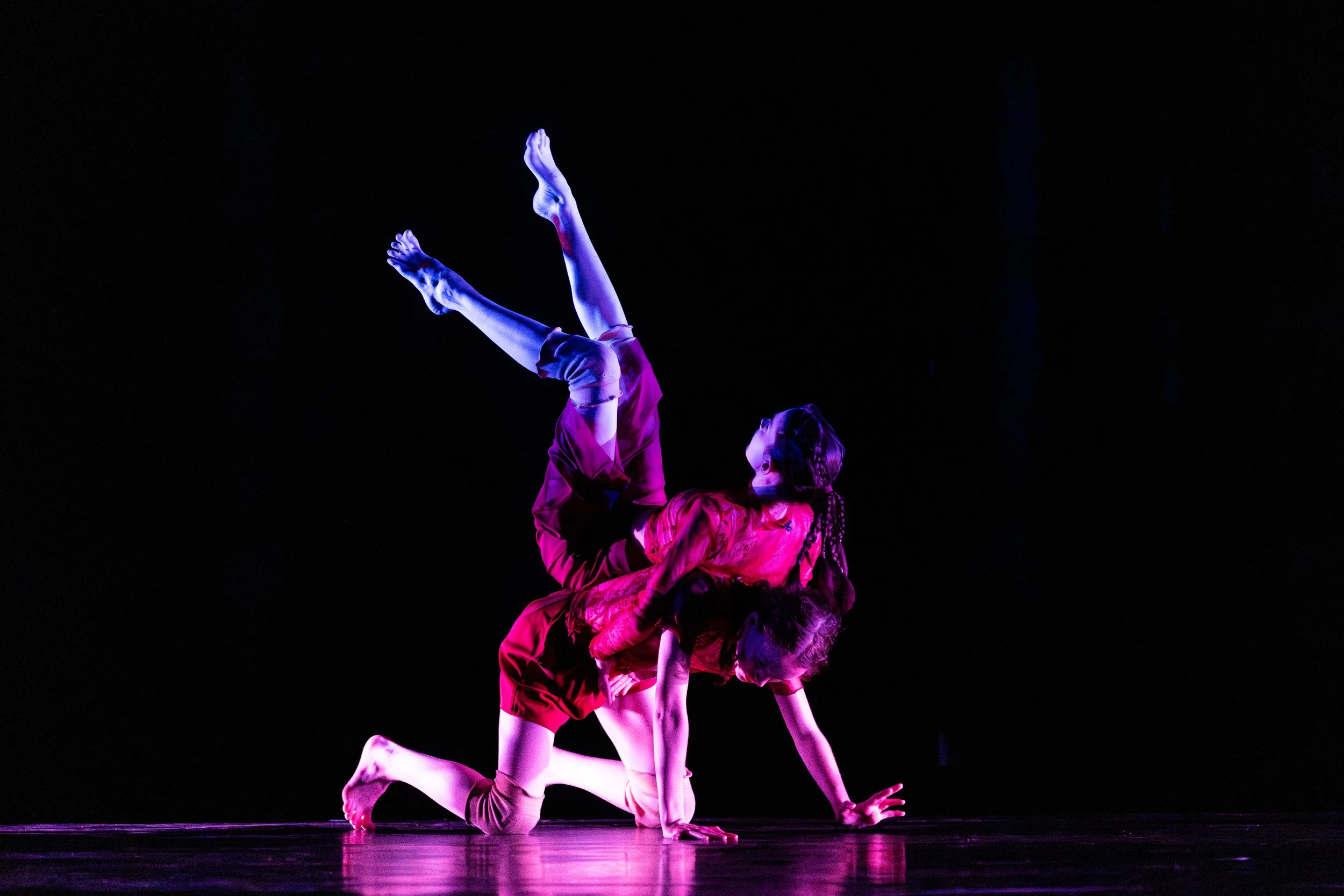
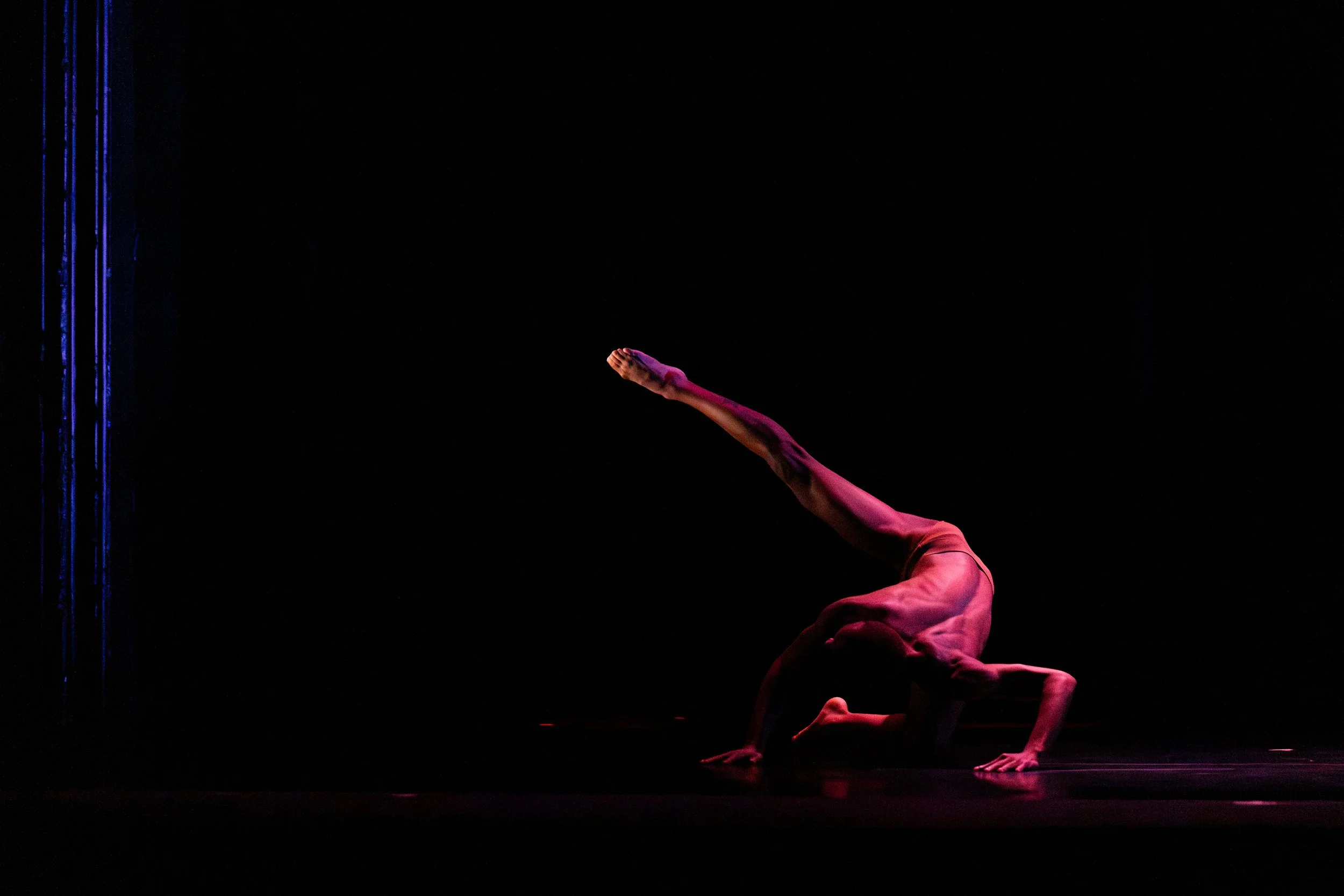
Next to show is Trilhas Firsching with her group piece, Control Group. Two dancers grace the stage as sparse synth beats play, sharply moving their arms in time with the music. The dancers continue to form angular shapes with their limbs, repeatedly cycling through the motions. Two more dancers join the stage, and the new duo contrasts the existing clockwork-like precision with a flinging, grappling duet. The groups then merge together, sinking into repetition and unison with a practiced ease. Control Group feels cold and clinical in its repetition, which feels effective when thinking about the title, and the moments of high contact provide perfect contrast to keep the audience engaged. The work shows a dogged commitment to repetition, which seems to echo into the next piece. DANC 0182 opens on Firsching balanced upon one leg, clinging to the other like a life raft. Slowly, she releases the leg she is holding, before gathering it back into her arms. She wobbles there, suspended, hesitantly dipping her toe back into the floor. The solo unfolds as Firsching claims the space for herself, growing more confident through each repeated movement. To close the piece, Firsching returns to the opening image, but this time with more conviction. She takes a deep breath in, and in one final, exalted swing, she throws out her leg. Foot flexed, head to the sky, the lights go dark. DANC 0182 reflects Firsching’s persistence in completing her degree, as well as all the work she has put into her dance career thus far. Her use of repetition is extremely effective, and Firsching’s style was evident in every piece she presented. Finally comes Shider, one of my favorites of the night. The duet has an introduction that immediately draws you in: two dancers tangled up in each other, limbs poking out at impossible angles. At first it almost appears to be a giant maroon arachnid crawling around onstage. The two dancers extricate themselves from the clump, heads darting and fingers crawling. They find themselves on two feet and fly into a thrashing contortion before rejoining into a new creature. As they move, their limbs collectively unravel, like a flower opening and closing in timelapse. The eerie nature of Shider set it apart, as well as the nature of the material, which felt less like a performance and more like a creature evolving onstage.
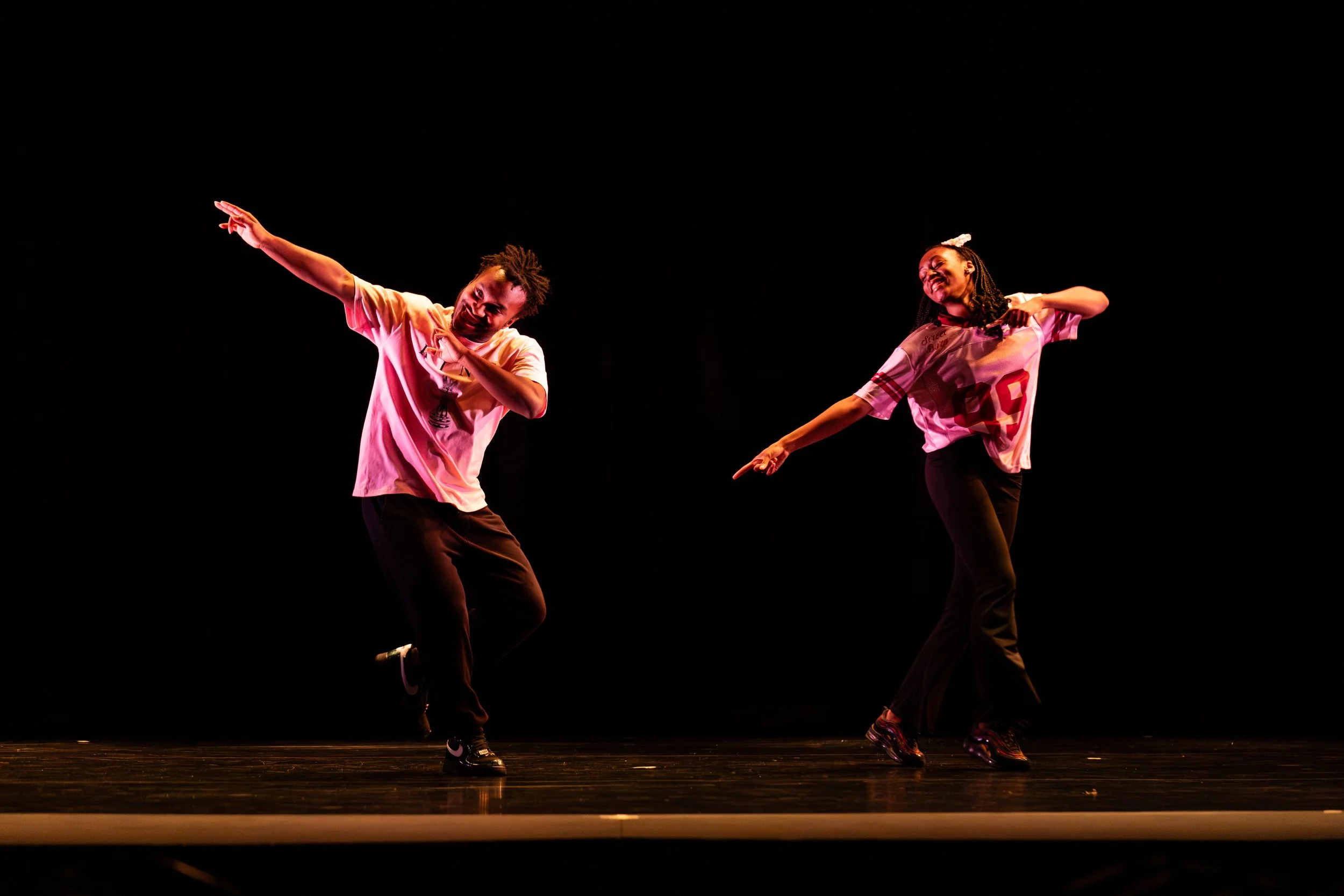
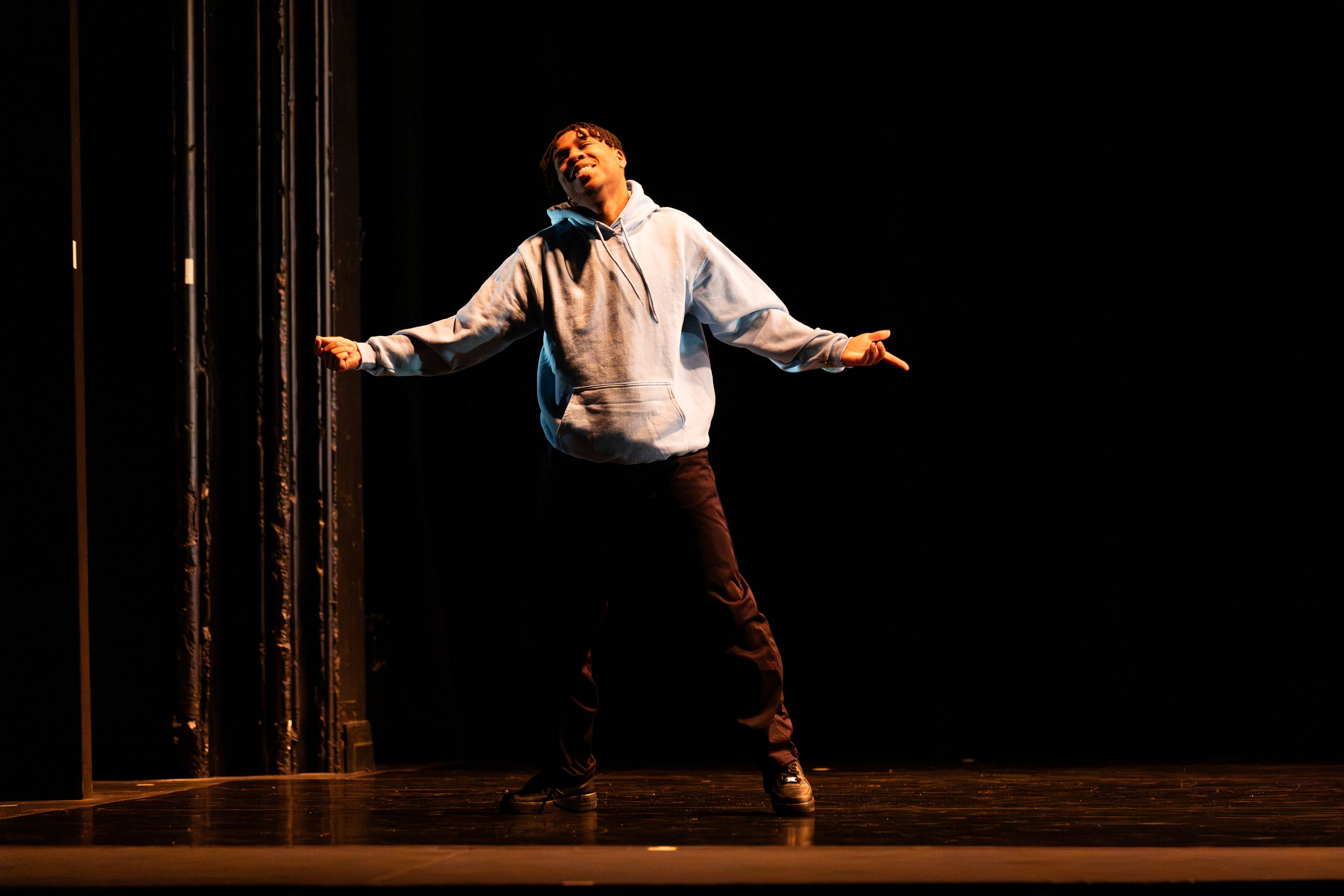
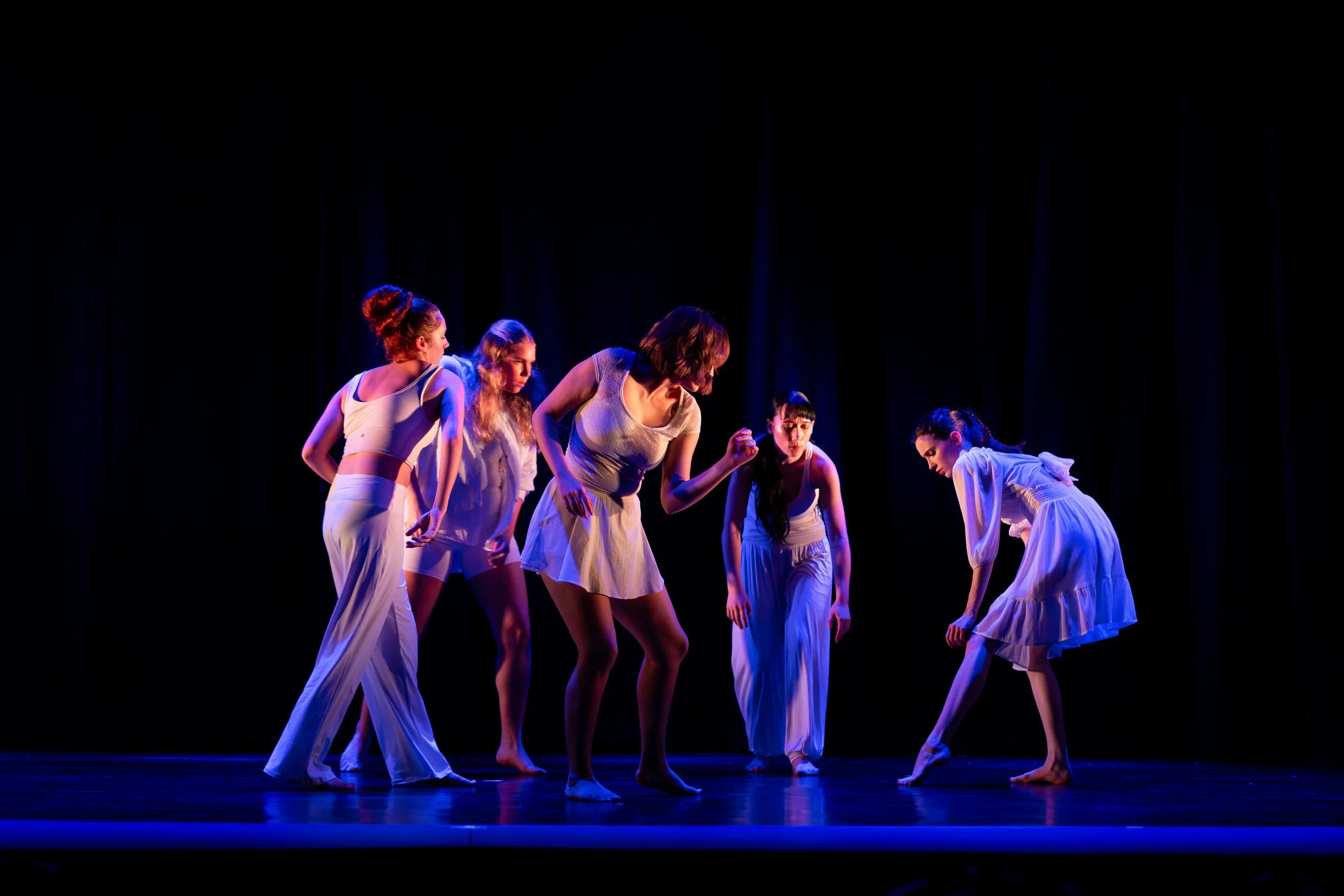
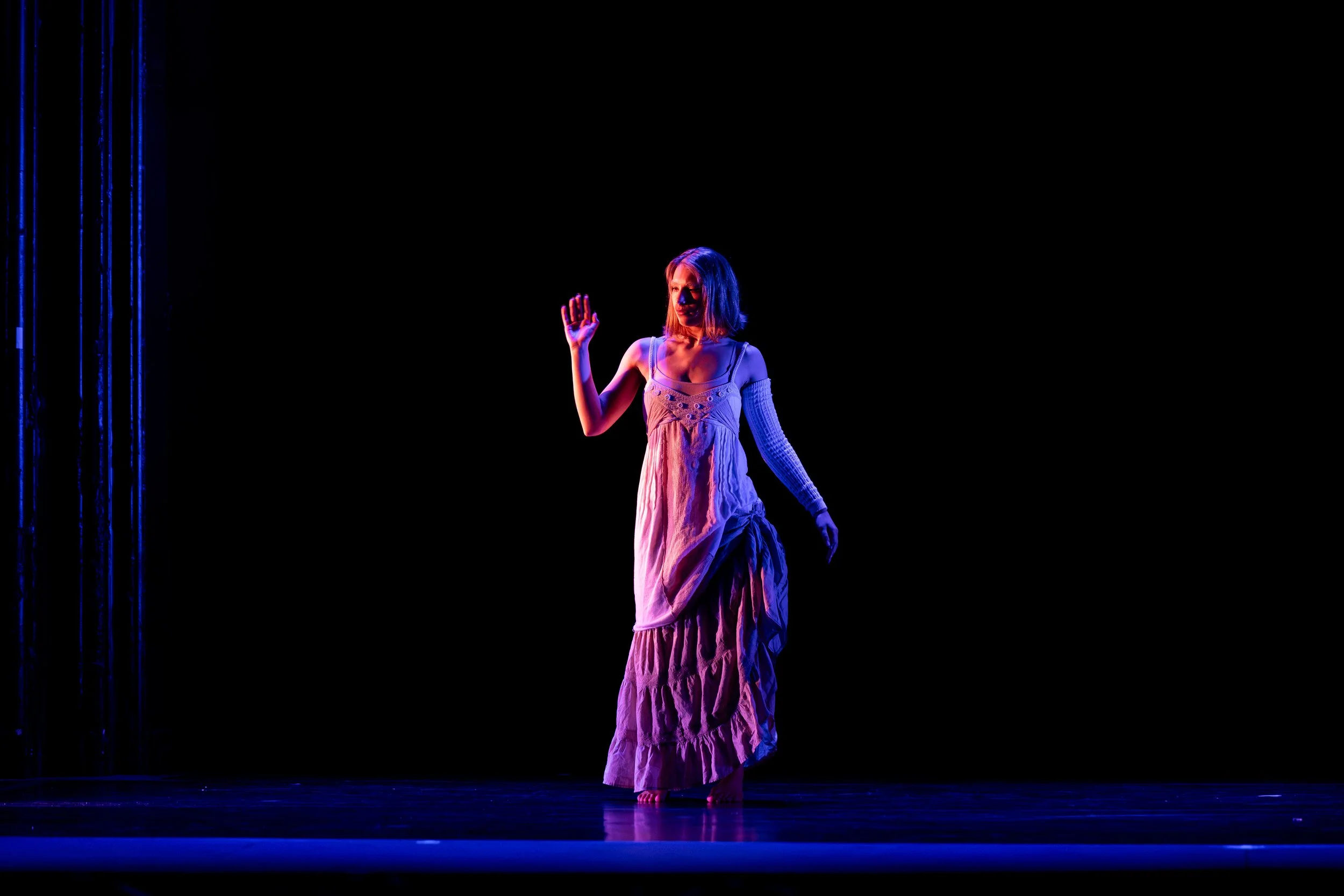
The first work we see by Ahren Sims is his duet, Sublime. The two dancers bound onstage, light on their feet and dressed in a casual graphic tee and a jersey. What ensues is an earnest, humorous hip-hop piece that dips its toes into house, waving, footwork, and more. One way Sublime excels is in its energy: the two dancers fill the stage with larger than life vitality, moving through every corner of the floor, interacting with the audience and each other. The performers even hit a little mid-dance scuba. That’s one way to keep an audience on its toes. Next up is Lunar Lover, Sims’ solo. Lunar Lover opens with Sims laying on the floor, back to the audience, bathed in blue light. In this work, Sims is truly dancing for himself. A soft R&B track provides the soundscape as Sims grooves around the stage. Soon, the dance pivots to a duet with an invisible partner; Sims mimes trying to woo this lover through a variety of methods, not limited to simply changing his shirt. The work is incredibly earnest in all of its humorous moments, and Sims’ genuine love for crafting stories through dance is clear. The audience sees the full picture of this relationship, despite there only being one member on stage, and we see how it grows and shifts over time. Lunar Lover closes with Sims once again laying on the floor, daydreaming as the lights fade. Closing out Sims’ trio of works is About the Journey, a poignant group dance reflecting themes of friendship. The work features five dancers in fluttering white costumes, providing a more contemporary departure from Sims’ first two works. The movement is slow and painstakingly gentle, but still finds time to catch every beat of the a cappella sound score. Dancers offer each other supporting hands and connect through rippling canons of turns; there are moments where a dancer will separate from the group, but are always welcomed back with open arms. The final image of the work sums it up nicely: all the dancers gathered together, each with one arm stretched up into a spotlight, growing and reaching together as a community. Sims’ work is optimistic and lighthearted, clearly showing his expertise in hip-hop, but also shows how that expertise lends itself to the other styles he pursues; beyond that, the energy is always infectious.
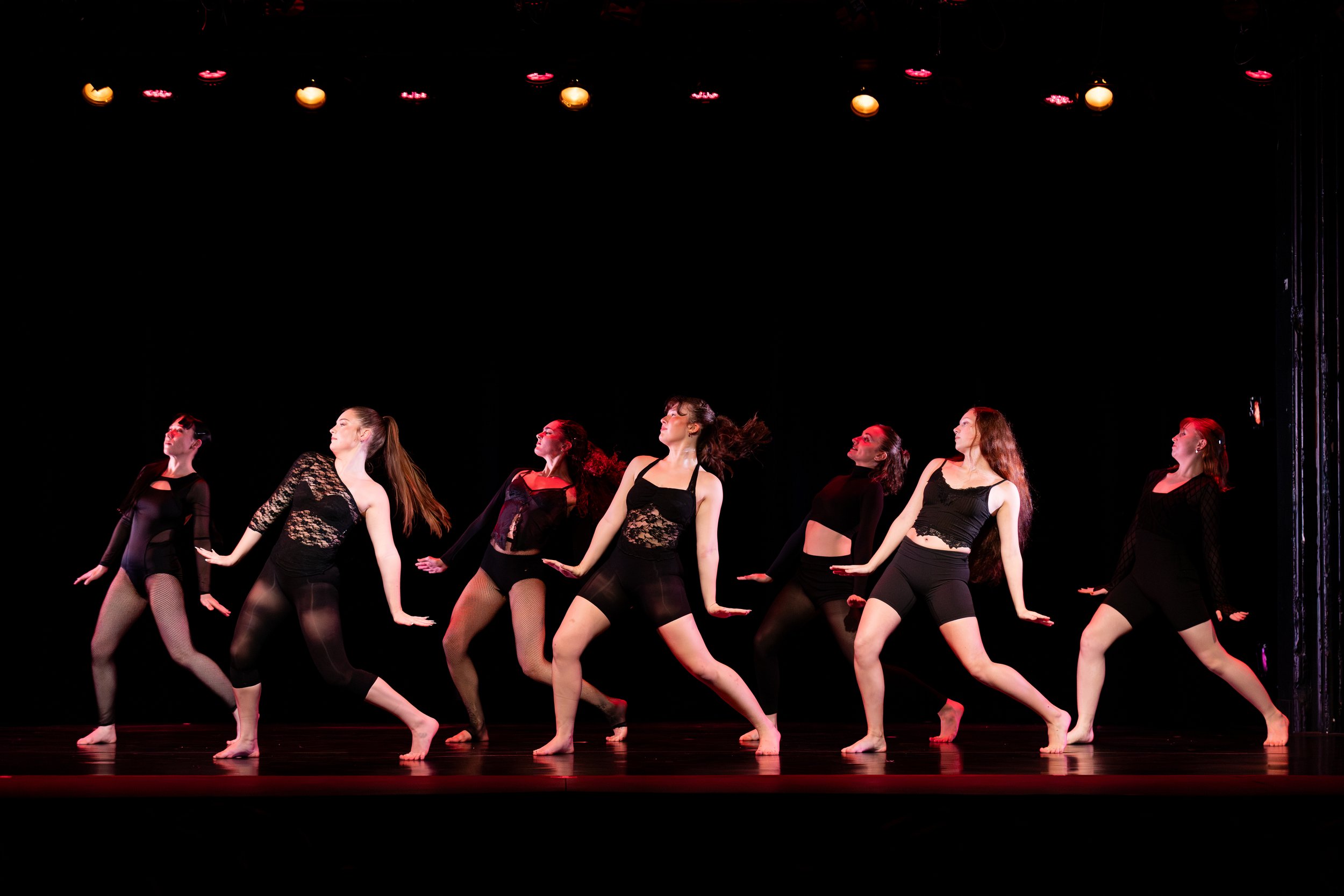
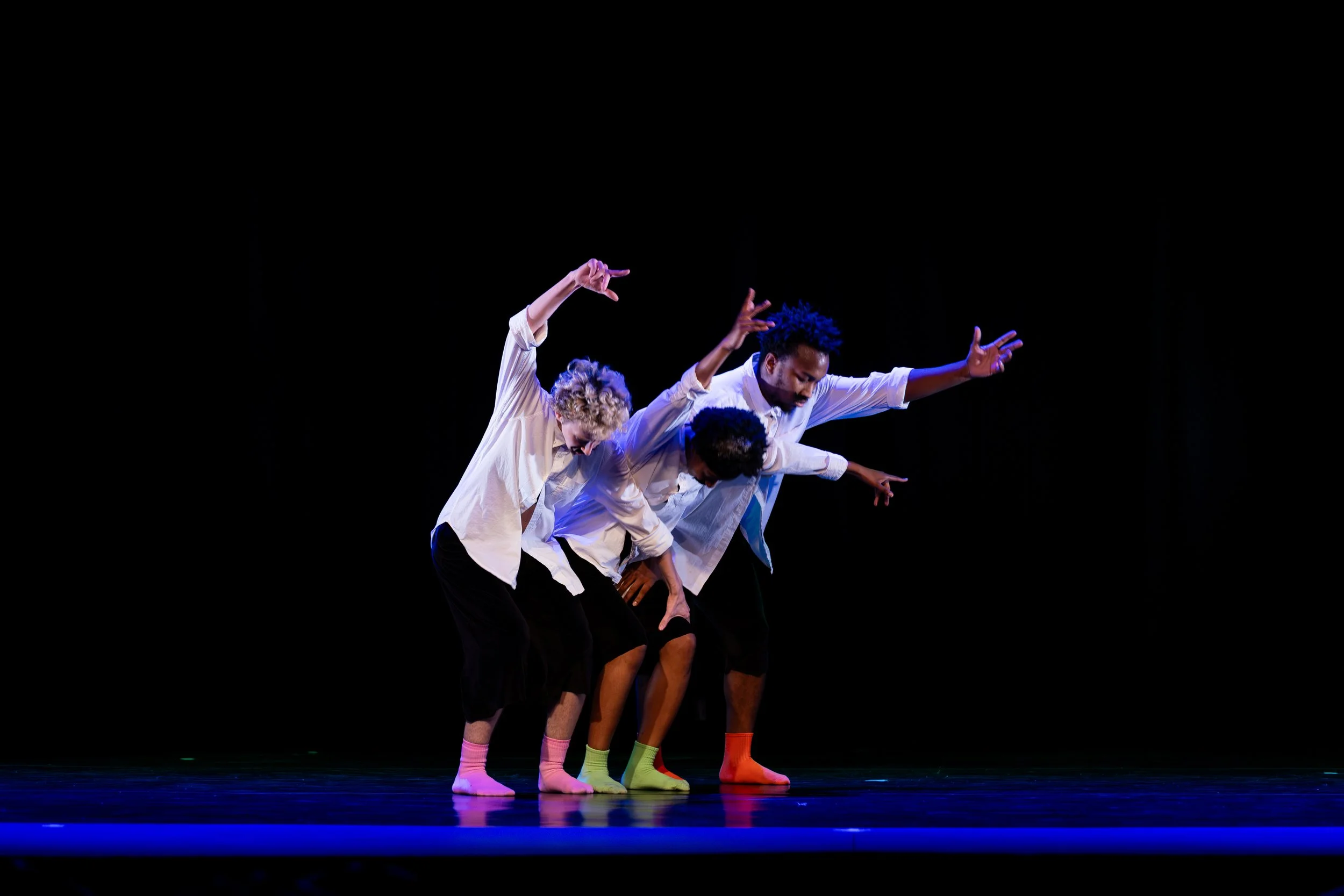
The final choreographer, Megan Burton, has quite the wide array of works in this concert. Each piece is vastly different from the last, and you truly see the breadth of Burton’s choreographic mind through the progression. We first see her group dance, Sleight, a classic Fosse jazz number. Lights raise on seven dancers who, in true Fosse fashion, are clad in tights and black lace. They strike a pose, breathe together, and hit one crisp snap before moving to a new position. They build to a sultry rhythm with hip isolations and snappy jumps galore. The choreography has multiple moments to highlight the subtlety of the movement, letting each meticulous isolation get the time and attention they deserve. The dancers’ stage presence is cool and confident, and their performance is absurdly clean. Next, we see Burton perform her solo. Mental Infirmity is a poignant piece about degradation of memory, where Burton endlessly repeats pedestrian motions, such as putting on clothes. She turns to the back and shakes out her hair. With every iteration of these movements, the hair shaking stretches on longer and becomes more fervent, until the swinging of her hair eclipses her head in a staticky whirlwind. The work is set to music from Everywhere at the End of Time by The Caretaker, whose ambient tracks explore themes of Alzheimer’s; a fitting choice. Burton sprints across the stage, eyes glazed over, the running becoming a larger metaphor for the deterioration of the mind. This solo was exceptional in its melancholy atmosphere; both grieving and quite peaceful. To close out the show is possibly the audience favorite of the night, people with a mustache. Three dancers bounce around the stage, each outfitted in a white button-down and a splendid fake mustache. The best way to describe these three is as the kind of guys you really don’t want to talk to at the bar. They smolder, throw winks, hype each other up, and groove in a half-house, half-sexy-whoville-resident sort of way. The choreography expertly balances being ridiculously funny and well choreographed: it remains engaging, athletic, and wholly singular through its chaos. These dancers hit the coffee grinder, chased each other while jumping, and even broke out in a minor brawl onstage. It was the perfect note to end the evening on, and showed that the most a piece of art can strive for is to be exactly itself.
When looking at each choreographers’ work, each piece feels singular; they showcased a broad expertise in a variety of techniques, concepts, and productions. No two pieces are quite alike, and the tone zigzags between every emotion under the sun. In fact, when searching for a through line, the audience instead finds a showcase of the seniors’ artistic character: Brooks’ growth and poise, Firsching’s relentless determination, Burton’s fresh eccentricities, and Sims’ zeal and vitality shine through each work, despite their disparate concepts. This concert provided a peek into these young artists’ minds, and their intellectual and artistic prowess is clearly on display. These Webster students are ready to hit the ground running.
Photos by Carly Vanderheyden