
HQ Review: Webster University presents BFA Concert I: Sotto Voce
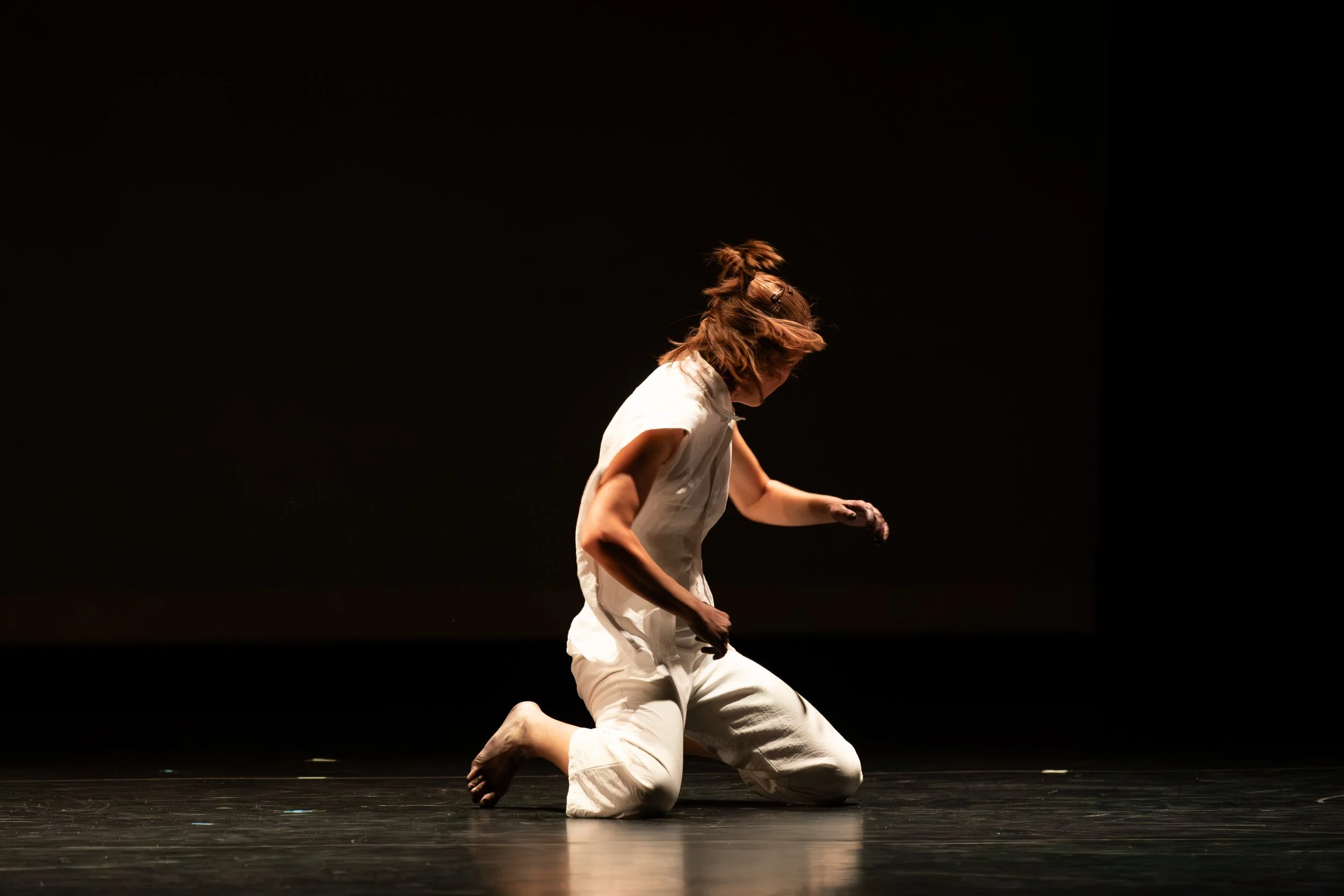
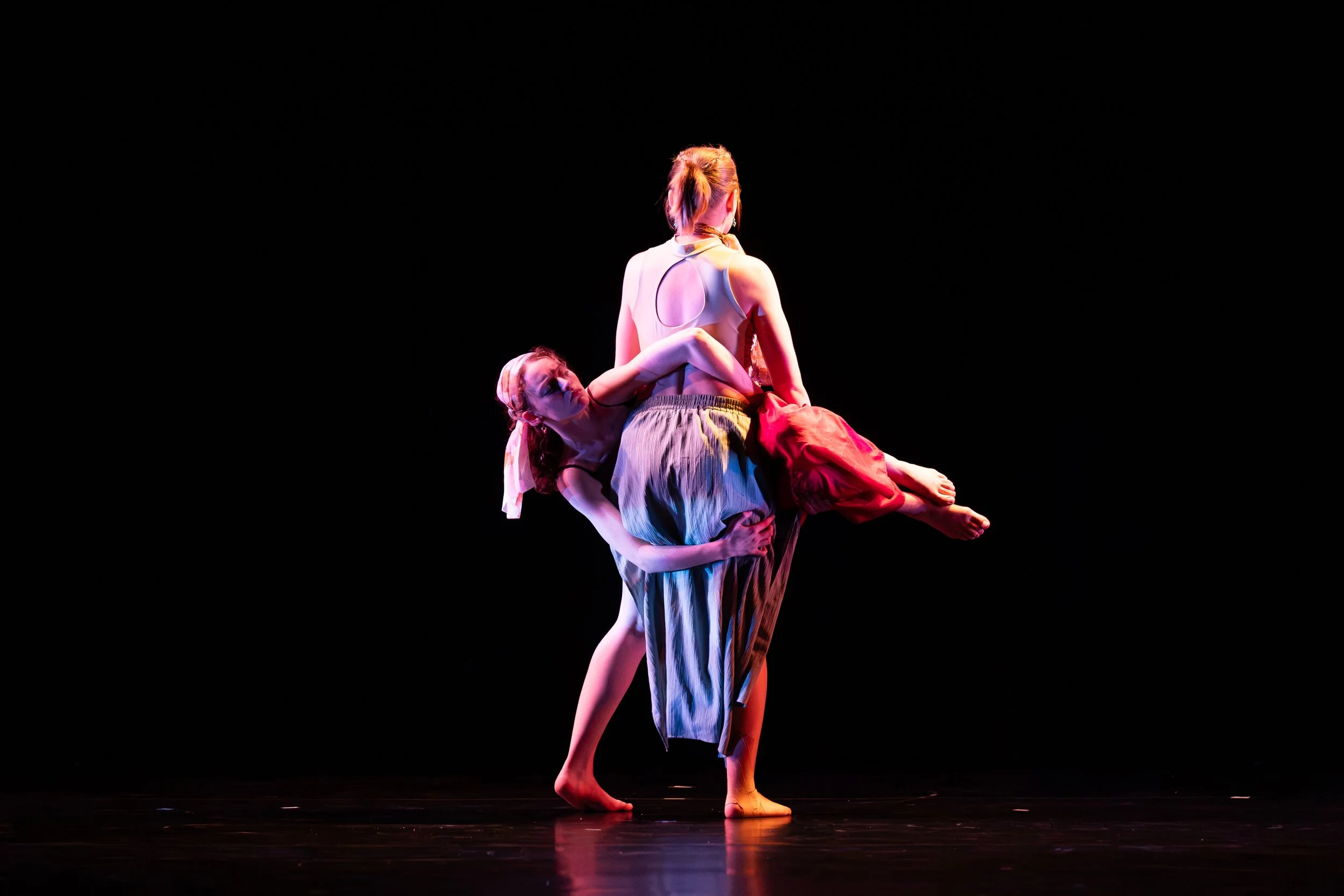
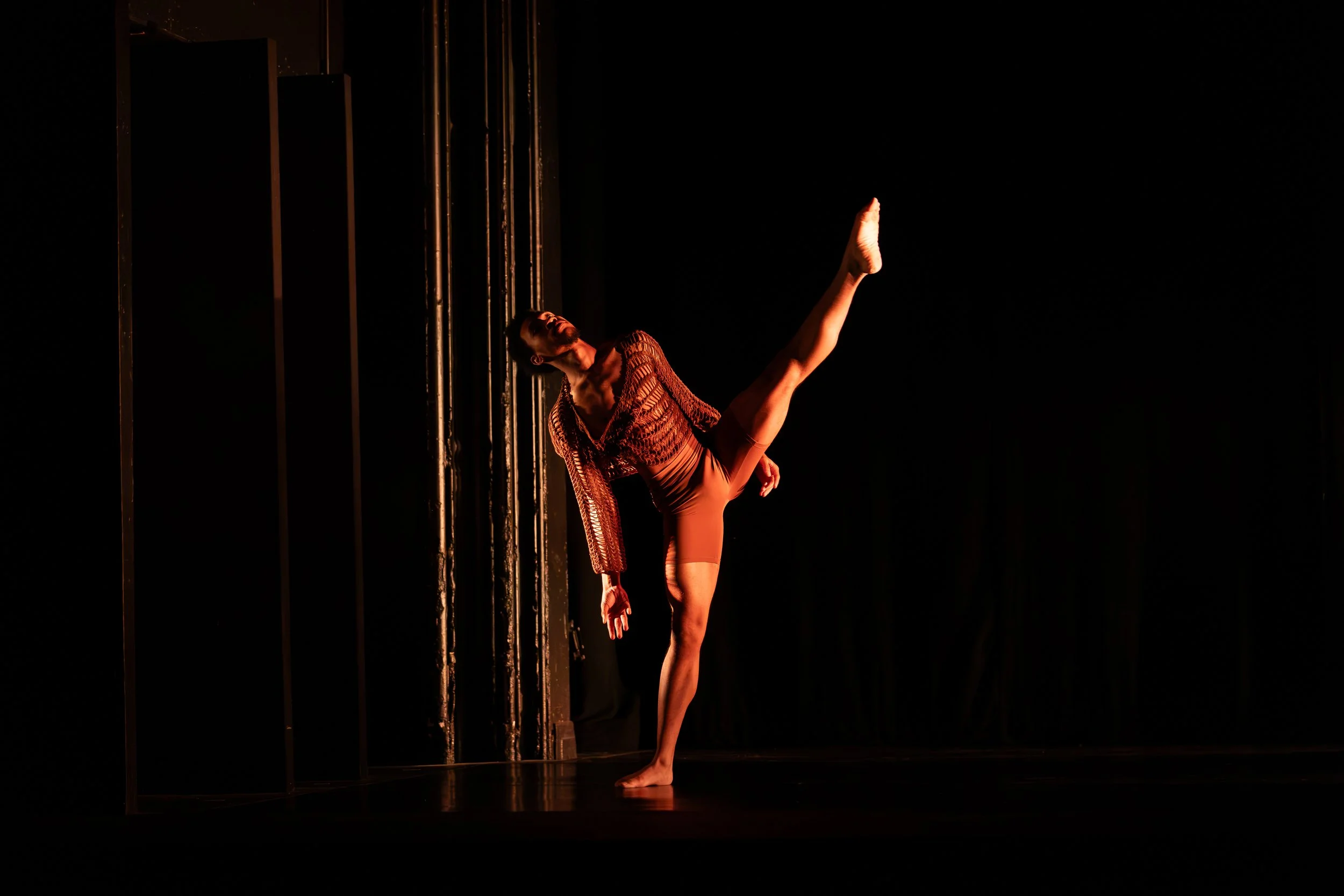
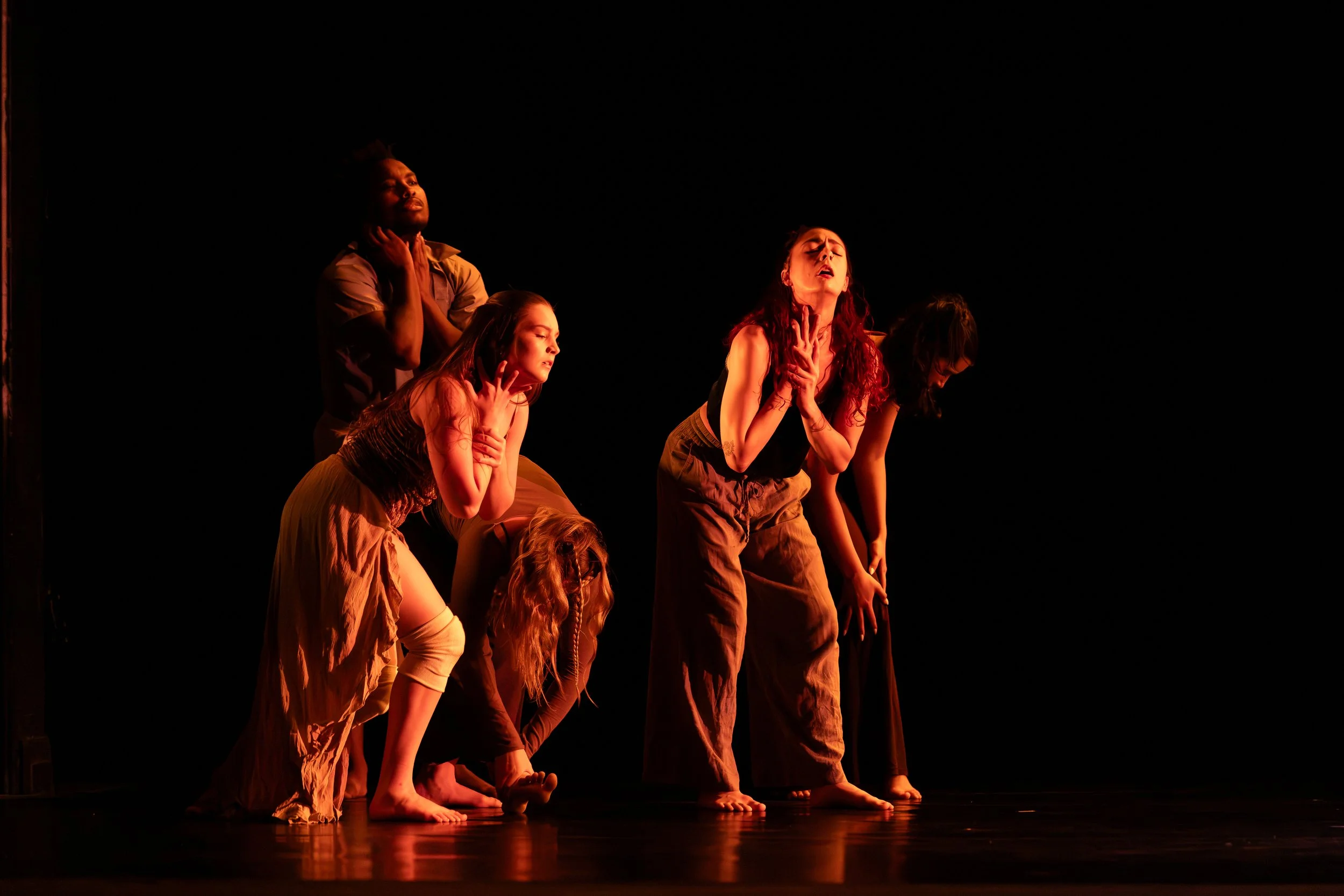
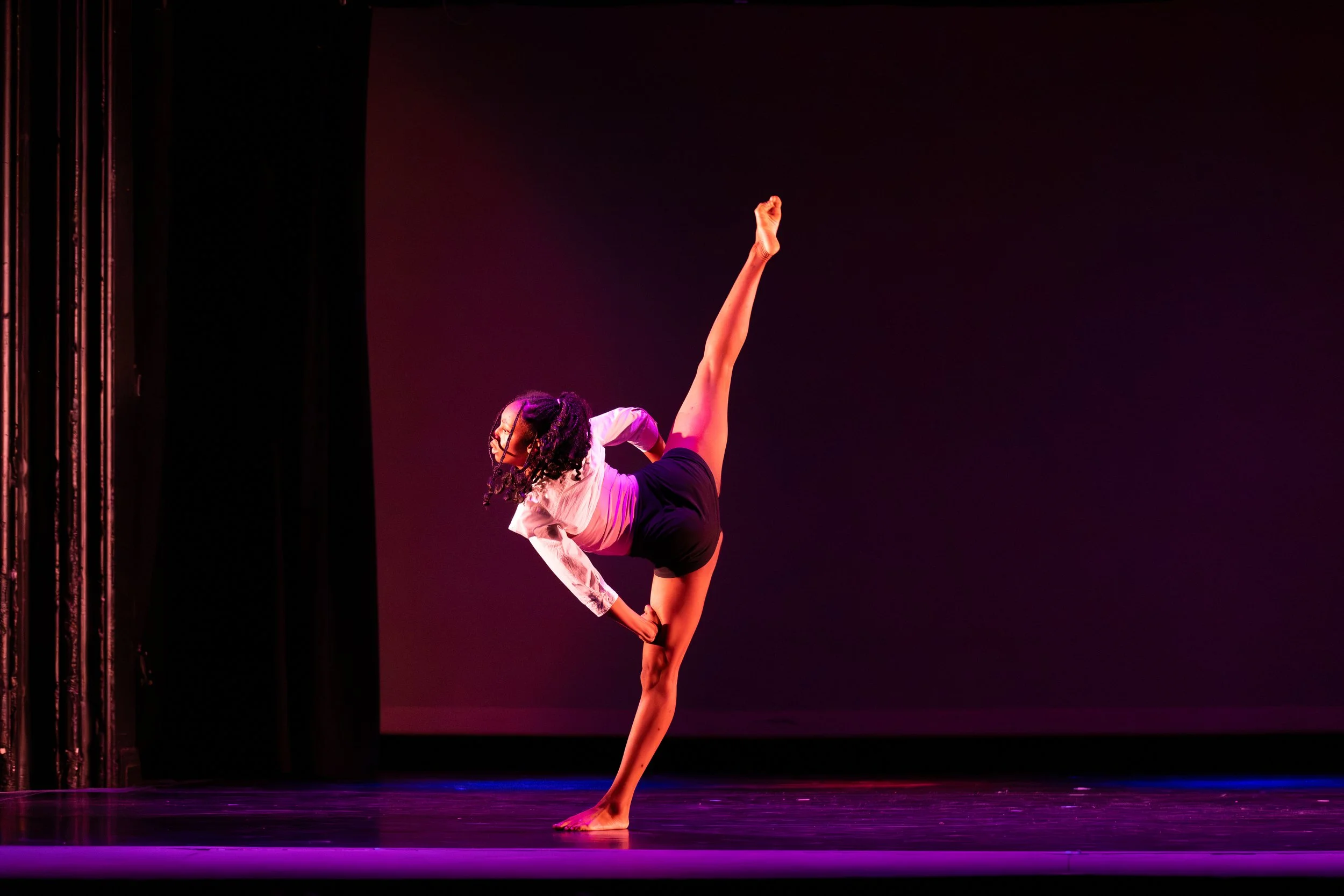
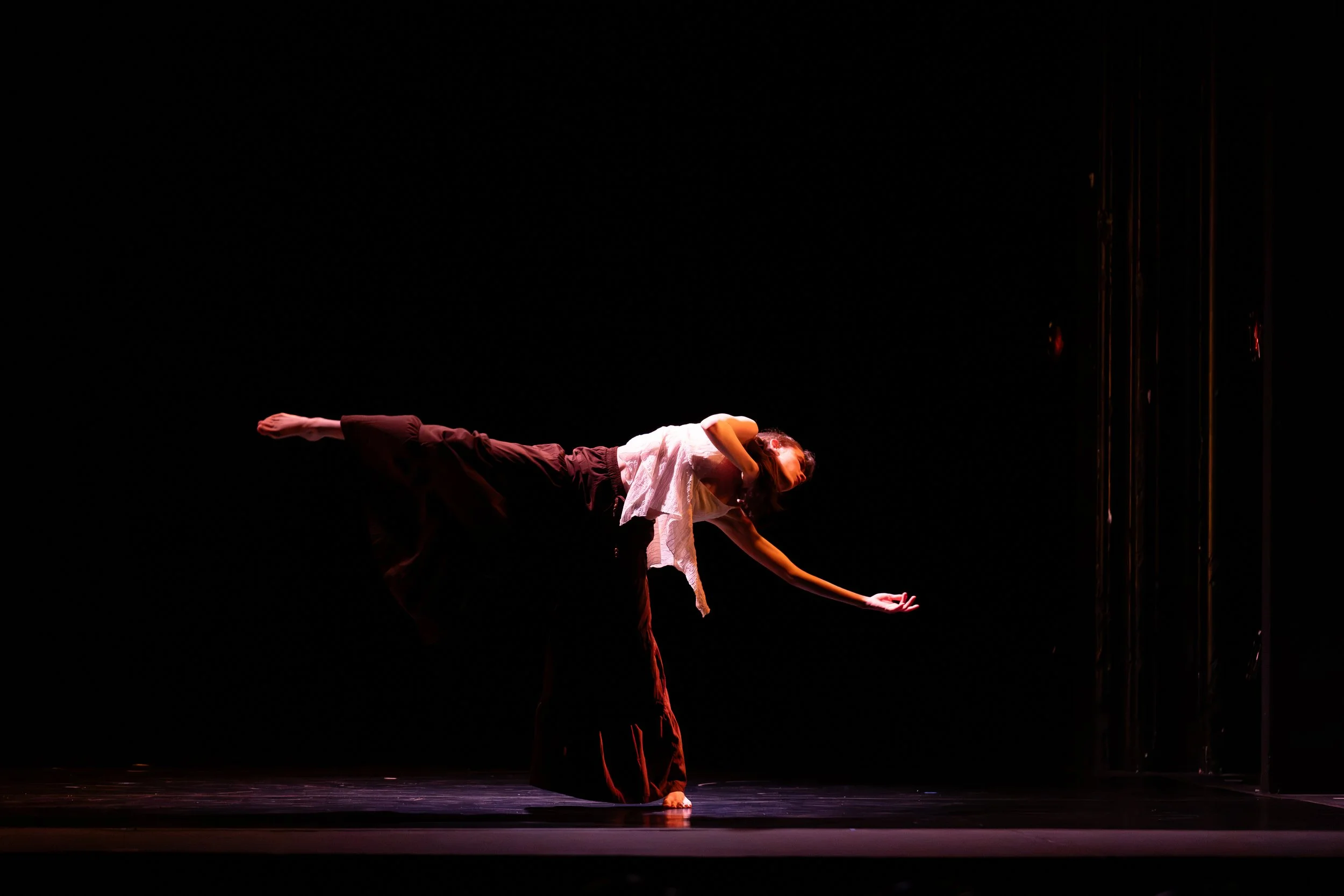
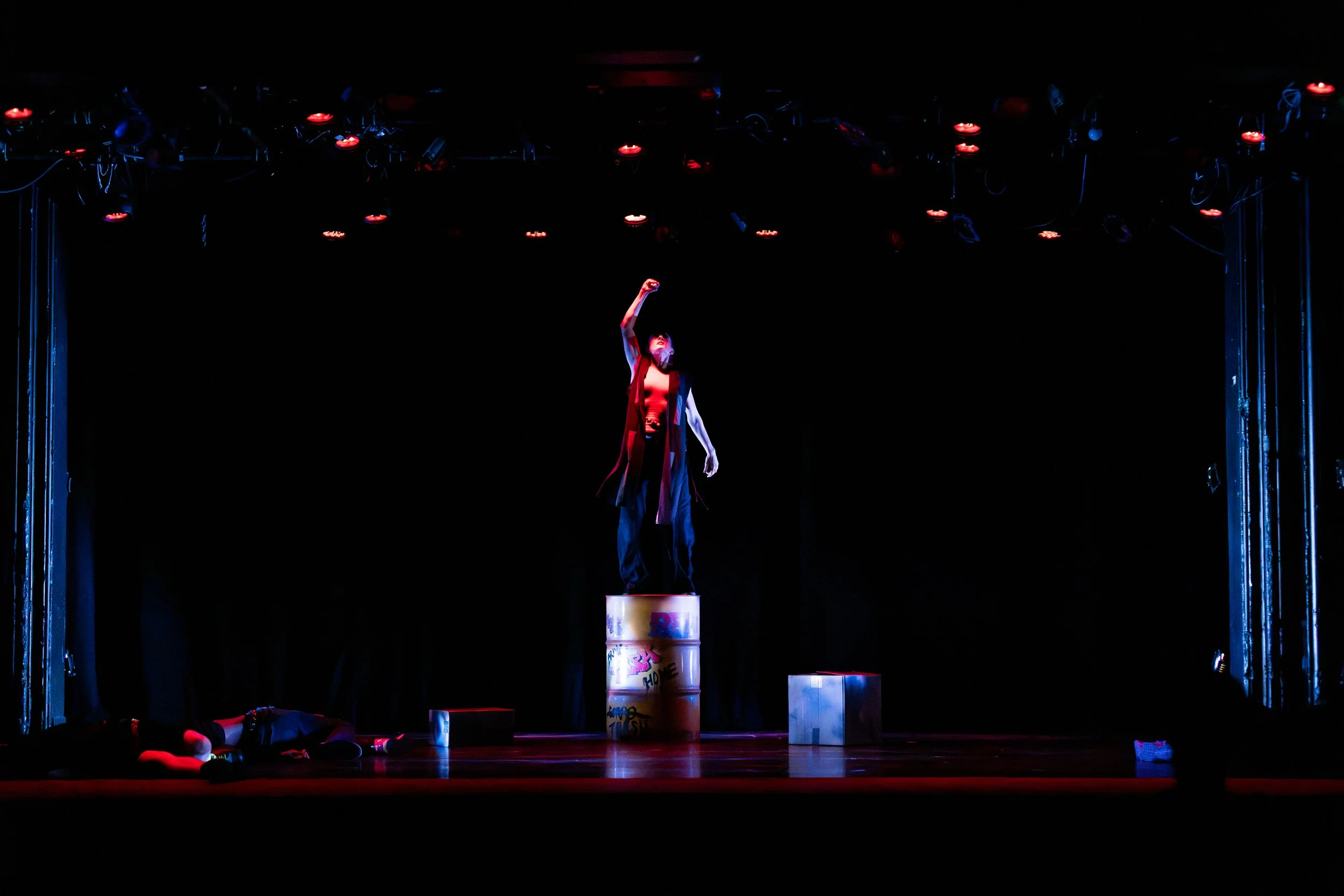
On October 9th, 10th and 11th, Webster University’s BFA Dance students took the stage in Webster Hall’s “The Dot” theater to present Sotto Voce. The concert offered an evening of contemporary dance that explored the complexities of human experience through themes of identity, isolation, power, and the passage of time. Featuring original works by BFA student choreographers Bella Shea, Eilee McVey, and Keenon Hamburg, the program showcased a diverse range of artistic approaches, each offering a variety of perspectives on relationships and emotion. The choreographers invited audiences into abstract worlds where physical expression became a means of examining the psychological and emotional challenges of everyday life.
To start off the show, Bella Shea’s stay with me here a little while explored the tension between confinement and the desire for connection.The solo, performed by Shea herself centered on the idea of being trapped within a prison of one's own making. The work’s program note posed a particularly striking question: “Could a key ever be present to you, when you knew the bars before the concept of a lock?” Her intense movements suggested that the greatest obstacles to freedom come from the obstacles made in our minds. The circular spotlight also aided in reinforcing this sense of confinement, creating a space that could be interpreted as both a physical boundary and an emotional barrier.
Up next was That Which Devours, choreographed by Eilee McVey shifted the evening’s attention toward people's complex relationship with time. Performed by Marley Fuhrman and Skylar Powers, the duet examined time as an unavoidable force that continuously shapes human existence. The piece started off with the two dancers lying still on stage, and from there the dancers went into partnering work that explored the progression of relationships. As the program note suggested, nothing remains certain except the ending of one moment and the beginning of another. The dancers did a beautiful job with connecting with one another, through eye contact and working with one another. Their partnering work often resembled balance, and what seemed like living in unison. With this, the piece also represented the ups and downs of relationships. After watching this piece, it is hard to not feel inspired to confront changes and to cherish memorable moments in life.
Solo, choreographed and performed by Keenon Hamburg, offered a more personal examination of the relationship between an artist and their craft. Hamburg's performance started off with his hand reaching strenuously from the wing of the stage, reaching for his artwork. Rather than presenting dance simply as a form of beauty or entertainment, Hamburg explored the emotional demands and expectations placed upon dancers. The work raised questions about the sacrifices involved in pursuing artistic excellence and the ways in which dedication can shape an individual's identity. The charged vocals and emotions of the music I Put a Spell On You by Nina Simpone emphasized his storytelling. Through his full body movements, floorwork, intentional hand gestures, and emotional expression, Hamburg illustrates to his audience how dance has such a great impact on dancers, much like a literal “spell”. Ultimately, Solo invited audiences to look beyond the polished exterior of performance and consider the individual behind the movement.
Revolt of the Flesh, also choreographed by McVeyan, is an ensemble work inspired by the Greek myth of Sisyphus. Dancers Vivian Birch, Sara Davis, Madi Maetten, Joshua Bruton, Ansley Batts, and Emily Weller, examined how often things in history and human life seem to repeat itself, and the neverending struggles that make up everyday life. In Greek mythology, Sisyphus is condemned to push a boulder uphill for eternity, only for it to roll back down each time he approaches the summit. The dance featured a lot of individualism, with each person having their own story, yet all seeming to have the same struggles. Its central question, “How can we break this cycle?” resonated beyond the stage, encouraging audiences to reconsider the relationship between repetition, purpose, and personal freedom. Her piece leaves the audience wondering, will people ever be able to escape the expectations and routines that seem to take over their lives?
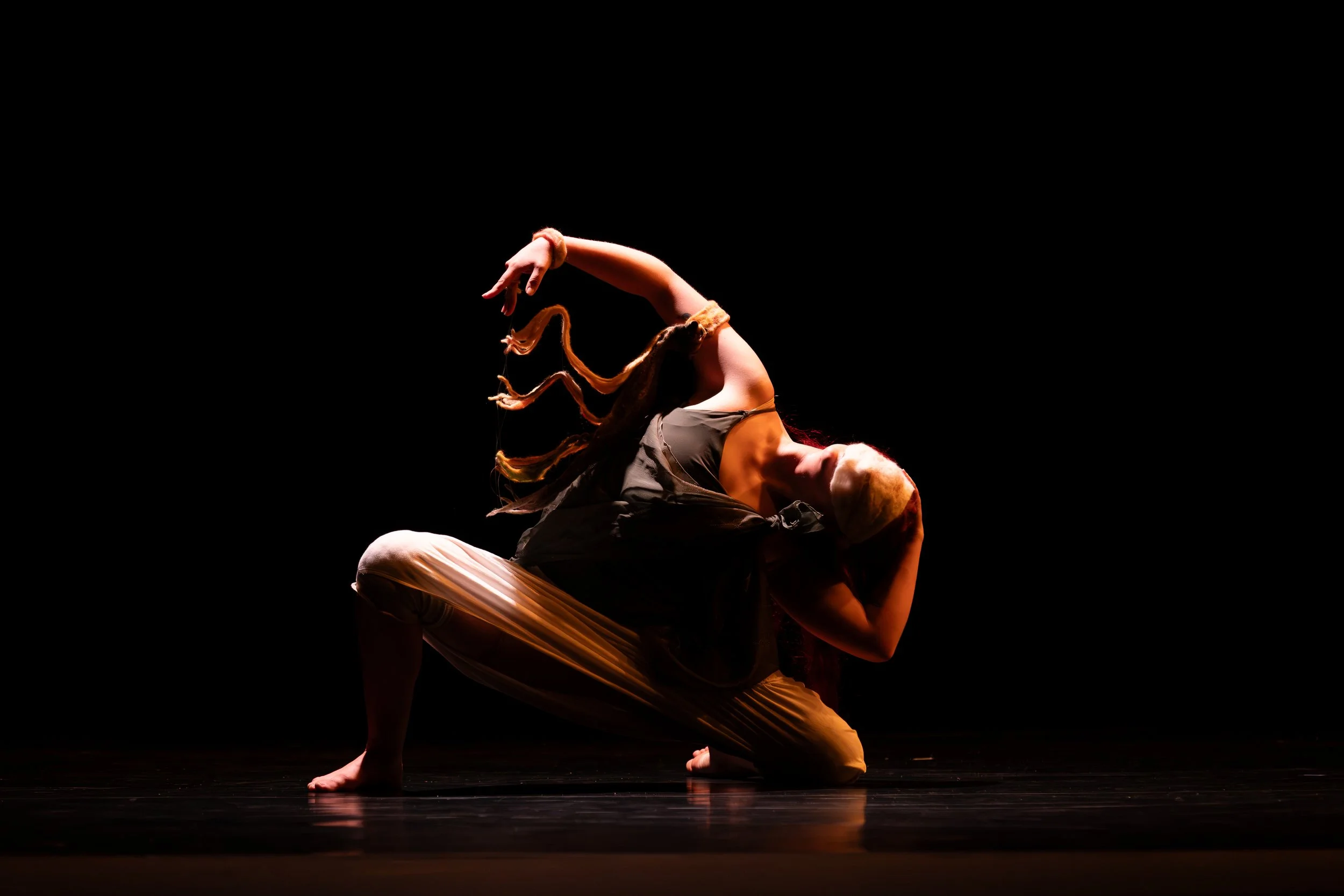
Following intermission, McVey’s solo Heautoscopy, that she choreographed herself, introduced one of the evening’s most psychologically complex concepts. The solo explored dissociative disorders and how they have the strength to mess with our visual and sensory experiences. Prop designer Elise Yeargin, helped the work to investigate themes of distortion, isolation, and the uncanny by having McVey dance with a cloth around her eyes for much of her performance, as well as a cloth around her arm. This visual approach expands the possibilities of how movement can communicate experiences that may be difficult to explain through language alone. McVey’s relationship with the props helped explain these struggles. Heautoscopy challenged conventional understandings of perception and identity, inviting audiences to consider the unsettling relationship between the body, the mind, and one's sense of self.
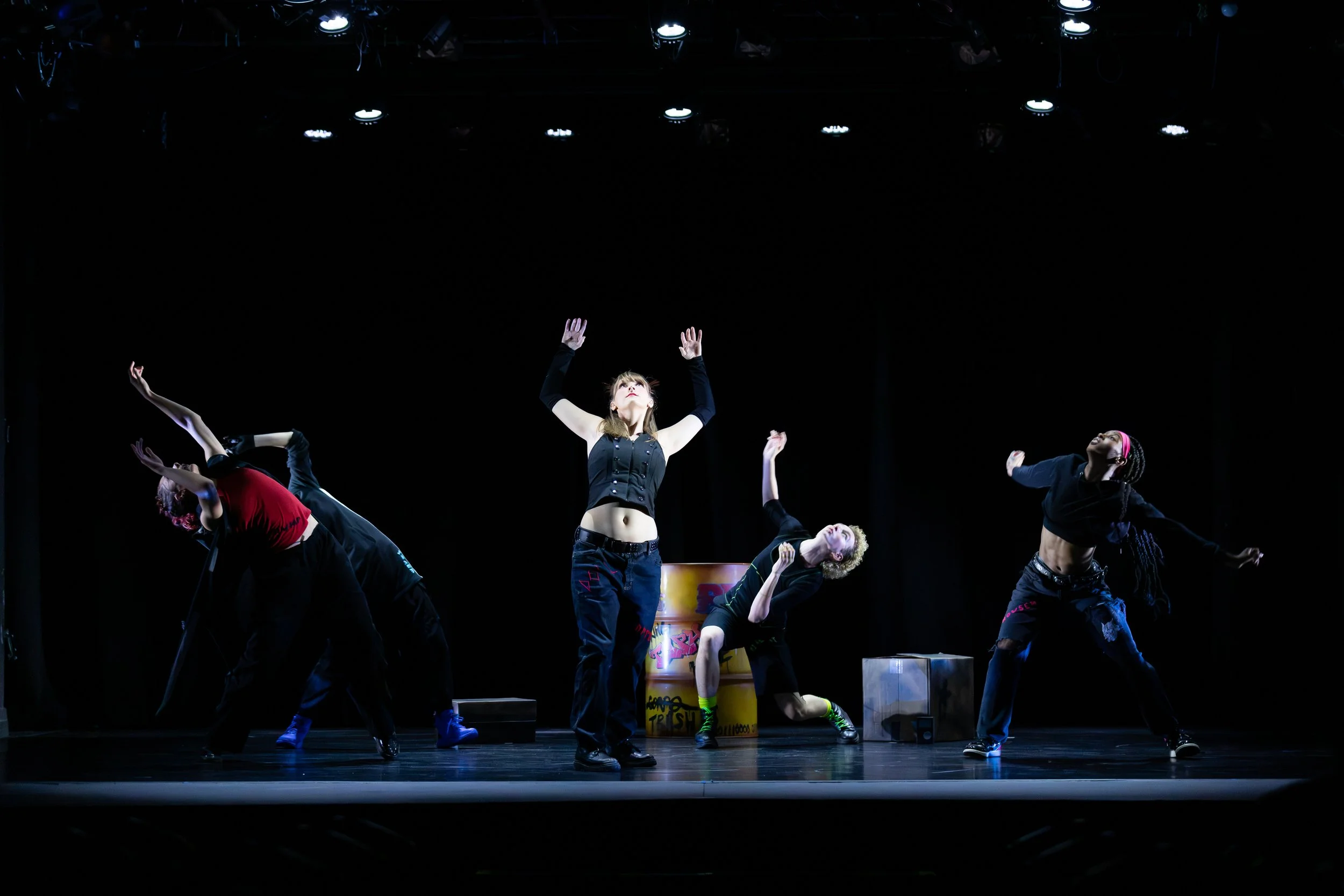
After McVey's solo, Between Us 3, choreographed by Kennon Hamburg shifted the evening to a different kind of struggle, focusing on social hierarchies and the pursuit of personal desires. Performed by Doline Colinburg, Elizabeth Fore, and Josslin Haag, the performance explored the power dynamics that emerge when individuals attempt to satisfy their own needs. Although the music and lights seemed more light and vibrant compared to other works in the concert, the work placed interpersonal relationships at the center of its exploration, still resembling a form of struggle. The dancers on stage performed how people have evil tendencies to get to the top, such as gossip and backstabbing. The dance examines shifting alliances, competing interests, and the uneven distribution of power within a group.
Last but not least, Bella Shea’s error: transmission incoming brought another distinctive perspective to the program. Featuring Vivian Birch, Alivia Fletcher, Jasmine Davis, Daisha Leachman, and Shea, the work incorporated an expansive musical collage, drawing from artists including Ryan Lott, Imogen Heap, Birdengine, and others. Unlike the more descriptive program notes accompanying the earlier works, Shea presented a sequence of binary code, introducing an element of mystery and technological abstraction. The piece also incorporated a duet performed by Davis and Leachman and acknowledged the influence of Krump through special thanks to Kyla Kikkawa. During the piece the dancers expressed a sense of community and working together during times of struggle. This connection to street dance offered an interesting contrast to the contemporary vocabulary present throughout much of the evening. With its references to transmission, coded communication, and fragmented musical sources, the work suggested a world shaped by disruption and the challenges of communication.
Three choreographers did a great job highlighting different approaches to creating meaning through movement. McVey's works examined philosophical and psychological questions, while Hamburg explored the social pressures that shape individuals and their relationships. Shea’s choreography approached similar concerns through themes of confinement and communication with other dancers. Despite these differences, the works shared a fascination with the forces that influence human behavior, whether those forces emerged from within the individual or from the surrounding world.
Overall, Webster University’s BFA Choreography Concert offered a thoughtful exploration of the possibilities of contemporary dance. Shea, McVey, and Hamburg demonstrated how choreography has the power to represent real world issues and how people respond to them . The evening confronted subjects with high complexity without necessarily giving straightforward answers, since there are usually many grey areas in such complex situations. Together, the works reminded audiences that dance can communicate what language alone can’t, revealing the shared experiences that define what it means to be human.
Photos by Carly Vanderheyden